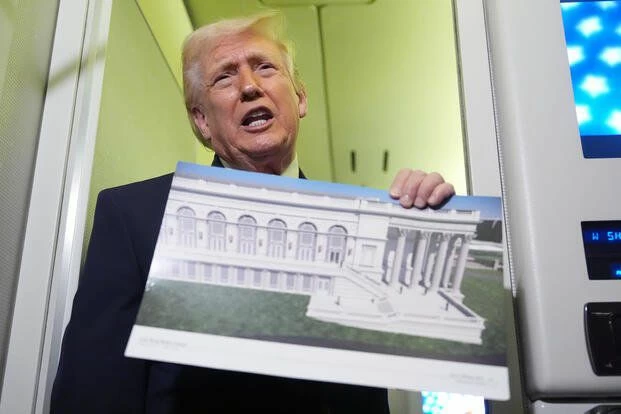
President Donald Trump has revealed a controversial project involving the construction of a massive underground military complex beneath the Grand Ballroom of the White House. This announcement comes after the demolition of the East Wing last year, which has drawn significant criticism from opponents who argue that this move undermines the identity of the "People's House."
In statements made to reporters aboard Air Force One, Trump confirmed that the U.S. military is working on the construction of the military complex, noting that the work is "well underway" and that the project is ahead of schedule. He also added that the ballroom would serve as a cover for the military complex, but did not disclose further details about the project, indicating that information had leaked due to a lawsuit he described as "ridiculous."
Project Details and Controversies
The project is part of a larger plan to build a 90,000-square-foot event hall within the White House, necessitating the demolition of the East Wing. The Trump administration views this hall as a "necessary and distinctive addition" to the historic building, while critics argue that these changes exceed presidential authority.
The project has faced legal objections, with heritage preservation groups filing a lawsuit to halt construction until congressional approval is obtained and independent reviews are conducted. Additionally, Democrats have accused the administration of circumventing standard regulatory procedures, including approvals from planning and arts committees.
Background & Context
This initiative comes at a time when the White House is undergoing significant infrastructure changes, as Trump seeks to enhance security amid increasing challenges. The estimated cost of the project has risen from $200 million to $400 million, with expectations that it will be completed by 2028.
The U.S. administration is making substantial investments in this project, relying heavily on private donations for funding, which raises questions about transparency and accountability in the use of public funds.
Impact & Consequences
This move raises concerns about how it will affect the identity of the White House as an institution representing the American people. The criticisms directed at the project suggest that these changes could erode the democratic values that the White House embodies.
Furthermore, the establishment of a military complex beneath the Grand Ballroom reflects rising security tensions in the United States, with Trump indicating that the hall will include advanced security features, such as bulletproof windows and a drone-resistant roof. These fortifications represent a new reality that demands unprecedented levels of protection.
Regional Significance
Although this project focuses on domestic U.S. issues, its repercussions may extend to the Arab region. Increased security tensions in the United States could influence its foreign policies, including relations with Arab countries.
Moreover, these transformations within the White House may reflect new trends in U.S. policy towards Middle Eastern issues, warranting close attention from Arab nations.
In conclusion, this project remains a subject of significant debate, requiring a balance between security and national identity, which will continue to be a topic of ongoing discussion in the American political arena.