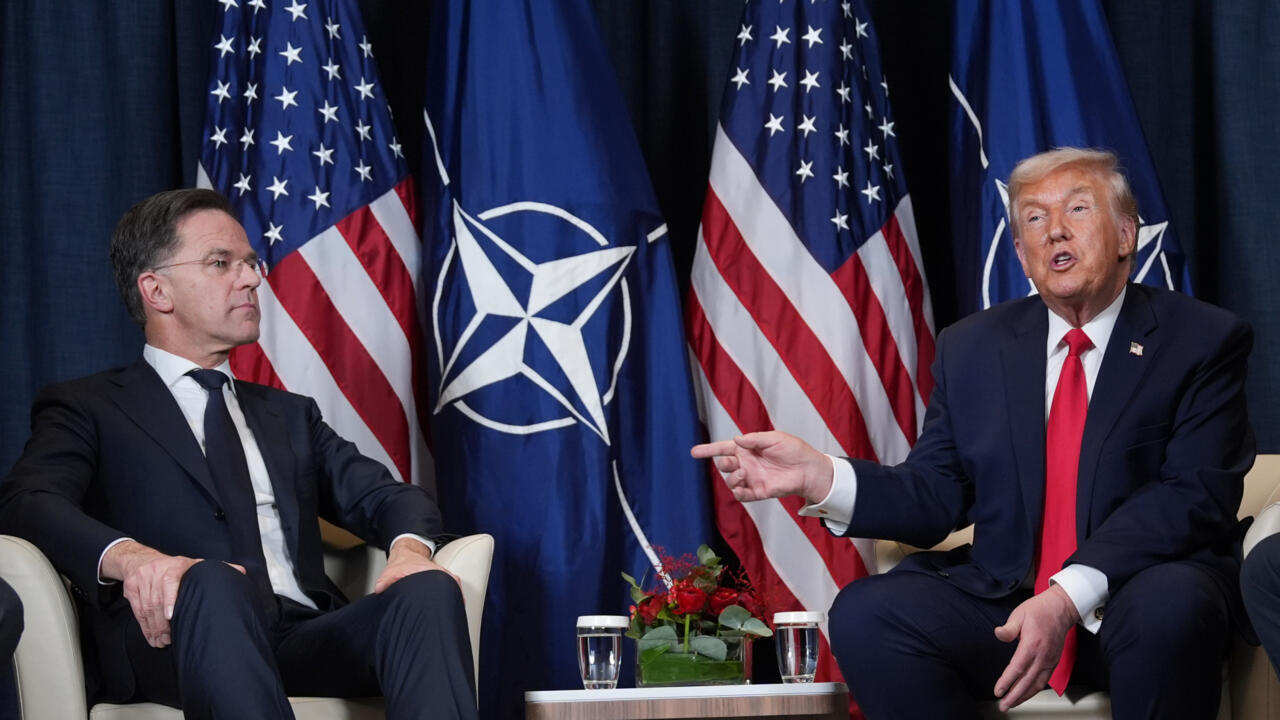
In provocative remarks, U.S. President Donald Trump announced he is seriously considering withdrawing the United States from the NATO alliance, indicating that the alliance has not provided adequate support for U.S. military action against Iran. Trump described NATO as a 'paper tiger,' reflecting his lack of confidence in the alliance's ability to fulfill its commitments.
During an interview with the British newspaper The Telegraph, Trump stated, 'I have never been convinced by NATO. I always knew it was a paper tiger, and (Russian President Vladimir) Putin knows that too.' These comments come at a sensitive time as tensions in the Middle East are escalating, increasing the importance of military cooperation between the United States and its allies.
Details of the Statement
In the interview, Trump noted that the issue of U.S. withdrawal from the NATO defense agreement has 'gone beyond the stage of reconsideration.' He affirmed that he has long had doubts about the credibility of the alliance, reflecting a deterioration in relations between the United States and its European allies. He added, 'Yes, I say it has gone beyond the stage of reconsideration' when asked about the possibility of reassessing U.S. membership in the alliance after the war.
These statements come at a time when the world is witnessing a rise in geopolitical tensions, particularly in the Middle East, where security challenges are increasing. Trump's remarks have raised concerns among U.S. allies who rely on American military support to face regional threats.
Context and Background
NATO was established in 1949 as a military alliance aimed at countering Soviet threats. Over time, the alliance has evolved to encompass a range of global security issues. However, doubts about the effectiveness of the alliance have increased in recent years, especially with rising tensions between the United States and Russia, in addition to security challenges in the Middle East.
Trump's statements are part of his foreign policy that focuses on 'America First,' as he seeks to reassess U.S. military commitments abroad. This approach has sparked widespread debate among experts and analysts, who believe that a U.S. withdrawal from NATO could destabilize the global security system.
Consequences and Impact
If the United States decides to withdraw from NATO, it could lead to radical changes in the security balance in Europe. European countries may feel vulnerable, prompting them to enhance their military capabilities independently. Additionally, this withdrawal could strengthen Russia's position, which seeks to expand its influence in the region.
Moreover, a U.S. withdrawal from NATO could affect military relations with allied countries in the Middle East, potentially exacerbating regional crises. This decision could also alarm Arab countries that rely on U.S. support to confront security threats.
Impact on the Arab Region
Trump's remarks serve as a wake-up call for Arab countries, which may find themselves in a difficult position if the United States retracts its military commitments. This could lead to increased tensions in the region, especially with the rising threats from Iran and other armed groups.
Under these circumstances, Arab countries must consider new strategies to enhance their security, including strengthening military cooperation among themselves. There should also be efforts to develop self-defense capabilities in case U.S. support diminishes.
In conclusion, Trump's statements highlight the importance of reassessing international relations in light of current geopolitical changes. The future of NATO and the role of the United States within it may have profound implications for regional and international security.