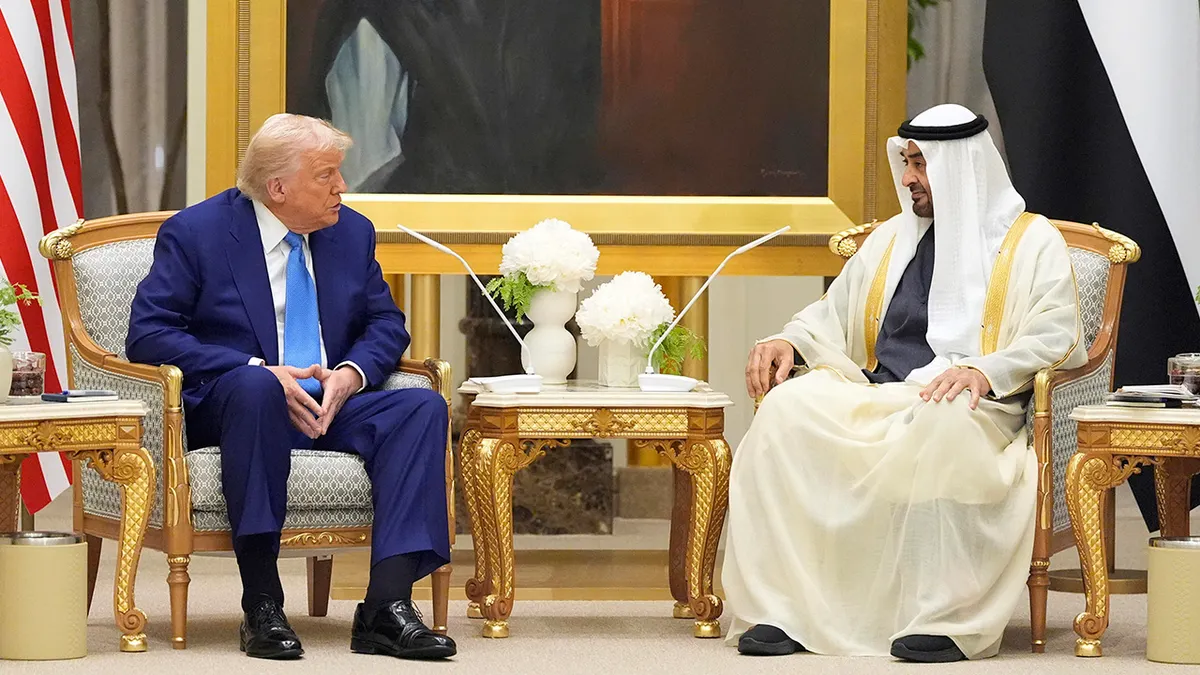
Former President Donald Trump's recent speech has created confusion in the political landscape, with mixed messages about the possibility of a quick or delayed victory in the Middle East. These contradictions raise questions about the future strategies of the United States.
In his speech, Trump indicated that there are significant opportunities for achievements in the Middle East, but at the same time expressed concern about the challenges that could hinder this progress. This disparity in messages reflects a lack of clarity in the American vision regarding the multiple crises afflicting the region.
Details of the Speech
During the speech, Trump addressed a range of hot issues, including the Israeli-Palestinian conflict and the situations in Syria and Iraq. He emphasized the importance of supporting allies in the region, yet did not provide a clear plan or specific strategy to achieve that. These statements came at a time when the region is experiencing increasing tensions, complicating the political landscape further.
Trump also touched on Iran's role in the region, stating that Tehran poses a threat to regional security. However, he did not specify how to deal with this threat, leaving many questions regarding future American policy.
Background & Context
Trump's remarks come at a sensitive time, as pressures are mounting on the United States to intervene in regional crises. Since taking office, the Trump administration has followed a volatile policy toward the Middle East, maintaining ties with some traditional allies while deteriorating relations with others.
The recent speech reflects the continuation of this contradictory policy, as Trump seeks to maintain a strong support base in the United States while ignoring the potential risks arising from instability in the Middle East.
Impact & Consequences
The contradictions in Trump's speech could exacerbate conditions in the region, as they may be interpreted as a weakness in American leadership. This situation could encourage other regional powers to take bolder steps, increasing the likelihood of escalation in existing conflicts.
Moreover, the lack of clarity in American policy could negatively affect relations with allies, who may feel insecure under the ambiguity of the American stance. This could lead to a reassessment of their own strategies in dealing with regional crises.
Regional Significance
Given the current situation, Trump's speech could directly impact Arab countries, potentially leading to increased tensions in areas such as Palestine and Syria. Arab nations that rely on American support may find themselves in a precarious position if these contradictions in American policy continue.
Additionally, instability in the region could affect Arab economies, potentially leading to a decline in foreign investments and increased security risks. Under these circumstances, Arab countries must be prepared to adapt to any changes in American policy.
In conclusion, Trump's recent speech serves as a reminder that American policy in the Middle East remains fraught with challenges and contradictions. These challenges require Arab nations to be more cautious and prepared to face any potential repercussions.