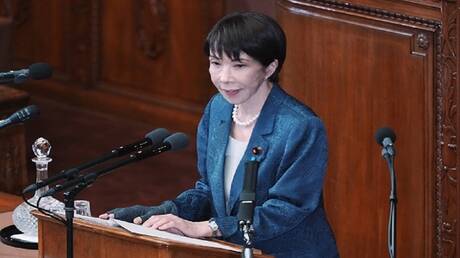
The Financial Times reported that President Donald Trump's joke regarding the Pearl Harbor attack serves to underscore what Japan's Prime Minister Sanae Takaichi has stated: the world has changed. This joke, made during a conversation with Takaichi, elicited mixed reactions, with some viewing it as a sign of historical ignorance, while others interpreted it as indicative of major transformations in global politics.
In her remarks, Takaichi stressed that the world today faces new challenges that require nations to reassess their historical relationships. These statements come at a sensitive time as Japan seeks to strengthen its alliances with the United States in the face of increasing security challenges in the Pacific region.
Details of the Incident
During a meeting between Trump and Takaichi, the U.S. President referenced the Pearl Harbor attack, which occurred in 1941, as a joke in the context of discussing U.S.-Japan relations. Although this joke may seem unintentional, it highlights the generational gap in understanding history and its impact on international relations.
It is worth noting that the Pearl Harbor attack was a turning point in both American and Japanese history, leading to the United States' entry into World War II. Therefore, Trump's use of this historical event in a joke could be interpreted as a signal of profound changes in how leaders view historical events.
Background & Context
Historically, relations between the United States and Japan have been complex, characterized by periods of tension and conflict, followed by shifts toward cooperation and partnership. After World War II, Japan became a key ally of the United States in Asia, reflecting the importance of these relations in contemporary international politics.
However, the new challenges facing Japan, such as tensions with China and North Korea, require Tokyo to rethink its security and diplomatic strategies. Takaichi's remarks come in this context, as Japan aims to enhance its presence on the international stage.
Impact & Consequences
Trump's joke may lead to unforeseen consequences for U.S.-Japan relations. It could provoke negative reactions from certain Japanese circles who may perceive it as a lack of respect for history. Additionally, this incident may also reflect changes in how leaders engage with history and its implications for current politics.
Moreover, this event could highlight the importance of historical awareness in international politics, as a good understanding of history can contribute to building more stable relationships between nations. In a world characterized by rapid changes, it becomes essential for leaders to be aware of history and its impact on the present and future.
Regional Significance
Although this event may seem distant from the Arab region, the lessons learned from international relations can be relevant. The Arab world also faces historical and political challenges that require leaders to understand history and handle it with care. The relationships between Arab countries and major powers are significantly influenced by history, necessitating an awareness of the history of these relationships.
In conclusion, Trump's joke is not merely a fleeting incident; it reflects deep changes in how leaders understand history and its impact on international relations. In a world characterized by rapid changes, it is crucial for leaders to be aware of history and its influence on the present and future.