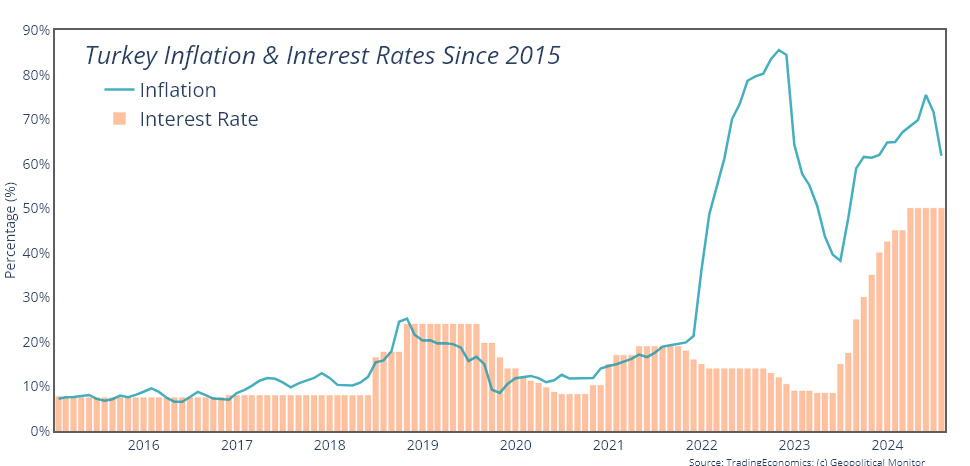
Turkey is facing escalating economic challenges, with inflation rising sharply to 31.53% last month, exacerbating the hardships of citizens amid ongoing war impacts. The depreciation of the Turkish lira further complicates living conditions.
Inflation is a key indicator reflecting the economic situation in the country, directly affecting citizens' purchasing power. As prices soar, Turks find themselves under increasing financial pressure, negatively impacting their daily lives.
Details of the Event
In a recent report, economic sources indicated that inflation in Turkey has seen a significant increase, rising from 30.5% to 31.53% in just one month. This increase reflects the economic pressures resulting from regional and international crises, in addition to the ongoing effects of war in the region.
These figures have raised significant concern among citizens, who are struggling to meet their basic needs. Many experts have noted that rising prices encompass all sectors, from food items to essential services, intensifying the economic crisis.
Background & Context
Historically, Turkey has experienced recurring economic fluctuations, but the current situation is considered one of the most challenging. The ongoing war in the region, alongside political crises, has contributed to the worsening economic situation. Additionally, the repercussions of the COVID-19 pandemic have increased pressures on the Turkish economy, leading to a decline in growth and rising unemployment rates.
The Turkish lira is also a significant factor influencing the economic situation, having notably depreciated against foreign currencies. This decline increases the cost of imports, contributing to a general rise in prices.
Impact & Consequences
The repercussions of rising inflation extend beyond the Turkish economy, affecting social and political stability. As economic pressures mount, protests and public demands may escalate, potentially destabilizing the country.
Moreover, the deteriorating economic situation could impact Turkey's foreign relations, as the government may find itself under greater pressure from the international community to address economic and social crises. This situation could also affect foreign investments in the country.
Regional Significance
Turkey is a key player in the Arab region, and economic events within its borders influence many neighboring countries. With rising inflation and economic crises, trade and economic relations between Turkey and Arab nations may be affected.
Furthermore, the deteriorating economic situation in Turkey may lead to increased emigration from the country, creating new challenges for neighboring nations that receive refugees.
In conclusion, Turks face significant economic challenges due to rising inflation and the depreciation of the lira, necessitating an effective government response to mitigate the impacts of these crises on citizens.