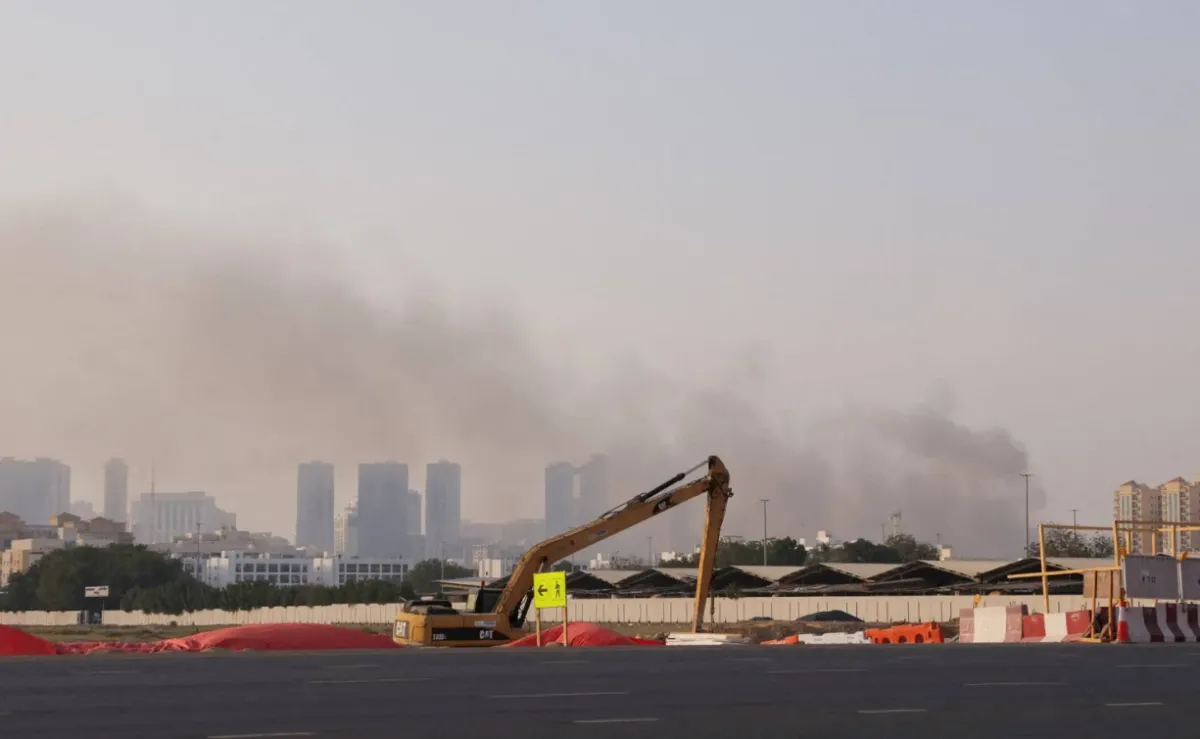
The UAE Ministry of Defense announced on Tuesday that the country's air defense systems are actively intercepting missile and drone attacks originating from Iran. The ministry confirmed that the sounds heard in various regions of the country were due to operations aimed at intercepting ballistic missiles and drones.
In an official statement, the ministry clarified that the UAE's air defenses are currently "dealing with missile and drone attacks," emphasizing the readiness of defensive systems to counter any threats amid rising regional tensions.
Details of the Incident
The Dubai Media Office reported that four individuals sustained minor injuries due to debris falling on homes in a residential area south of the city. Authorities confirmed that they are addressing the incident caused by falling debris, which resulted in damage to homes and injuries to individuals of Asian nationality.
The media office also stated via the platform "X" that "relevant authorities are handling an incident resulting from debris falling on several residential homes," leading to material damages and injuries.
Background & Context
These events come at a sensitive time marked by notable military escalation in the region. On the same day, Saudi air defenses thwarted a series of attacks targeting the Riyadh area and the Eastern Province, where ballistic missiles and drones were launched. The Saudi Civil Defense announced that two minor injuries were recorded due to debris from interceptions in Al-Kharj, alongside limited material damages.
In a sequence of events, the official spokesperson for the Saudi Ministry of Defense stated that four ballistic missiles launched toward the Riyadh area were intercepted and destroyed, in addition to intercepting and destroying three other missiles, bringing the total number of intercepted missiles to seven. Ten drones were also countered in the past hours.
Impact & Consequences
These developments indicate an increase in tensions between Iran and Gulf states, as missile and drone attacks pose a direct threat to regional security. These aggressions have led to military mobilization in the countries of the region, increasing the likelihood of escalating conflict.
At the same time, this escalation reflects concerns about its impact on international navigation freedom and energy supply security, which could negatively affect the global economy. The region has witnessed a recurrence of Iranian attacks on Gulf states in recent years, raising alarms about the stability of the area.
Regional Significance
These events necessitate Arab countries to enhance security and military cooperation to confront common threats. Saudi Crown Prince Mohammed bin Salman, Jordanian King Abdullah II, and Qatari Emir Sheikh Tamim bin Hamad held a trilateral meeting in Jeddah to discuss the latest developments in regional situations and the implications of military escalation.
During the meeting, the importance of joint coordination to enhance the security and stability of the region was emphasized, especially in light of the repeated hostile Iranian attacks. This cooperation is considered a significant step in addressing the security challenges faced by Arab countries.
In conclusion, the situation in the region remains under observation, as the current conditions require a swift and effective response from the concerned countries to protect their security and stability.