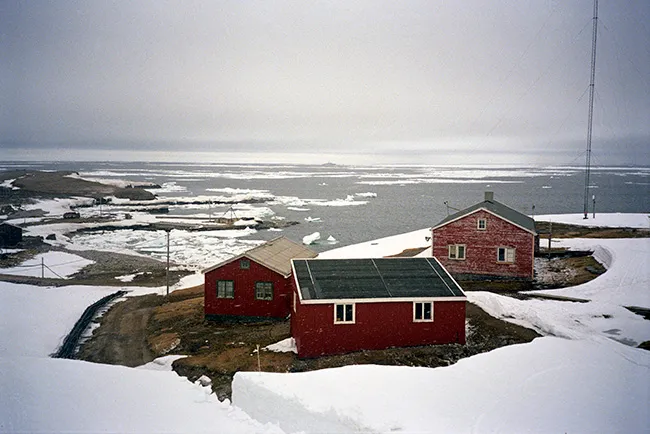
The United Arab Emirates has officially joined the Svalbard Treaty under Federal Decree No. 125 of 2025. This move aims to enhance the UAE's role in polar science and international cooperation, reflecting the nation's commitment to safeguarding some of the world's most climate-sensitive regions.
The Svalbard Treaty, signed in 1920, aims to regulate economic and scientific activities in the Norwegian archipelago of Svalbard, which boasts a unique environment. The UAE's accession to this treaty demonstrates the country's ambitious vision to foster international collaboration in scientific research and environmental protection.
Details of the Announcement
Through this initiative, the UAE seeks to strengthen its presence on the international stage as a leading nation in scientific research, particularly concerning climate change issues. This decision follows a series of initiatives launched by the UAE in recent years aimed at promoting sustainability and environmental protection.
The Svalbard Treaty is one of the few international agreements focusing on polar regions, allowing member states access to natural resources in the area, provided it is done in an environmentally sustainable manner. The UAE's membership in this treaty opens new avenues for collaboration with other countries in scientific research.
Background & Context
Historically, polar regions have attracted the attention of major nations due to their natural wealth and rich resources. With the increasing impacts of climate change, it has become essential to enhance international cooperation to protect these areas. The UAE's accession to the Svalbard Treaty comes at a time when concerns about climate change's effects on the polar environment are growing.
The UAE is recognized as a leader in innovation and technology, demonstrating a clear commitment to addressing environmental challenges. Its membership in the Svalbard Treaty reflects its strategy to enhance international cooperation in the fields of science and technology.
Impact & Consequences
The UAE's joining the Svalbard Treaty is expected to have positive effects on international cooperation in scientific research. This step will provide the country with opportunities to participate in international research projects, enhancing its position as a major supporter of science and innovation.
Moreover, this move may encourage other nations to join the treaty, bolstering global efforts to protect the polar environment. The UAE could also contribute to developing new strategies to address the environmental challenges facing the world.
Regional Significance
At the regional level, the UAE's accession to the Svalbard Treaty could have positive implications for other Arab nations. This step may encourage Arab countries to enhance their cooperation in scientific research and environmental protection, contributing to sustainable development in the region.
This initiative also reflects the UAE's commitment to its responsibilities regarding global issues, reinforcing its position as a key supporter of international efforts to combat climate change.
In conclusion, the UAE's accession to the Svalbard Treaty represents a strategic step that reflects the country's commitment to environmental protection and enhancing international cooperation in science. This move is not merely about joining a treaty; it is a reaffirmation of the UAE's ambitious vision in addressing global environmental challenges.