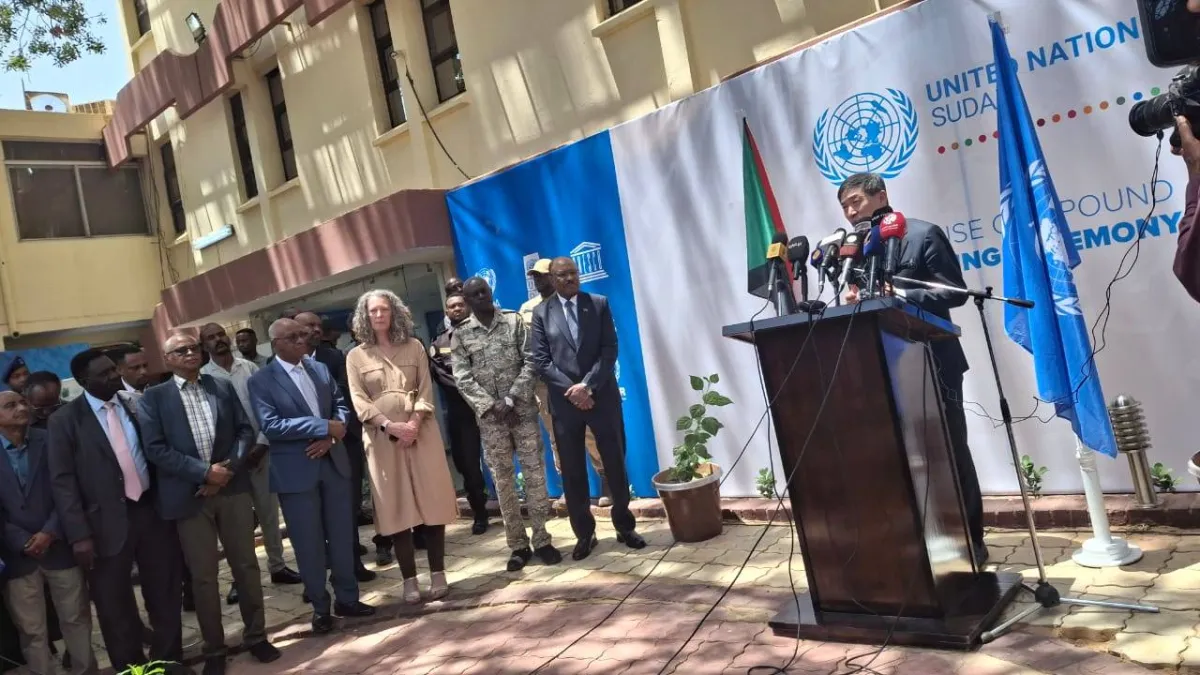
The United Nations announced on Thursday its official return to work from the Sudanese capital Khartoum, after three years of ongoing conflict between the Sudanese army and the Rapid Support Forces. Humanitarian Coordinator Denise Brown confirmed that this step represents a significant achievement that allows UN agencies and organizations to access areas that were previously hard to reach.
In a press conference held at the UN headquarters in Khartoum, Brown explained that the international organization continues to support the state and individuals in their efforts to end the conflict and rebuild Sudan. She noted that the return to work from Khartoum reflects the UN's commitment to helping the Sudanese people overcome the humanitarian and economic challenges they face.
Event Details
Following the outbreak of conflict in April 2023, the UN Office for the Coordination of Humanitarian Affairs relocated to the city of Port Sudan, which was considered the temporary capital of the country. With the UN's return to Khartoum, officials hope to strengthen partnerships with the government and local communities, contributing to enhancing stability and development in the country.
In this context, Haoliang Xu, Assistant Administrator of the United Nations Development Programme, confirmed that the return of UN agencies to Khartoum aims to enhance coordination between international and local efforts. Xu reiterated the UN's commitment to continue working with its partners to support citizens' return to normal life and enhance recovery opportunities in the country.
Background & Context
Historically, Sudan has witnessed multiple conflicts that have led to the deterioration of humanitarian and economic conditions. The recent conflict between the army and the Rapid Support Forces is part of a long-standing struggle for power and influence in the country. Since 2019, when former President Omar al-Bashir was ousted, Sudan has experienced significant political transformations, but the ongoing conflict has hindered democratic transition efforts.
The UN's return to Khartoum is seen as a positive step in the context of international efforts to support peace and stability in Sudan. The Sudanese government has expressed its readiness to cooperate with the UN in this regard, with Minister of Foreign Affairs and International Cooperation Muhyiddin Salim stating that this return represents an important message to international partners about Sudan's commitment to peace.
Impact & Consequences
The UN expects that its return to Khartoum will contribute to improving humanitarian conditions, as humanitarian organizations can now better access affected communities. This step may also enhance cooperation opportunities between the Sudanese government and the international community, potentially leading to greater support for reconstruction and development efforts.
However, the greatest challenge remains how to achieve stability in the country amid the ongoing conflict. The Sudanese Foreign Minister emphasized the need to work with the UN through initiatives aimed at stopping the war and restoring peace, stressing the rejection of any truce that might bring the Rapid Support Forces back into the picture.
Regional Significance
The UN's return to Khartoum serves as an indicator of the potential for achieving stability in a region plagued by conflicts. The success of these efforts could positively impact neighboring countries, as it may contribute to enhancing regional cooperation to address common challenges.
At the same time, Arab countries and the international community must remain vigilant regarding developments in Sudan, as any deterioration in conditions could negatively affect regional security. Supporting peace efforts in Sudan is part of a collective responsibility that requires the concerted efforts of both international and local stakeholders.
In conclusion, the UN's return to Khartoum represents an important step towards rebuilding Sudan, but challenges remain. Continuous cooperation among all parties is required to achieve lasting peace and stability.