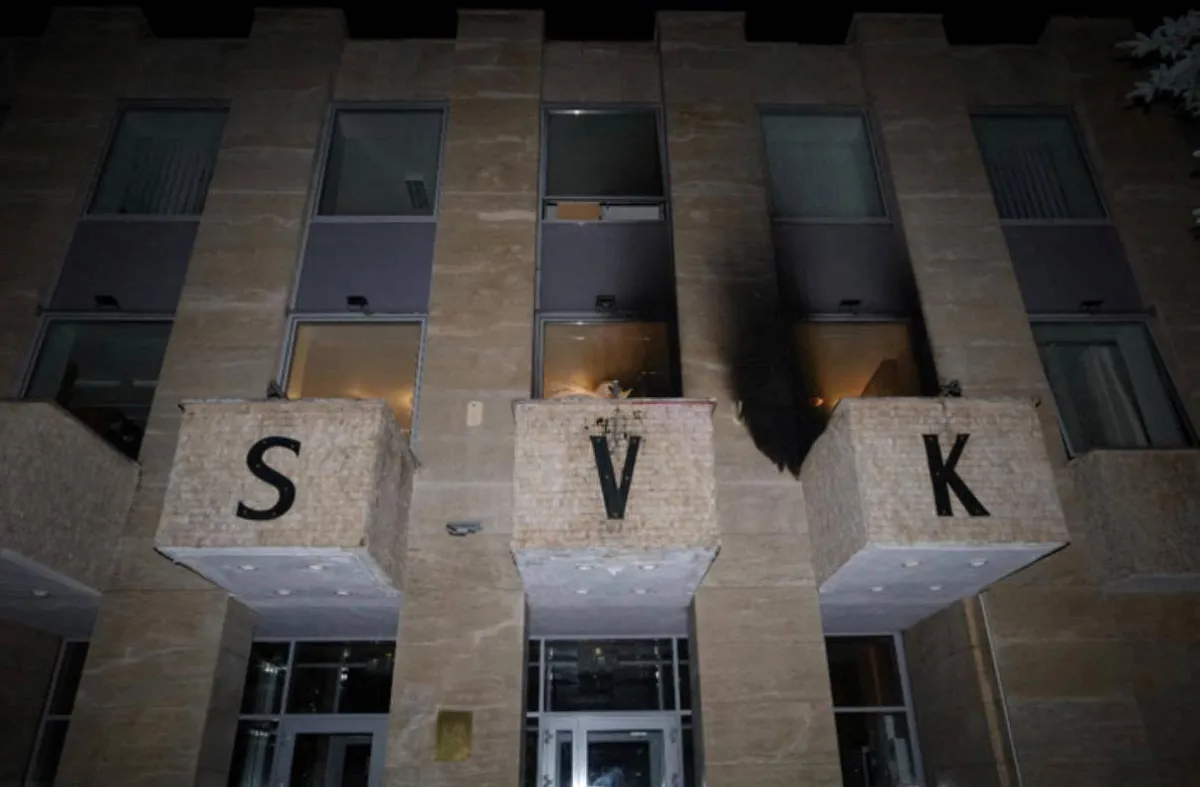
The Czech police reported on Friday that an unknown attacker threw several Molotov cocktails at a Russian cultural center in the capital, Prague, prompting swift reactions from local authorities and the Russian embassy.
The incident took place late Thursday evening, and although the building did not ignite, images circulated showed a shattered window and smoke rising from two other windows. According to the Associated Press, investigations are underway to identify the attacker and their motives.
Details of the Incident
The cultural center, known as the Russian House, is funded by the Russian government but does not enjoy diplomatic status. The center organizes various cultural and educational programs, including Russian language courses. In a statement, Igor Gerinko, the director of the center, confirmed that three of the six Molotov cocktails thrown did not explode, raising concerns about the safety of Russian institutions in the country.
Maria Zakharova, spokesperson for the Russian Foreign Ministry, described the attack as a "barbaric act," calling on Czech authorities to enhance security for Russian institutions and their staff. Meanwhile, Czech Interior Minister Lubomir Metnar deemed the attack "unacceptable," reflecting the increasing tensions between Russia and European countries.
Background & Context
This incident comes at a time of escalating tensions between Russia and the West, particularly following recent events in Ukraine. Several European countries, including the Czech Republic, have witnessed protests against Russian policies, which may impact relations between the two sides. Attacks on cultural centers are seen as indicators of rising violence and political tensions in the region.
Historically, Russian cultural centers in Europe have been targets of criticism, as they are viewed as tools for spreading Russian influence. This attack may exacerbate concerns regarding the safety of these centers and increase pressure on European governments to address security threats.
Impact & Consequences
The attack on the Russian cultural center in Prague could lead to significant political and security repercussions. Russia may demand enhanced protection for its institutions abroad, potentially increasing tensions between Moscow and European countries. Additionally, this incident could affect bilateral relations between the Czech Republic and Russia, possibly leading to calls for further restrictions on Russian cultural activities in the country.
Moreover, this attack could encourage a rise in violent acts against Russian institutions in other countries, threatening stability in the region. At the same time, it may increase pressure on European governments to respond firmly to such acts, potentially leading to heightened security measures.
Regional Significance
Although the incident occurred in Europe, its implications may extend to the Arab region. The tensions between Russia and the West could influence international policies related to the Middle East, especially amid ongoing conflicts in Syria and Libya. Additionally, the rise in violence in Europe may reflect on regional security, prompting Arab nations to monitor the situation closely.
In conclusion, this attack serves as a testament to the escalating political and security tensions in the world, necessitating that countries take effective steps to ensure security and stability within their communities.