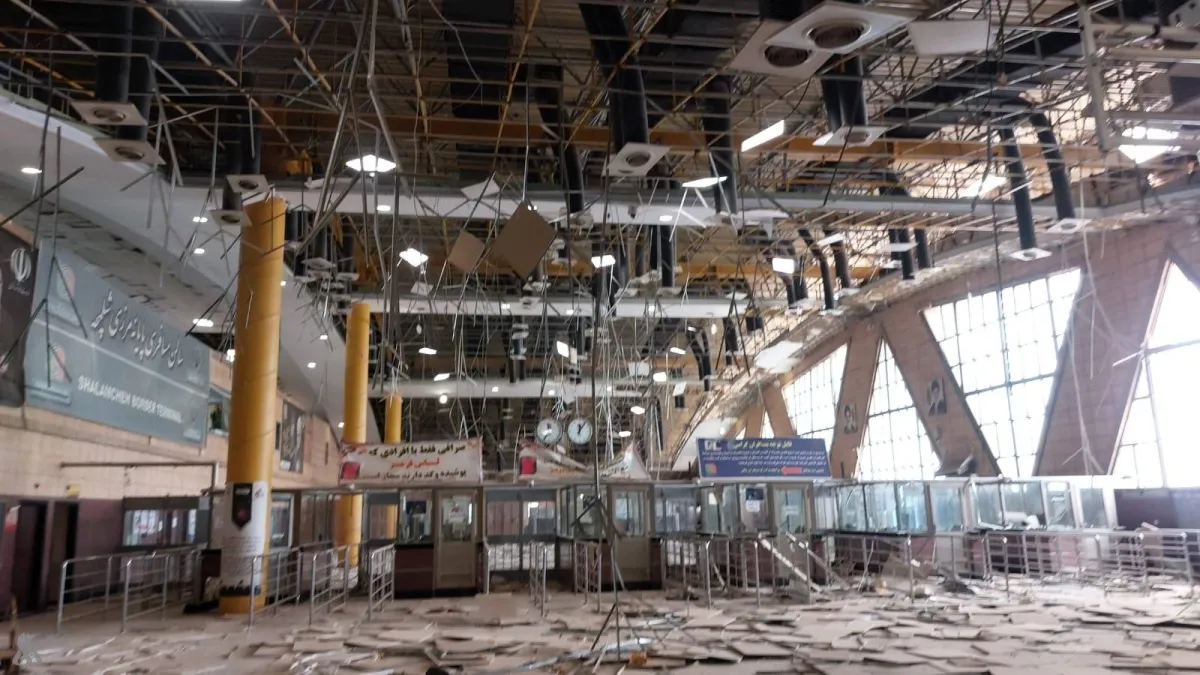
On Saturday, the Shalamcheh border crossing with Iran was targeted by a U.S. airstrike, resulting in the death of one Iraqi and injuries to five other travelers. This attack led to the suspension of trade and travel through the crossing, which is considered one of the most important points of commercial exchange between Iraq and Iran.
The Shalamcheh crossing is located east of Basra province, approximately 30 kilometers from the city center, and sees the passage of more than 300 trucks daily for transporting goods. The airstrike, which targeted the passenger hall, raised significant concerns about its implications for trade relations between the two countries.
Details of the Incident
Following the airstrike, the head of the border crossings authority, General Omar Al-Waeli, announced the suspension of trade and passenger movement at the crossing. Al-Waeli informed the Iraqi News Agency that the attack resulted in the death of one Iraqi and injuries to five travelers, who were transferred to a hospital in Iran. He also noted that this attack may aim to sever crossings between Iraq and Iran.
Media sources reported that the attack coincided with the crossing of logistical support convoys into the Iranian side, complicating the situation in the region further. At the same time, there were reports of a similar bombing targeting the Mehran crossing on the border with Wasit province, but media sources denied that.
Context and Background
These attacks come as part of a continuing U.S. escalation against Iraqi sites, as U.S. officials seek to isolate Iraq from Iran. Political analyst Falah Al-Mashal considered the goal of these strikes to be preventing aid from reaching Iraq and disrupting the flow of goods between the two countries.
In the same context, oil facilities in Basra were targeted by drone strikes, which are believed to be carried out by Iranian-backed factions, raising fears of escalating security situations in the region. Some oil companies, particularly American ones, have postponed their operations in Iraq due to these threats.
Impact and Consequences
These attacks underscore the rising tensions between the United States and Iran, as Washington seeks to undermine Iranian influence in Iraq. This escalation could exacerbate humanitarian and economic conditions in Iraq, which heavily relies on trade with Iran.
Moreover, these events may lead to an increase in the intensity of conflict in the region, as armed factions in Iraq are expected to take retaliatory actions, further complicating the security landscape in the country.
Regional Significance
These developments are indicative of rising tensions in the Middle East, where neighboring countries are directly affected. These attacks could increase pressure on Arab governments to address the repercussions of the conflict between the United States and Iran.
Furthermore, the continuation of these attacks may impact regional security, necessitating urgent diplomatic moves by Arab states to prevent the situation from escalating in the region.
In conclusion, the situations in Iraq and Iran remain under observation, with expectations that tensions will continue to rise, prompting an immediate response from the international community to protect civilians and ensure regional stability.