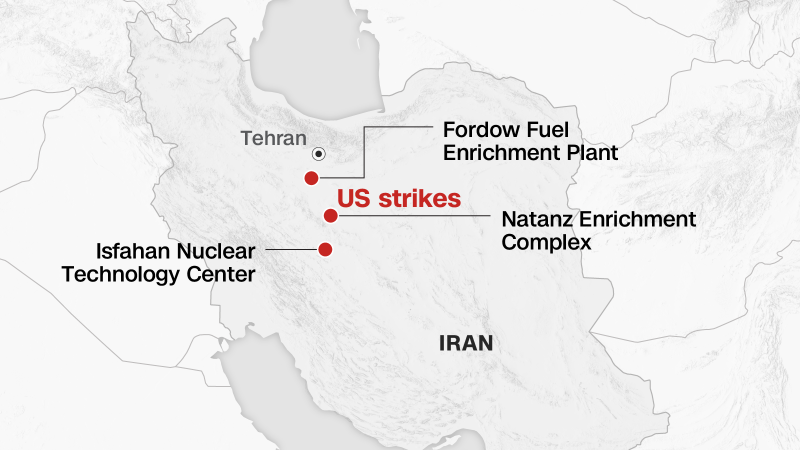
U.S. and Israeli airstrikes were launched on several sites in Iran on Thursday, with the most significant target being a vital bridge linking the Iranian capital Tehran to the city of Karaj, leading to the death of two people. The strikes occurred in two phases, with the second phase targeting the bridge while rescue teams were assisting victims from the first strike.
In a related development, Iranian media reported a fire near Mashhad Airport in the northeast of the country due to a fuel tank being hit by a projectile. The office of the Governor of Khorasan Razavi confirmed that no injuries were reported and that firefighting operations are ongoing.
Details of the Incident
The details surrounding the airstrikes indicate that the first attack targeted the bridge, which is considered a vital artery for transportation between Tehran and Karaj, reflecting an escalation in military operations between Iran and both the United States and Israel. This attack provoked angry reactions from the Iranian government, with the Iranian Foreign Ministry stating that the attack constitutes a war crime.
The Iranian Foreign Ministry also condemned the attack on the Pasteur Institute for Research and Public Health in Tehran, describing it as a "brutal assault on fundamental human values." The ministry's spokesperson, Ismail Baqaei, noted that this attack is a clear war crime in the context of the illegal war being waged by the United States and Israel against Iran.
Background & Context
These airstrikes come at a sensitive time, as relations between Iran and the United States have significantly escalated over the past few months, particularly after Israel and the United States began launching attacks on Iranian sites, resulting in thousands of casualties. Iran has responded to these attacks by launching missiles and drones towards Israeli targets, in addition to targeting American sites and interests in Arab countries.
This military escalation reflects the increasing tensions in the region, where fears of a broader conflict that could affect the stability of neighboring countries are rising. The reciprocal attacks between the two sides illustrate a state of instability that the region has been suffering from for years.
Impact & Consequences
The potential consequences of these airstrikes could be severe, as they may lead to further escalation in the conflict between Iran and both the United States and Israel. Attacks on vital facilities such as bridges and scientific institutes could increase internal tensions in Iran, which may negatively impact the stability of the regime.
Moreover, these attacks could provoke reactions from Iran's allies in the region, potentially contributing to heightened conflict. The region may witness more military operations, increasing the risk of civilian casualties.
Regional Significance
The impact of these events extends to neighboring Arab countries, where the escalating tensions between Iran and the United States could destabilize the region. Arab countries with American interests may be vulnerable to retaliatory attacks from Iran, increasing anxiety among governments and populations.
Additionally, the escalation of the conflict could affect oil prices and financial markets, as any military escalation in the region may raise risks to global oil supplies.
In conclusion, this military escalation between Iran, the United States, and Israel represents a turning point that could lead to serious repercussions for security and stability in the region, necessitating international intervention to mitigate the escalation and ensure the protection of civilians.