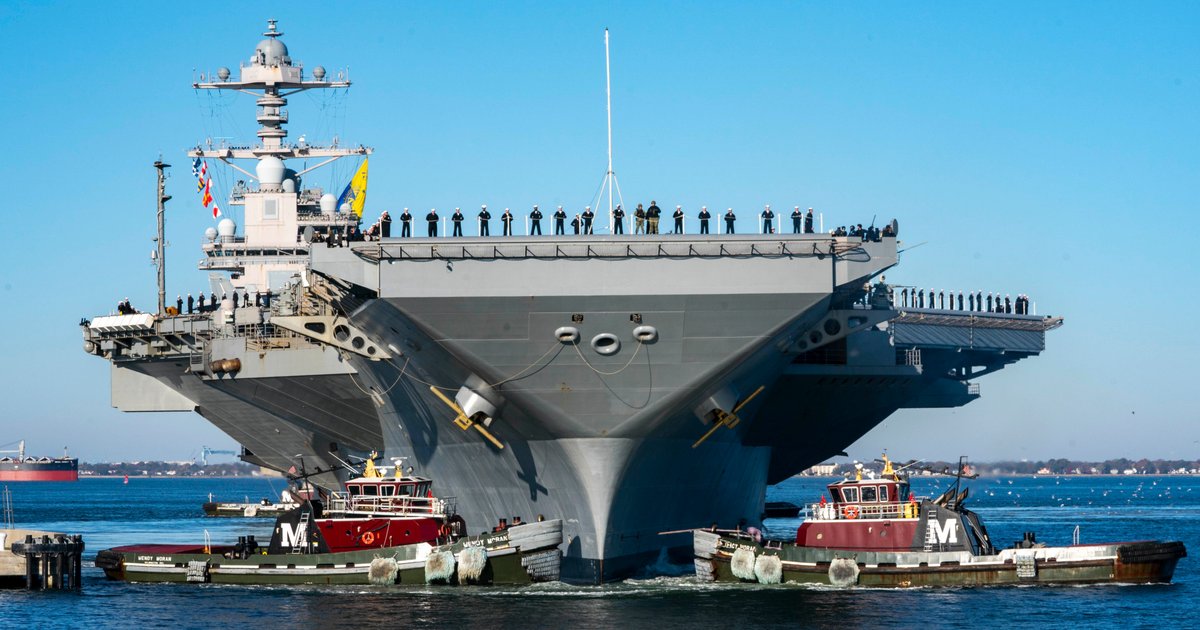
The U.S. Navy has announced the restoration of the Gerald Ford aircraft carrier's combat readiness after completing the necessary repairs. This announcement comes at a critical time as the United States seeks to bolster its military presence in various regions around the world, particularly amid rising tensions with certain nations.
The Gerald Ford aircraft carrier, considered one of the most advanced warships in the U.S. fleet, represents the pinnacle of modern military technology. Repairs were conducted at a shipyard, where operational systems and technologies used in the aircraft were upgraded, enhancing its combat efficiency.
Details of the Event
The Gerald Ford is one of the largest aircraft carriers in the world, known for its capacity to carry a significant number of warplanes. Following the repairs, all systems were tested to ensure their readiness for operation in combat environments. The tests showed remarkable success, reflecting the technological advancements achieved by the U.S. Navy.
These repairs are part of a comprehensive plan to modernize the U.S. fleet, as the Navy aims to enhance its ability to carry out military missions in various regions, including the Pacific and the Mediterranean. Officials noted that this step reflects the United States' commitment to maintaining its military superiority.
Context and Background
Historically, aircraft carriers have been a fundamental element of U.S. Navy strategy. Since World War II, these ships have played a crucial role in military operations, providing a launch platform for warplanes and contributing to the execution of strategic missions. With increasing geopolitical tensions, it has become essential to update these vessels to ensure their capability to meet new challenges.
In recent years, international relations have undergone significant changes, prompting the United States to reassess its military strategies. The Gerald Ford is part of this strategy, symbolizing U.S. military power in the face of growing challenges.
Implications and Effects
The restoration of the Gerald Ford's combat readiness could significantly impact the military balance in the regions where it operates. This step is expected to enhance the United States' ability to respond quickly to any potential threats, increasing pressure on competing nations.
Moreover, this move may lead to heightened tensions in hot spots, as some countries may feel threatened by the increasing U.S. military presence. Consequently, these dynamics could escalate conflicts or lead to new diplomatic efforts to ease tensions.
Impact on the Arab Region
For the Arab region, the enhancement of U.S. military capabilities may affect regional stability. Some Arab nations may express concern over the increased U.S. military presence, especially amid ongoing tensions in countries like Iraq and Syria.
However, some may view the presence of the Gerald Ford aircraft carrier in the region as a contribution to enhancing regional security, particularly in the face of common threats such as terrorism. Thus, the balance between military power and diplomatic efforts will be crucial in the upcoming phase.
In conclusion, the restoration of the Gerald Ford's combat readiness represents an important step in enhancing U.S. military capabilities, raising questions about its impact on the international and regional arenas.