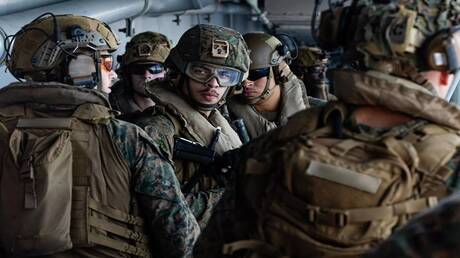
The US Central Command has announced the arrival of the amphibious ship USS Tripoli in the Middle East, loaded with 3,500 sailors and Marines. This military reinforcement comes at a time when the region is experiencing increasing tensions, raising concerns about security conditions in Middle Eastern countries.
The USS Tripoli is one of the prominent US warships, playing a vital role in military operations and maritime transport. With the arrival of this ship, fears of a potential military escalation are growing, especially amid the multiple crises affecting the region.
Details of the Event
This move is part of the United States' strategy to enhance its military presence in the Middle East, aiming to secure its interests and those of its allies amid rising tensions. The Tripoli, classified as an amphibious assault ship, is capable of transporting troops and military equipment quickly and efficiently, making it a strategic asset in any potential military operations.
The ship's missions include supporting military operations, providing humanitarian assistance, and enhancing cooperation with local forces. This deployment comes at a sensitive time, as tensions between the United States and Iran are escalating, as well as in other areas such as Iraq and Syria.
Background & Context
Historically, the Middle East has witnessed multiple US military interventions, which have had profound effects on the political and security situations. Since the beginning of the millennium, the United States has maintained a strong presence in the region, leading to varied reactions from Arab and Islamic countries.
The USS Tripoli is part of the US Navy fleet aimed at maintaining stability in the region. As threats from armed groups increase, these ships remain a fundamental pillar in the US defense strategy.
Impact & Consequences
The arrival of the Tripoli may escalate tensions between the United States and Iran, as Tehran views such reinforcements as a direct threat to its national security. Additionally, the presence of additional US forces could bolster the position of armed groups opposing the US presence in the region, increasing the likelihood of military escalation.
Moreover, this development may affect relations between Arab countries and the United States, as perspectives on the US military presence in the region vary. Some countries see this presence as necessary to ensure security, while others consider it an unwarranted intervention in their internal affairs.
Regional Significance
The arrival of the USS Tripoli comes at a critical time, as many Arab countries are suffering from political and economic crises. This military reinforcement may increase pressures on Arab governments, which are already facing internal and external challenges.
This development may also impact peace efforts in the region, as many parties seek to achieve lasting stability. Under these circumstances, the question remains about how this military presence will affect the future of relations between Arab countries and the United States.
In conclusion, the arrival of the USS Tripoli signifies an escalation of tensions in the Middle East and reflects the ongoing challenges facing the region. As crises continue, the security situation in the Middle East remains a point of interest and monitoring by the international community.