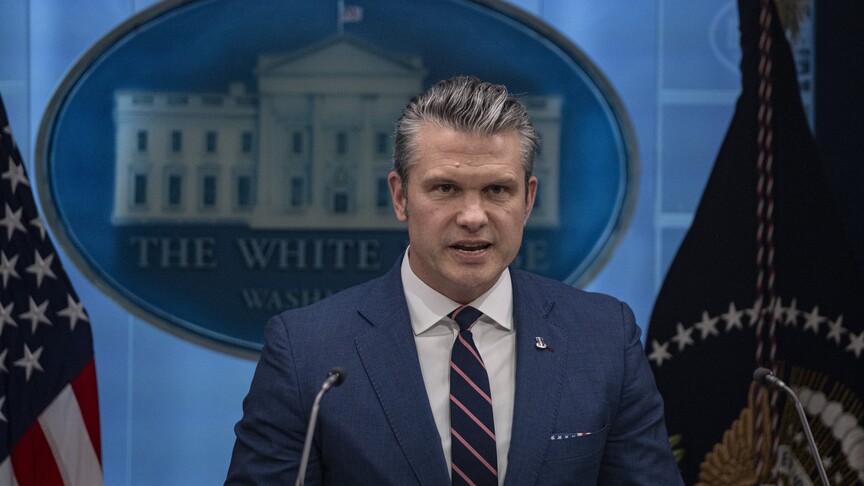
In a new development highlighting the increasing tensions in U.S.-Iranian relations, officials in the U.S. administration have confirmed that Peter Hegseth's assessments regarding the conflict with Iran are inaccurate and could mislead public opinion. These statements come at a time when concerns are rising about potential escalation in the region.
One official noted that Hegseth "is not speaking the truth to the president," raising questions about how this information might influence the political and military decisions made by the U.S. administration. This situation reflects a division within the White House regarding how to handle Iranian threats.
Details of the Incident
These remarks come at a critical juncture, as tensions between the U.S. and Iran are escalating, particularly following a series of military incidents in the region. Hegseth, who is considered a strong supporter of President Donald Trump's policies, has provided optimistic assessments about the U.S. ability to confront Iran, which has alarmed some officials who believe this perspective may be misleading.
There are growing fears that these assessments could lead to ill-considered decisions, especially in light of the tense conditions in the Middle East. U.S. officials are calling for the need to provide accurate and objective information to the president to ensure informed decision-making.
Background & Context
Historically, U.S.-Iranian relations have been fraught with tensions, beginning with the Iranian Revolution in 1979, which led to the severance of diplomatic ties between the two countries. Since then, the region has witnessed numerous crises, including military conflicts and economic sanctions imposed by the U.S. on Iran.
In recent years, these tensions have notably escalated, particularly with the U.S. withdrawal from the Iranian nuclear deal in 2018. This withdrawal resulted in the re-imposition of stringent economic sanctions on Iran, significantly impacting the Iranian economy and intensifying the conflict in the region.
Impact & Consequences
The overly optimistic assessments provided by Hegseth could lead to uncalculated military decisions, increasing the likelihood of military escalation in the region. With regional powers such as Israel and Saudi Arabia supporting a policy of pressure on Iran, any U.S. action could provoke strong reactions from the Iranian side, potentially dragging the region into a broader conflict.
Moreover, providing misleading information to the public could affect popular support for U.S. policies toward Iran, exacerbating internal divisions within the United States. This could negatively impact the administration's ability to implement its policies effectively.
Regional Significance
Arab countries, especially those neighboring Iran, such as Iraq, Saudi Arabia, and the UAE, remain on high alert regarding any potential escalation. The tensions between the U.S. and Iran could directly affect security and stability in these countries, prompting them to take precautionary measures to address any potential repercussions.
Ultimately, the current situation in U.S.-Iranian relations requires greater accuracy and objectivity in information dissemination to ensure informed decisions that contribute to stability in the region.