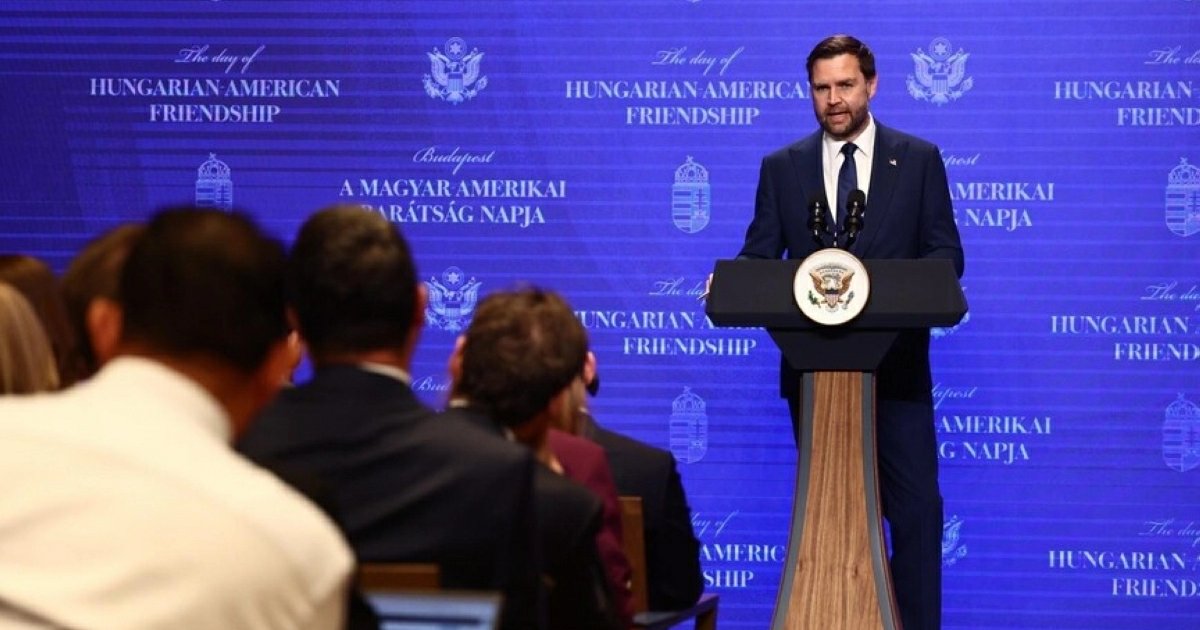
U.S. Vice President J.D. Vance recently asserted that the ongoing war with Iran will come to an end 'very soon,' emphasizing that the United States has largely accomplished its military objectives. This declaration was made during a joint press conference with Hungary's Prime Minister in the capital Budapest, where Vance explained that there are some additional steps that may be taken, but they are not fundamental.
Vance added that the United States has completed most of its military goals, but he pointed out the need for further work regarding Iran's ability to manufacture weapons. He confirmed that the primary military objectives have been met, paving the way for the possibility of ending the ongoing conflict.
Details of the Event
During the press conference, Vance clarified that the timeline set by former U.S. President Donald Trump remains in effect, requiring Iran to present a proposal by a specific deadline, or face potential escalation. He noted that Trump had warned that the United States might target Iranian power stations and bridges if Tehran does not reopen the Strait of Hormuz and reach an agreement by the specified deadline.
Vance also mentioned that recent developments, including reports concerning Kharq Island, do not indicate any change in the U.S. strategy towards Iran, reflecting the continuity of American policy in the region.
Background & Context
Historically, U.S.-Iranian relations have experienced increasing tensions since the Islamic Revolution in 1979, with economic sanctions and military threats escalating the conflict between the two nations. In recent years, tensions have further intensified following the U.S. withdrawal from the Iranian nuclear deal in 2018, leading to a series of military and economic escalations.
The Middle East is considered one of the most complex regions in the world, where American and Iranian interests intersect with other issues such as the Israeli-Palestinian conflict and the war in Syria. These dynamics make it challenging to predict the future course of events.
Impact & Consequences
The conclusion of the war with Iran could have significant implications for regional security, potentially leading to greater stability in the area or a new escalation of conflicts. This may also impact global oil prices, as the Strait of Hormuz is a vital point for oil transportation.
Moreover, this announcement could affect U.S. relations with its allies in the region, necessitating a reassessment of their security and military strategies. If Iran continues to develop its military capabilities, it could lead to renewed tensions.
Regional Significance
For Arab countries, the end of the war with Iran may open up new opportunities for regional cooperation, but at the same time, it could raise new concerns about Iranian influence in the region. Many Arab nations are looking to achieve greater stability in their relations with Iran, yet they remain cautious of any potential escalation.
Ultimately, the question remains about how these developments will affect regional security and the relationships between Arab states and Iran, necessitating close monitoring of upcoming events.