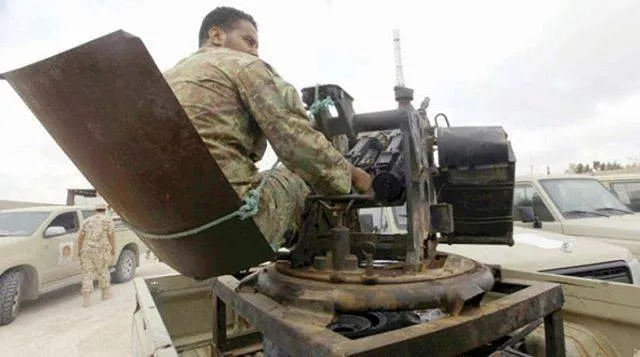
The specter of ISIS is raising increasing fears among Libyans, a decade after the fall of what was known as the group's emirate in the city of Sirte. This concern is driven by U.S. warnings indicating a quiet resurgence of ISIS activity in various regions of the country.
Despite the absence of clear field indicators of ISIS activity in Libya, the U.S. military command in Africa (AFRICOM) announced through its media platform, "African Defense Forum," that "the organization's strength is quietly increasing," benefiting from human trafficking networks and irregular migration routes.
Details of the Event
The U.S. warning has renewed discussions within Libyan circles about the potential for the group's return, attracting the attention of local media and shedding light on the possible risks of its covert activities. This comes amid a fragile security environment suffering from political and military division since 2011.
In an interview with "Asharq Al-Awsat," former fighters from the "Bunyan Marsous" operation, which defeated ISIS in Libya in 2016, confirmed that the threat from the group still exists. Abdul Hamid Khidr, a former infantry battalion commander, noted that concerns about the group's return are "logical," and the return of its elements to the country cannot be ruled out.
Background & Context
Ten years ago, the "Bunyan Marsous" forces, which included Libyan military and civilian personnel, with support from American airstrikes, succeeded in defeating ISIS in the coastal city of Sirte on December 6, 2016. This followed a military operation that began on May 5 of the same year, after the group seized control of the city and declared its "emirate" in January 2015.
On the other hand, Salem Krawad, a former fighter in "Bunyan Marsous," warned that the "relative stability" does not mean the disappearance of the group's threat, pointing out that the ongoing political division between eastern and western Libya may open the door for ISIS to reorganize.
Impact & Consequences
ISIS represents a concern for a segment of the Libyan elite, especially after Tunisian authorities announced the return of about 1,715 individuals who had previously joined the group. This prompted the "People's Voice" party to warn of security risks to Libya and the Maghreb region, calling on Libyan authorities to enhance monitoring of border crossings.
Libyan pages have also circulated a video showing ISIS elements inside training camps in neighboring countries such as Burkina Faso, Mali, and Niger, which increases concerns about the possibility of the group's return to Libya.
Regional Significance
The African Sahel region, which is just a stone's throw from Libya, is considered one of the most security-vulnerable areas and is witnessing a complex geopolitical struggle. The "Global Terrorism Index" has revealed that these countries have topped global deaths due to extremism for three consecutive years.
Under these circumstances, it is likely that increasing security pressures on extremist groups in Sahel countries may push ISIS elements to reposition and infiltrate again into Libyan territory.
In conclusion, fears of ISIS's return to Libya remain, necessitating heightened security vigilance and cooperation between local and international authorities to confront this growing threat.