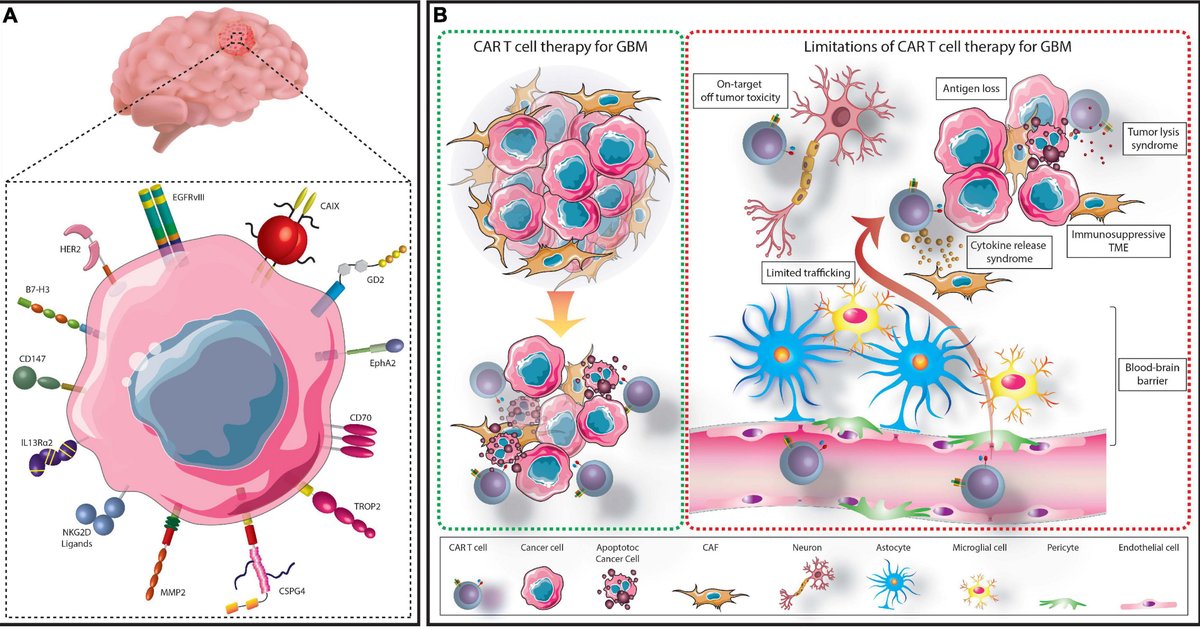
Recent medical research has announced the use of CAR-T cells as a new immune mechanism targeting glioblastoma, marking a significant step in treating this type of cancer. This technique enhances the immune system's ability to recognize and attack cancer cells.
CAR-T cells are a type of immunotherapy where the patient's immune cells are modified to more effectively target cancer cells. This treatment opens new avenues in addressing tumors that have been considered difficult to treat, such as glioblastoma.
Details of the Development
CAR-T cells are developed through a complex process that involves taking T cells from the patient's blood, genetically modifying them in the lab to recognize specific antigens present on the surface of cancer cells. These modified cells are then reinfused into the patient's body, where they begin to combat the tumor.
Initial studies indicate that this treatment has shown promising results in improving survival rates for patients suffering from glioblastoma, a type of brain tumor characterized by a high level of aggressiveness and difficulty in treatment.
Background & Context
Glioblastoma is one of the most common types of brain cancers and poses a significant challenge to scientists and doctors due to its aggressive nature and ability to spread rapidly. Over the years, many treatments have been developed, but most have not yielded satisfactory results.
Historically, traditional treatments such as surgery, radiation therapy, and chemotherapy were the available options, but they often proved ineffective in completely eradicating the tumor. Therefore, the introduction of CAR-T cells represents a major shift in this field.
Impact & Consequences
If CAR-T cells prove effective in clinical trials, they could lead to a radical change in how glioblastomas are treated. This advancement may encourage further research in the field of immunotherapy, potentially leading to the development of new treatments for other types of cancer.
Moreover, this technique may contribute to reducing treatment costs in the long run, as immunotherapies can be more effective and less expensive compared to traditional treatments.
Regional Significance
These developments in cancer treatment are particularly significant for the Arab region, where cancer incidence rates are rising. CAR-T cells could provide new hope for patients in Arab countries, where healthcare systems often lack advanced treatment options.
Many Arab nations are striving to enhance their capabilities in scientific research and medical development, which may facilitate the introduction of these modern techniques in the near future.
In conclusion, the use of CAR-T cells represents an important step towards a brighter future in cancer treatment, reflecting ongoing advancements in medical sciences. As research continues, this treatment could become a new standard in combating glioblastomas.