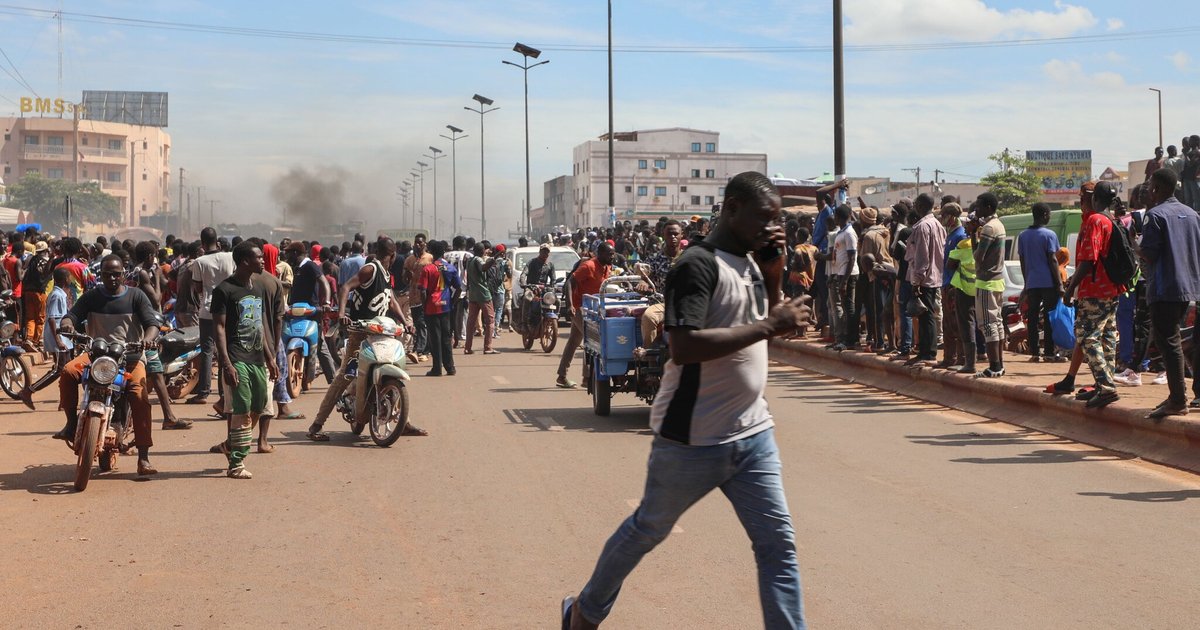
Mali has faced its most severe attack in years, shaking the capital Bamako and extending to strategic cities in the north and center. This attack was not merely a transient military operation; it was a coordinated assault that revealed the fragility of military power and evoked memories of the collapse scenarios the country faced in 2012.
Several French newspapers have agreed that the blow was painful, leading to the death of Defense Minister Sadio Kamara and injuring notable military figures such as General Modibo Kone. Additionally, the transitional president Assimi Goita has almost completely disappeared, indicating a significant field advance by the state's adversaries on multiple fronts.
Details of the Attack
Field data suggests that Goita was moved to a safe location under the protection of special forces, reflecting the extent of confusion within the authority. The magazine Jeune Afrique revealed from a Malian security source that Kamara was killed in a suicide bombing carried out by the group Jama'a Nusrat ul-Islam wa al-Muslimin, resulting in the death of all worshippers in the adjacent mosque except for the imam.
The newspaper Le Monde believes that the scale and timing of the attacks reveal a troubling trend in the security landscape of Mali, suggesting a well-coordinated effort among various armed groups.
Background & Context
The recent surge in violence in Mali can be traced back to the increasing tensions between armed groups and the military authority. The country has been grappling with instability since the coup in 2020, which has led to a power vacuum and emboldened various factions to challenge the government.
In 2012, Mali experienced a similar collapse, which resulted in the loss of control over northern territories to separatist and jihadist groups. The current situation raises fears of a repeat scenario, as the military government struggles to maintain order and security.
Impact & Consequences
The implications of this attack are significant, as it not only undermines the credibility of the military government but also raises concerns about the potential for increased violence and instability in the region. The death of a high-ranking official like Kamara may lead to a leadership crisis within the military ranks.
Moreover, the unprecedented cooperation among armed groups in Mali could signal a new phase of conflict, where these factions may unite against a common enemy, further complicating the security situation. The fall of the city of Kidal represents a major psychological blow to the regime, as it symbolizes the loss of control over key territories.
Regional Significance
The attack in Bamako has broader implications for regional security, as it could lead to a spillover of violence into neighboring countries. The international community is closely monitoring the situation, with concerns that instability in Mali may encourage extremist groups to exploit the chaos.
Countries in the region are urged to take preventive measures to avoid a similar fate, as the potential for a rise in violence could destabilize the entire Sahel region. The situation calls for urgent diplomatic efforts to restore stability and address the root causes of the conflict.
Closing Thoughts
This news highlights the radical transformations in the security and political landscape in Mali, reflecting the challenges faced by the military government amid escalating attacks. It also sheds light on new alliances among armed groups, which could significantly impact regional stability.