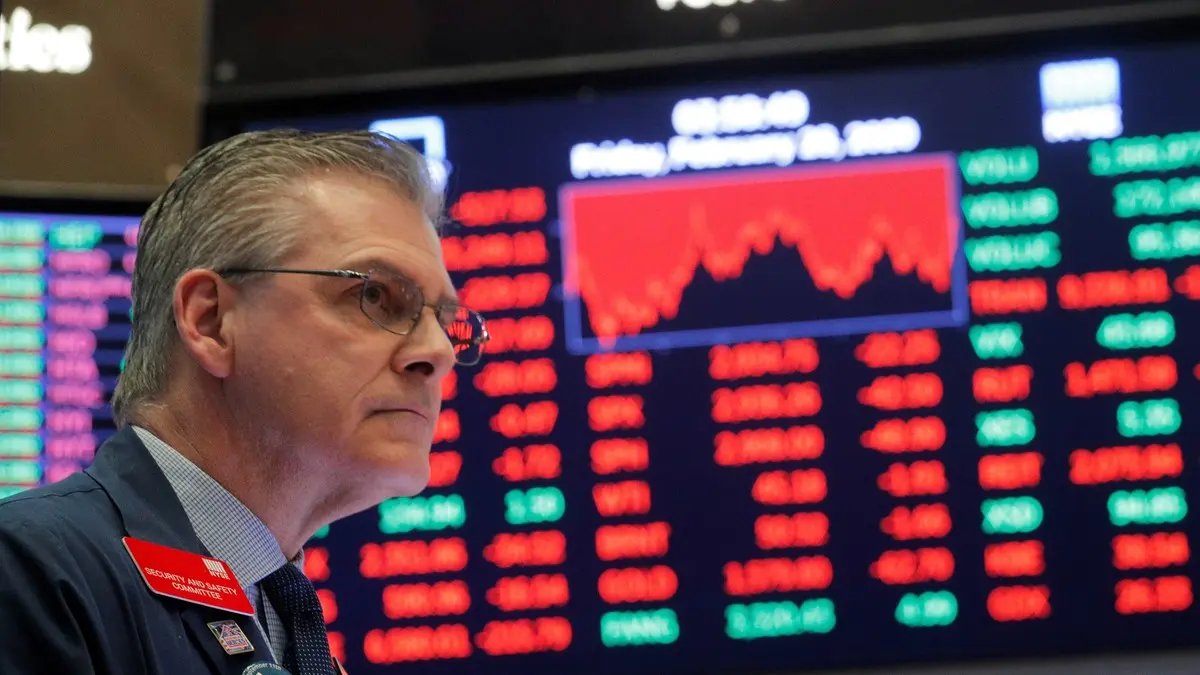
Wall Street has experienced a sharp decline, marking its worst drop since the Iran War, with the Nasdaq index falling by 10% from its highest level. This decrease occurs at a time when the global economy is facing major challenges, including persistent inflation and rising interest rates, negatively impacting investor confidence in financial markets.
In detail, the Dow Jones Industrial Average fell by 800 points, while the Standard & Poor's 500 also saw a significant decline. This downturn followed a series of economic data indicating a slowdown in growth, raising concerns about a potential recession. Additionally, statements from some officials at the U.S. Federal Reserve regarding the possibility of further interest rate hikes heightened anxiety in the markets.
Details of the Event
These declines on Wall Street signal a state of uncertainty prevailing in financial markets. Reports indicate that investors have begun to withdraw their investments from stocks, leading to increased pressure on prices. Meanwhile, major companies continue to announce their financial results, which have been mixed, further complicating the financial landscape.
Eyes are now on upcoming economic data, particularly those related to employment and inflation rates, as they are expected to play a significant role in guiding the Federal Reserve's decisions in the near future.
Background & Context
Historically, Wall Street has experienced significant fluctuations during periods of economic crises. The Iran War in the 1980s was one of those times that saw a sharp market decline. However, the current situation differs in many aspects, as investors grapple with a range of complex economic factors, including the impact of the COVID-19 pandemic on supply chains and prices.
Moreover, geopolitical tensions in various parts of the world, including the Middle East and Europe, also play a role in influencing the markets. These combined factors make it challenging for investors to make informed decisions.
Impact & Consequences
The significant drop on Wall Street could lead to widespread repercussions for both the U.S. and global economies. It may affect consumer and investor confidence, resulting in reduced spending and investment. Companies might also face difficulties in obtaining the necessary financing to expand their operations, potentially leading to a slowdown in economic growth.
Furthermore, the market downturn could increase pressure on governments to implement stimulus measures to support the economy. This could include tax cuts or increased government spending, which may raise public debt levels.
Regional Significance
The impact of these declines on Wall Street may extend to the Arab region, where many Arab countries rely on foreign investments. A downturn in U.S. markets could lead to reduced investment flows into the region, adversely affecting economic growth.
Additionally, rising interest rates in the United States may increase borrowing costs in Arab countries, impacting development and infrastructure projects. Therefore, monitoring developments on Wall Street has become essential for investors and decision-makers in the region.
In light of these circumstances, the key question remains: how will the markets respond to these challenges? Monitoring upcoming economic data will be crucial in determining future trends.