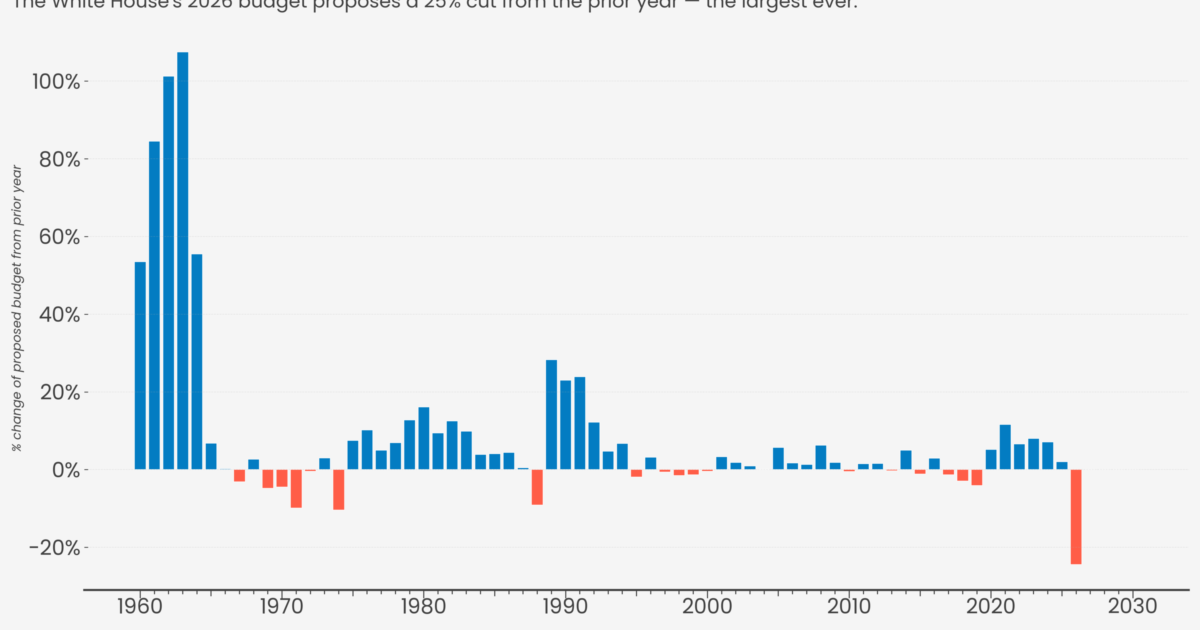
The White House has revealed a proposal to cut the budget of the American space agency NASA by $5.6 billion for the year 2027. The proposal includes a reduction of $3.4 billion for the agency's science division, representing 23% of that division's budget. This proposal comes at a time when NASA is planning to launch a series of new missions as part of its flagship lunar exploration program, raising questions about the impact of this cut on scientific research and innovation.
NASA is considered one of the leading space agencies in the world, playing a pivotal role in space exploration and the development of the necessary technology. As 2027 approaches, it appears that the current U.S. administration is seeking to reassess government spending priorities, which is reflected in the agency's budget. In this context, the proposed cut is part of broader efforts to achieve balance in the federal budget.
Details of the Proposal
The proposed budget includes significant cuts across several areas, with the reduction in the science division being the most impactful. This could directly affect current and future research projects, including studies related to Mars and the development of new technologies for space exploration. Notably, NASA had previously announced ambitious plans to send astronauts to the moon by 2024, which may be significantly affected by these cuts.
This proposal comes at a sensitive time, as NASA seeks to enhance its competitive capabilities in space, especially with the rapid advancements made by other space agencies such as the European Space Agency and the Chinese Space Agency. This cut is expected to slow down some projects aimed at boosting innovation in the space sector.
Background & Context
NASA was established in 1958 and has since become a symbol of scientific and technological advancement in the United States. Over the years, the agency has launched numerous successful missions, including the Apollo program that sent astronauts to the moon. However, the agency's federal budget has always been a topic of heated discussions, with varying opinions on the importance of investing funds in space exploration compared to domestic needs.
In recent years, NASA's budget has seen a notable increase, but the current proposal comes at a time when there is increasing pressure on the U.S. government to reduce the financial deficit. This proposal is part of a broader strategy aimed at reallocating financial resources in light of current economic challenges.
Impact & Consequences
The proposed cuts could lead to a reduction in the number of research projects that NASA can undertake, potentially negatively impacting innovation in the space sector. If these cuts are implemented, the agency may need to reassess its priorities, which could delay some critical missions such as Mars exploration or the development of new aerospace technologies.
Furthermore, these cuts may affect international collaboration in space, as many projects rely on partnerships with other space agencies. If NASA's budget is reduced, other countries may hesitate to collaborate on joint projects, hindering scientific progress on a global scale.
Regional Significance
In light of global trends towards space exploration, cuts to NASA's budget may have indirect effects on Arab countries. Many Arab nations, such as the United Arab Emirates, are striving to enhance their space programs, and reductions in the U.S. budget may impact cooperation between these countries and NASA.
Additionally, advancements in space can open new horizons for Arab nations in technology and innovation, making it essential for these countries to continue their investments in this sector. Amid global economic challenges, it may be crucial for Arab nations to seek new partnerships to enhance their capabilities in space exploration.