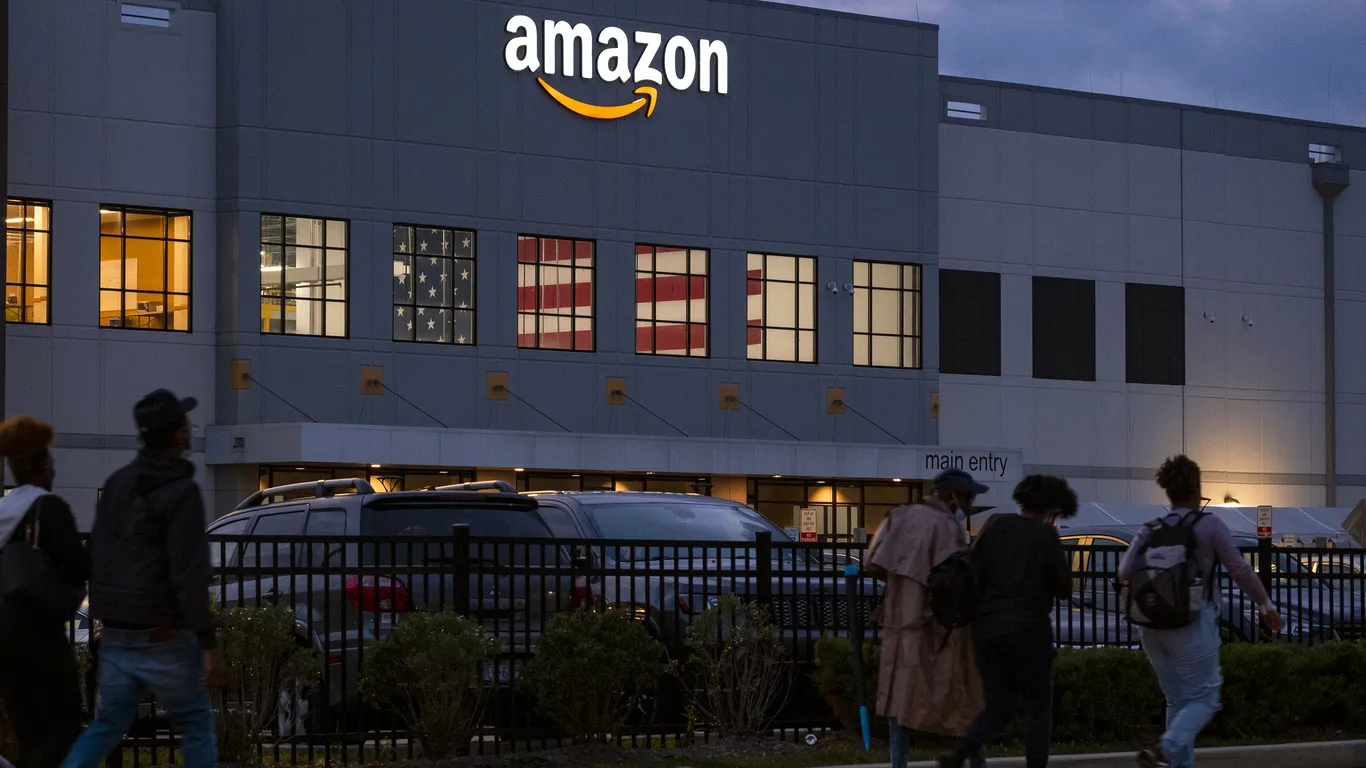
The National Labor Relations Board (NLRB) has issued a ruling requiring Amazon to negotiate with the labor union representing about 5,000 employees at its Staten Island warehouse. The ruling, announced on Wednesday, emphasizes the necessity of negotiating on issues related to wages, working conditions, and other significant matters.
The Amazon Labor Union was established in 2022 and has been actively seeking to negotiate with the company to improve working conditions. The union has garnered support from the International Brotherhood of Teamsters, strengthening its position in the upcoming negotiations.
Details of the Ruling
In its ruling, the NLRB confirmed that Amazon had engaged in unfair practices by refusing to recognize the union or negotiate with it. This decision has elicited mixed reactions, with labor unions considering it a historic victory for workers across the country.
Amazon, for its part, has contested the ruling, claiming that NLRB representatives improperly influenced the election results that led to the formation of the union. The company announced plans to appeal the decision, expressing confidence that the court will overturn the original certification.
Background & Context
This case is part of a broader movement in the United States aimed at enhancing workers' rights and improving working conditions. In recent years, the country has witnessed a surge in the number of labor unions striving to secure workers' rights across various sectors, including technology and retail.
The establishment of the Amazon Labor Union occurred amidst changing economic and social dynamics, as workers sought to improve wages and working conditions in light of the increasing pressures resulting from the COVID-19 pandemic. These circumstances have contributed to a heightened awareness of the importance of union organization.
Impact & Consequences
This ruling could have significant implications for the future of labor relations in the United States. If the Amazon Labor Union succeeds in achieving its goals, it may encourage more workers in various sectors to join unions and advocate for their rights.
Moreover, this decision could exert pressure on other major companies to adopt fairer policies towards their employees, potentially leading to changes in how labor relations are managed in the future.
Regional Significance
Although this event is taking place in the United States, it holds important implications for the Arab region. Many Arab countries face issues related to workers' rights and working conditions. The experience of the Amazon Labor Union could serve as an inspiration for Arab workers in their quest to improve their situations.
Workers' rights are a fundamental component of sustainable development, and enhancing these rights could lead to improved economic and social conditions in Arab countries.