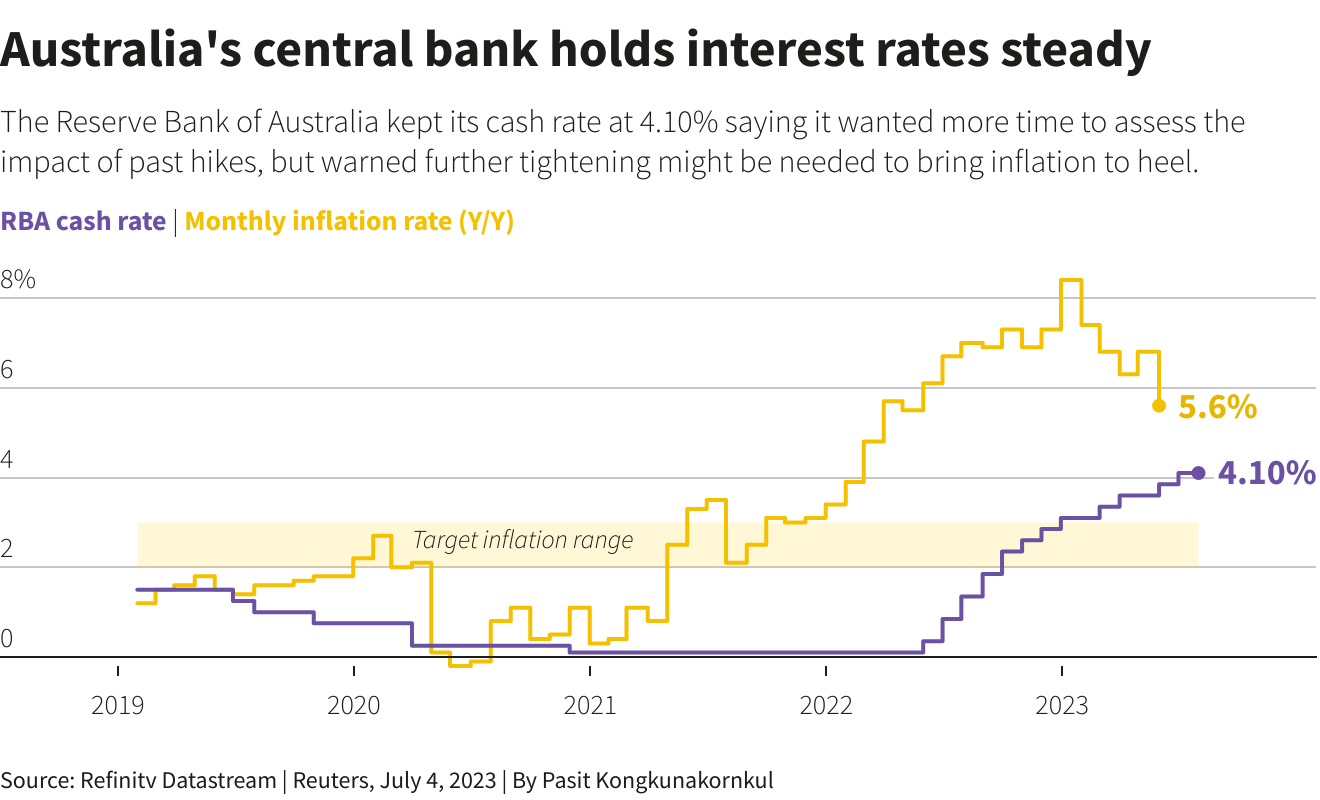
In a move reflecting current economic challenges, the Australian Central Bank has stated that it is impossible to accurately predict the trajectory of interest rates in the near future. This announcement follows the second interest rate hike this year, highlighting growing concerns about the impact of rising oil prices on inflation.
These developments come amid escalating crises in the Middle East, which have led to a noticeable increase in oil prices, threatening economic stability in Australia and increasing inflationary pressures.
Details of the Event
The Australian Central Bank raised interest rates in its latest meeting, a decision made under the difficult economic conditions facing the country. The bank indicated that inflation could be significantly affected by the ongoing rise in oil prices, complicating predictions regarding monetary policy.
The bank added that multiple factors influence the Australian economy, including global fluctuations in commodity prices, which increase uncertainty in economic decision-making.
Background & Context
Historically, Australia has experienced fluctuations in interest rates, significantly influenced by global economic crises. In recent years, there has been a focus on how regional crises, such as conflicts in the Middle East, impact the Australian economy. These conflicts often lead to rising oil prices, negatively affecting inflation.
In 2022, Australia faced significant economic challenges, with commodity prices rising unprecedentedly, prompting the central bank to take swift action to raise interest rates in an attempt to control inflation.
Impact & Consequences
Rising interest rates are considered an important step to curb inflation, but they may negatively affect economic growth. An increase in interest rates could lead to reduced consumer spending and investment, potentially slowing economic growth in Australia.
Moreover, the inability to predict the path of interest rates may create uncertainty in financial markets, affecting investor decisions and contributing to increased market volatility.
Regional Significance
Arab countries are significantly affected by fluctuations in oil prices, as they are among the largest oil producers in the world. Any rise in oil prices due to conflicts in the Middle East could lead to increased revenues in these countries, but it may also cause inflationary pressures that impact their economies.
Additionally, instability in oil prices could affect trade and economic relations between Arab countries and Australia, necessitating close monitoring of global economic developments.
In conclusion, the economic situation in Australia remains under scrutiny, as the central bank must make strategic decisions to address the challenges posed by rising oil prices and inflation. The continuation of these crises in the Middle East could have far-reaching effects on both the Australian economy and Arab countries alike.