At the Beijing International Auto Show, which gathered hundreds of companies and over a thousand vehicles, self-driving technologies and artificial intelligence took center stage, positioning China as a leading force in this field. The exhibition was not merely a display of cars but served as a platform to redefine the concept of transportation.
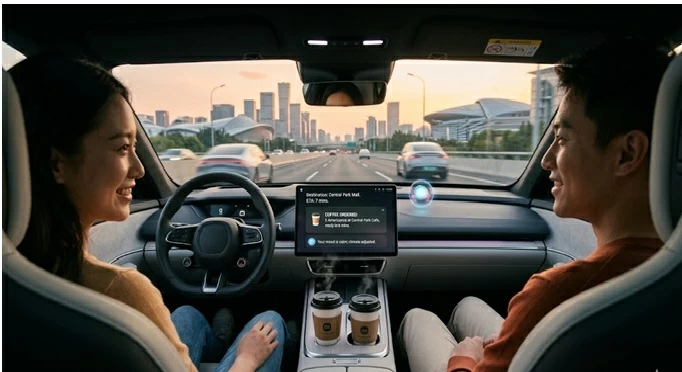
One of the standout innovations came from the company "Xpeng," which introduced a smart system that allows drivers to issue simple commands such as, "Park near the mall entrance," with the vehicle autonomously executing the task. Meanwhile, "Xiaomi" unveiled a new operating system that transforms the car into a fully integrated personal assistant, capable of ordering coffee, booking restaurants, and even adjusting the car's ambiance according to the driver's mood.
Event Highlights
The show also saw "Huawei" announce a massive investment of 80 billion yuan over five years to develop self-driving technologies. This investment reflects a new trend towards software and artificial intelligence, with companies competing to develop innovative solutions that enhance the driving experience.
These steps come at a time when the Chinese market is facing a noticeable slowdown, with passenger car sales dropping by 17% in the first quarter of the year. This decline has prompted companies to seek new revenue sources, such as selling technology and smart services, rather than relying solely on car sales.
Background & Context
Despite the challenges facing the local market, Chinese car exports have seen significant growth, increasing by more than 60%. This growth indicates that the world is beginning to open its doors to Chinese brands, strengthening their position in the global market.
For instance, the company "Chery" has achieved remarkable success in the British market, aiming to sell 10 million cars annually by 2030. Meanwhile, other companies are preparing to launch self-driving taxis in major cities like London, reflecting the global trend towards smart transportation technologies.
Impact & Consequences
What is happening in Beijing is not just a technological showcase; it is a forward-looking vision of the future of life. Cars that drive themselves, order coffee, and help alleviate stress may become part of our daily lives. This transformation could lead to radical changes in how individuals move and interact with technology.
If China continues on this path, it may not only lead the electric vehicle market but also become a pioneer in the future of smart mobility. This could alter global market dynamics and influence how cars are designed and developed in the future.
Regional Significance
For the Arab region, these developments highlight the importance of innovation in the transportation sector. Arab countries could benefit from these technologies to improve public transport systems and reduce traffic congestion. Moreover, investment in technology could open new avenues for cooperation between Arab nations and China in transportation and technology fields.
In conclusion, the Beijing International Auto Show seems to have laid the foundations for a new future in the world of transportation, where cars are set to become more than just a means of transport but part of an integrated smart life.