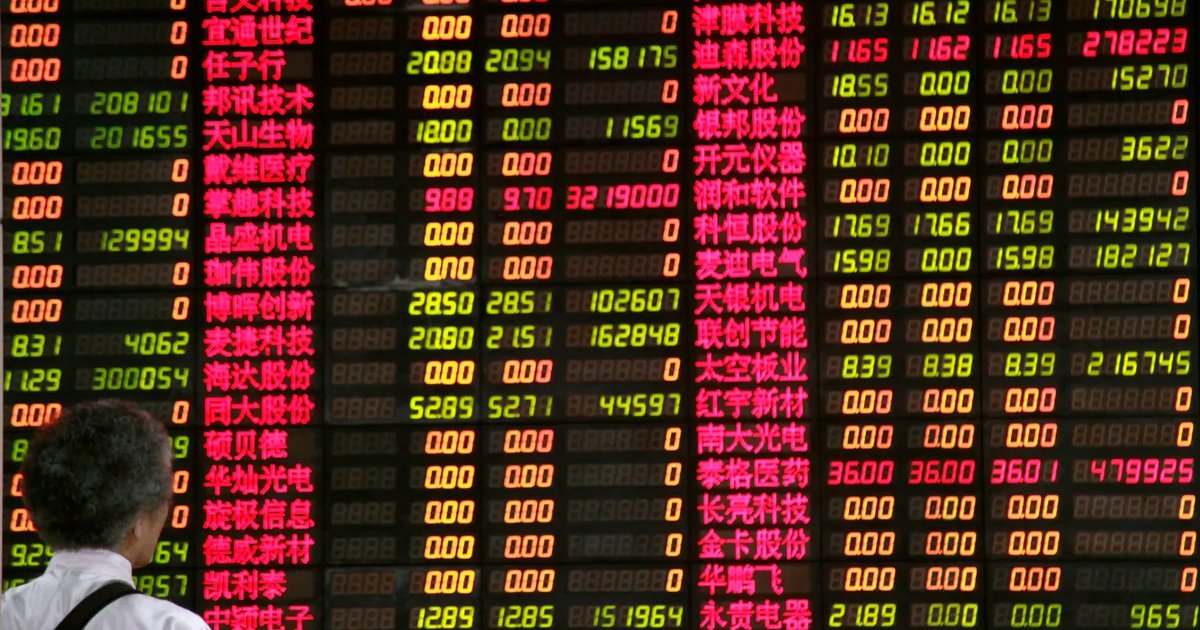
Chinese and Hong Kong stocks fell due to a selling wave sweeping Asian markets, amid ongoing tensions in the Middle East and global inflation concerns. This comes as the People's Bank of China kept its benchmark lending rates unchanged for the twelfth consecutive month.
During trading on Wednesday, the value of the US dollar against the Chinese yuan decreased by 0.15%, with the exchange rate reaching 6.8047 yuan per dollar. This decline reflects the uncertainty dominating global markets under the current economic conditions.
Market Details and Performance
Despite the overall decline in the markets, the renewable energy sector defied the prevailing trend, with the CSI New Energy Index rising by 1.1%. This increase comes as oil trades at high price levels, due to stalled US-Iran negotiations, which adds pressure on the markets.
The semiconductor sector also exhibited strong performance, surging by 4.6%, bolstered by a 19% increase in the stock of Huahong Semiconductor, following Yangtze Memory Technologies, the largest company in the sector in China, submitting its application for listing on the local stock exchange.
Background & Context
These developments occur at a time when global markets are experiencing significant volatility, with rising concerns over global inflation due to increasing prices of commodities and energy. Additionally, geopolitical tensions in the Middle East cast a shadow over economic stability in the region.
The interest rate hold by the People's Bank of China reflects its strategy to maintain financial stability under these circumstances. This decision was anticipated by many analysts, who believe the central bank aims to avoid any additional shocks that could impact economic growth.
Impact & Consequences
The decline in Chinese stocks may negatively affect both local and international investors, potentially leading to decreased confidence in Asian markets overall. Furthermore, the ongoing tensions in the Middle East could exacerbate economic conditions, increasing pressure on the markets.
On the other hand, the strong performance of the renewable energy and semiconductor sectors could attract investments, contributing to sustainable growth in these areas. This trend may have a positive impact on the Chinese economy in the long term.
Regional Significance
Arab markets are directly affected by economic developments in China, as China is one of the largest trading partners for many Arab countries. The decline in Chinese stocks may impact Arab investments in China, leading to a reassessment of investment strategies.
Moreover, the ongoing tensions in the Middle East may affect oil prices, which could reflect on Arab economies that heavily rely on oil revenues. Under these circumstances, Arab countries must take proactive steps to enhance the stability of their financial markets.
In conclusion, markets remain on alert, as investors closely monitor economic and political developments in the region and worldwide.