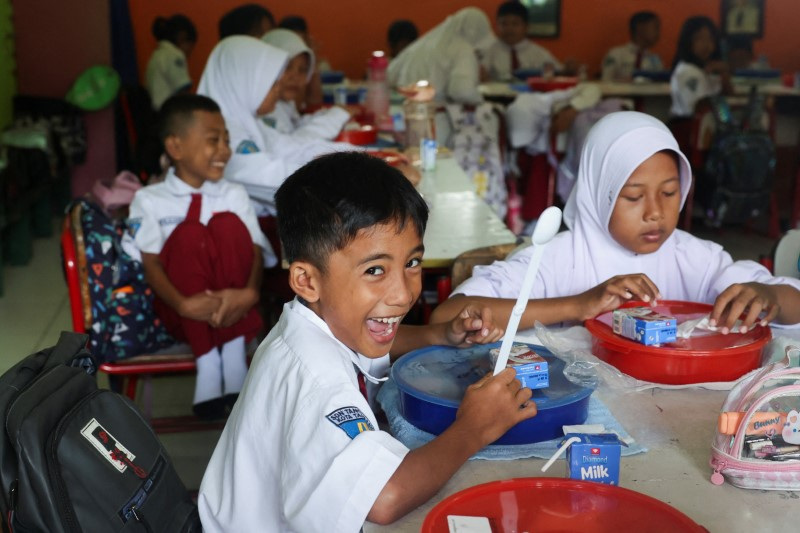
The National Nutrition Agency (BGN) in Indonesia has issued important clarifications regarding circulating information about the sale of milk from the free nutrition program (MBG) in stores, which has sparked widespread controversy on social media platforms. This announcement came during a press conference held by the agency's head, Dadan Hendayana, following a meeting with the Coordinating Minister for Food Affairs, Zulkifli Hasan, in the capital Jakarta.
Dadan confirmed that the agency has not signed any contracts with any milk producer, pointing out that any product marketed under the name of school milk is merely an attempt by the producers themselves. He explained that all Nutrition Service Units (SPPG) are required to purchase MBG milk from local stores or small and medium enterprises, with the aim of supporting local farmers.
Details of the Event
In his clarifications, Dadan noted that the agency does not prefer to deal with any specific producer but seeks to empower local farmers by purchasing products from nearby markets. Additionally, Nank Sudariati Diang, the deputy head of the agency, confirmed that BGN has not produced any type of milk, and that all products bearing the program's name are not produced by the agency.
Nank urged citizens to report any product that bears the agency's name or the MBG program, indicating that there are products sold in stores labeled "Free Milk from the MBG Program" despite being unauthorized. Milk in a 125 ml size has been observed selling for about 4,000 Indonesian Rupiah, even though the label states it is "not for sale."
Background & Context
The free nutrition program (MBG) was established in Indonesia as part of the government's efforts to improve children's health and promote proper nutrition. The program aims to provide nutritious milk to children in schools, helping to enhance their growth and development. However, rumors about milk sales in markets have raised concerns among parents and the community, prompting the agency to issue these clarifications.
Indonesia is one of the countries facing challenges in the field of nutrition, with many children suffering from malnutrition. Therefore, programs like MBG play a vital role in addressing these issues. However, rumors about milk sales could negatively impact public trust in these programs.
Impact & Consequences
Rumors about the sale of MBG program milk could undermine the government's efforts to improve nutrition. If these rumors persist, they may affect family participation in the program, potentially leading to increased rates of malnutrition among children. Thus, it is crucial for the agency to take effective steps to communicate with the public and clarify the facts.
Moreover, supporting local farmers by purchasing milk from small markets can contribute to strengthening the local economy. If the program is utilized correctly, it can achieve dual benefits: improving nutrition for children and supporting local farmers.
Regional Significance
Nutrition and public health issues are common challenges faced by many Arab countries. Despite differing contexts, the lessons learned from Indonesia's experience in managing nutrition programs can be beneficial for Arab nations. Transparency and effective communication with the public can help build trust and enhance participation in health programs.
In conclusion, this event highlights the importance of effective communication between government agencies and the community, especially on sensitive issues like nutrition. There should be clear mechanisms for reporting rumors and misinformation to ensure the success of health programs.