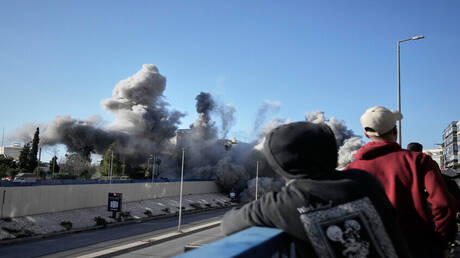
The Secretary-General of the Arab League, Ahmed Aboul Gheit, has strongly condemned the Israeli attacks on Lebanon, characterizing them as "barbaric and unprecedented." These remarks reflect the growing concern over the escalating violence in the region and its impact on security and stability.
This condemnation follows a series of airstrikes carried out by Israel on various areas in Lebanon, resulting in widespread destruction and civilian casualties. These attacks have provoked angry reactions from several Arab countries, which have emphasized the need to halt the Israeli aggressions.
Details of the Incident
In recent days, the Lebanese-Israeli border has witnessed a notable escalation, with Israeli warplanes targeting multiple sites in Lebanon, leading to significant damage. These strikes have hit residential areas and vital facilities, triggering widespread condemnation from the international community.
During his statements, Aboul Gheit called for urgent international intervention to stop these aggressions, indicating that their continuation would exacerbate the humanitarian situation in Lebanon, which is already suffering from economic and political crises.
Background & Context
Historically, Lebanese-Israeli relations have been marked by severe tensions, especially since the Lebanese Civil War in the 1970s. These tensions have persisted over the decades, with several rounds of conflict between the two sides. In recent years, fears of escalating violence in the region have increased due to ongoing conflicts in Syria and Palestine.
These aggressions are seen as part of a broader Israeli policy aimed at enhancing its influence in the region, which raises concerns among Arab nations that view this as a threat to their national security.
Impact & Consequences
Reports indicate that these aggressions could lead to a further escalation of the conflict, as Lebanese factions may retaliate against the attacks, heightening tensions. Additionally, the continuation of Israeli bombardments may open the door for international interventions, particularly from major powers seeking to maintain stability in the region.
At the same time, these events could affect relations between Arab countries and Israel, as some nations may adopt a harsher stance against Israel, increasing its political isolation on the international stage.
Regional Significance
These events serve as a wake-up call for Arab nations, highlighting the need for unity to confront shared challenges. The ongoing Israeli aggressions could lead to increased polarization in the region, complicating peace efforts and exacerbating civilian suffering.
Ultimately, hope remains pinned on the international community to pressure Israel to cease its aggressions and ensure the protection of civilians in Lebanon. Any further escalation could have dire consequences for regional security.