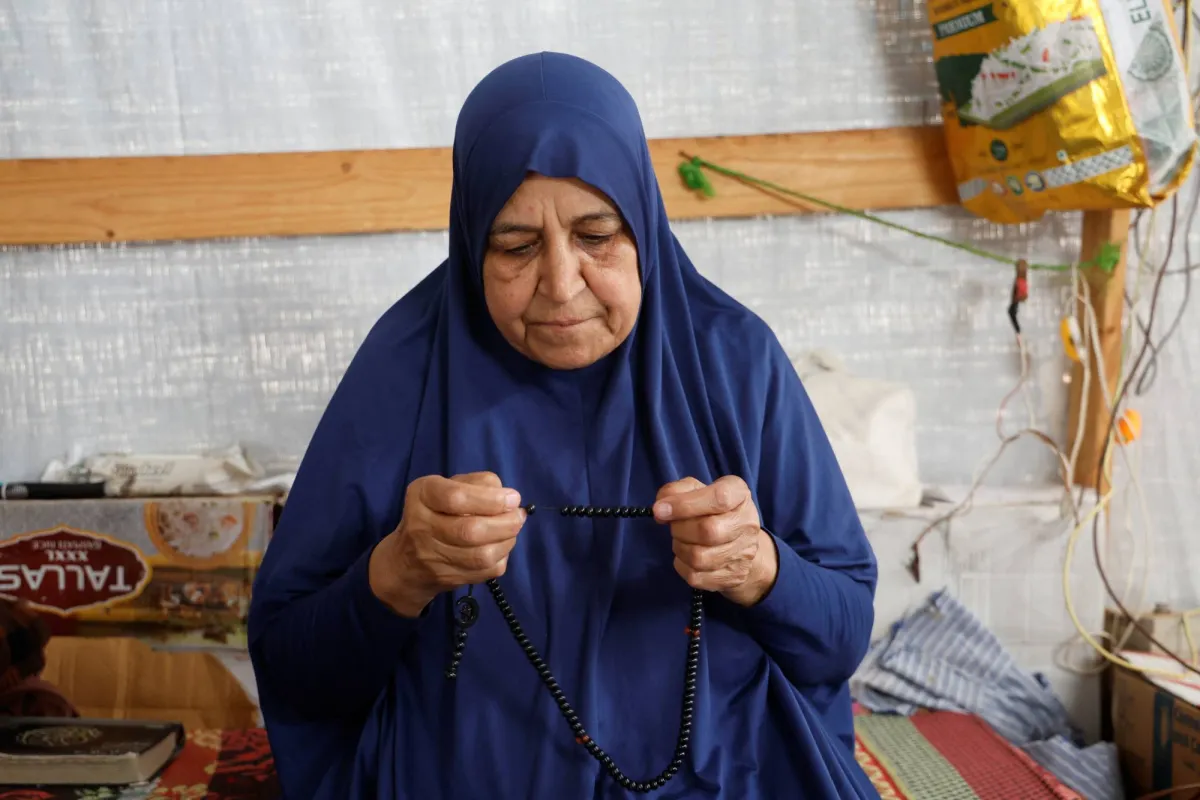
Um Ahmad Hamouda lives with her family in a makeshift tent in western Gaza City, lacking basic necessities for survival. She expresses her suffering by saying, "The tent is low; when you want to pass, you have to bend down. When you want to stand to pray, you have to bend down. Sometimes, one feels suffocated... I feel like I'm in a prison."
Before being displaced, Um Ahmad lived in a five-story house in Jabalia, but the war destroyed her home and forced her to flee four times. She recounts, "We had a five-story house, and we had prepared an apartment for each of my children to marry. All of that was lost in the war."
Details of the Situation
The plight of the displaced in Gaza continues, with families suffering from acute shortages of water and sanitation. Um Ahmad hangs food on the tent to protect it from rats, describing her situation: "No matter how I describe our life in the tents, you can't imagine it." In winter, the tent floods, and in summer, the suffering from rats and insects increases.
Um Ahmad states, "There are no privacy issues; what privacy? Everyone sleeps together, the boys with the girls, with my husband and me, there is none." The family struggles with insufficient toilets, as the temporary toilets overflow continuously, worsening their daily suffering.
Background & Context
Gaza lives under the weight of blockade and recurring wars, leading to a severe humanitarian crisis. Since the outbreak of war in October 2023, conditions have significantly worsened, with many Palestinians living in tents and damaged buildings, making daily life increasingly difficult.
These conditions are a direct result of the ongoing conflict between Palestinian factions and the Israeli occupation, which has led to the destruction of infrastructure and the displacement of many families. Displaced individuals live in harsh conditions, necessitating urgent humanitarian responses from the international community.
Impact & Consequences
The humanitarian situation in Gaza affects the mental and physical health of the displaced, with many suffering from depression and anxiety due to the harsh living conditions. Additionally, the lack of water and sanitation increases the risk of disease outbreaks.
These conditions require immediate action from humanitarian organizations to provide necessary assistance to the displaced and to create a safe and healthy environment for them. The international community is also called upon to pressure the involved parties to end the conflict and improve humanitarian conditions in the region.
Regional Significance
The suffering of the displaced in Gaza is a stark example of the deteriorating humanitarian conditions in the region. These circumstances reflect the urgent need for Arab and international solidarity with the Palestinian people and the provision of necessary support to alleviate their suffering.
The continuation of the tragic situation in Gaza highlights the importance of just and comprehensive political solutions that guarantee the rights of Palestinians and achieve peace in the region. There must be concerted efforts to end the occupation and achieve stability in the Palestinian territories.