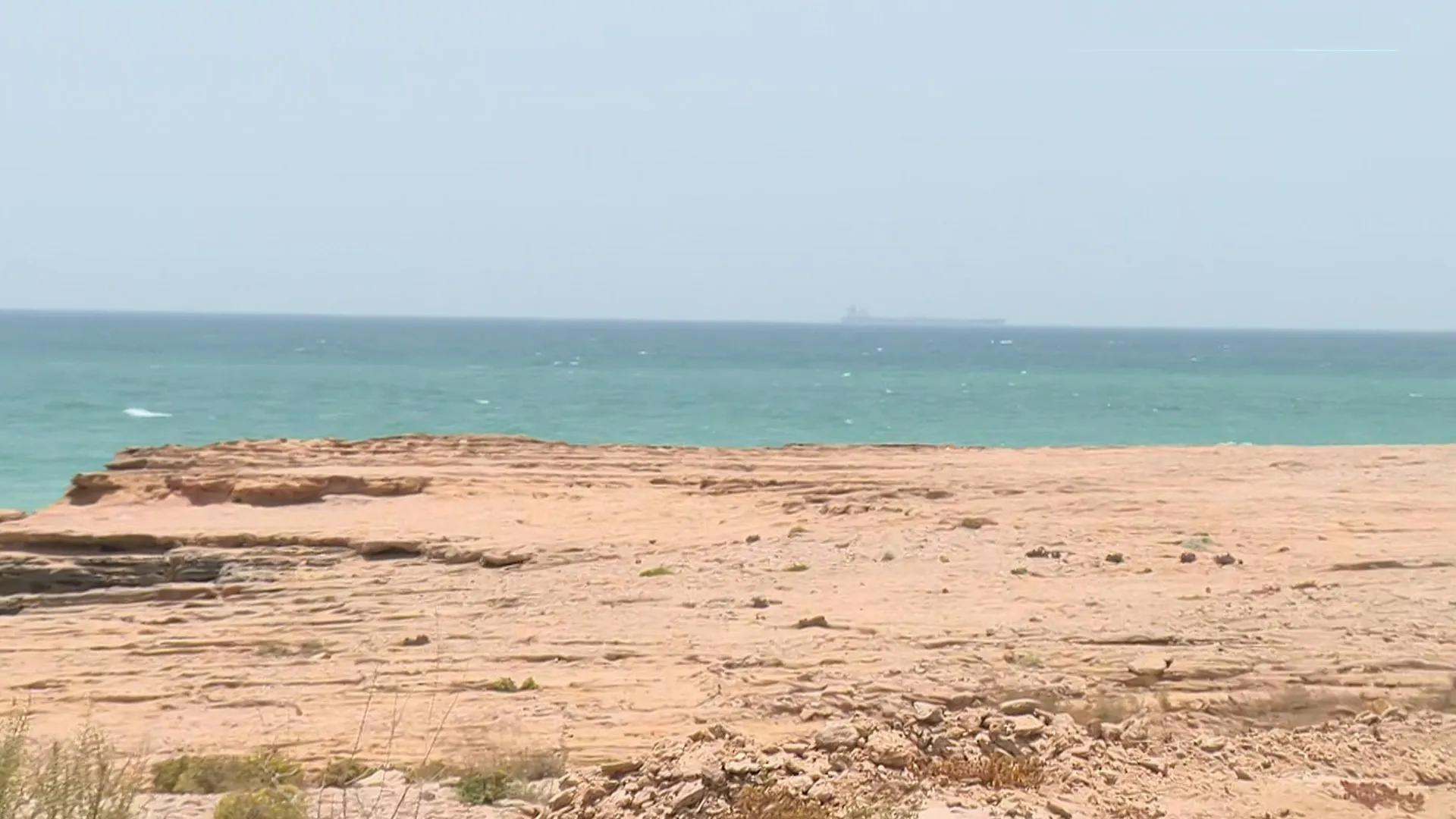
The waters surrounding Iran's Qeshm Island appear unusually calm, with ships and oil tankers idling near the entrances to the Hormuz Strait. This scene illustrates the escalating tensions between Tehran and Washington, transforming the strait into an open battleground for maritime and security control.
Al Jazeera's bureau chief in Iran, Nour Eddine Al-Dagheer, shared exclusive footage showing several vessels halted at the entrance leading to the Gulf waters. Concurrently, the Iranian Revolutionary Guard has intensified its security and administrative measures regarding transit within the strait.
Details of the Incident
Al-Dagheer confirmed that Qeshm Island is one of Iran's strategically significant islands, playing a pivotal role in monitoring maritime traffic and controlling transit routes within the Hormuz Strait. He noted that the field scene reflects a near-complete paralysis of maritime movement, with at least seven vessels halted in the area directly linking the strait to the Gulf waters.
Earlier, the Revolutionary Guard allowed the passage of about 30 vessels, but traffic sharply declined again after Iranian authorities imposed new measures aimed at regulating transit and ensuring safe routes within the strait. These measures include requiring ships to communicate in advance via designated websites to obtain transit permits.
Background & Context
These developments come amid escalating indirect confrontations between Iran and the United States, with Washington imposing a maritime blockade on Iranian ports since last April following stalled negotiations between the two sides. The effects of this blockade have become evident in the region's ports and islands, where several Iranian vessels have been unable to leave ports due to the imposed American restrictions.
Al Jazeera's team also observed during their field visits to Qeshm Island sites and docks that had previously been targeted by American and Israeli strikes, amid the military escalation that has targeted Iranian maritime facilities and ports in recent months. Recent satellite images have revealed extensive damage to vessels and military facilities within Shahid Bahonar Port in Bandar Abbas.
Impact & Consequences
As tensions rise, Iran has intensified the activation of its air defenses in Isfahan and Qeshm Island, with Iranian military leaders vowing a quicker and harsher response to any new attack. This comes after U.S. President Donald Trump announced the postponement of a strike that was planned against Tehran, further heightening tensions in the region.
This escalation reflects a state of instability in the region, where the Hormuz Strait serves as a vital point for oil and gas transportation, and the global economy heavily relies on maritime traffic through it. Any disruption to this movement could lead to negative impacts on oil prices and global markets.
Regional Significance
These events hold significant importance for Arab countries, especially those reliant on oil exports through the Hormuz Strait. Any escalation in tensions may affect regional stability and increase security risks. Furthermore, these developments could lead to a reassessment of Arab countries' strategies in dealing with Iran and the United States.
In conclusion, attention remains focused on the Hormuz Strait, where fears of a greater escalation that could impact regional and global security are increasing.