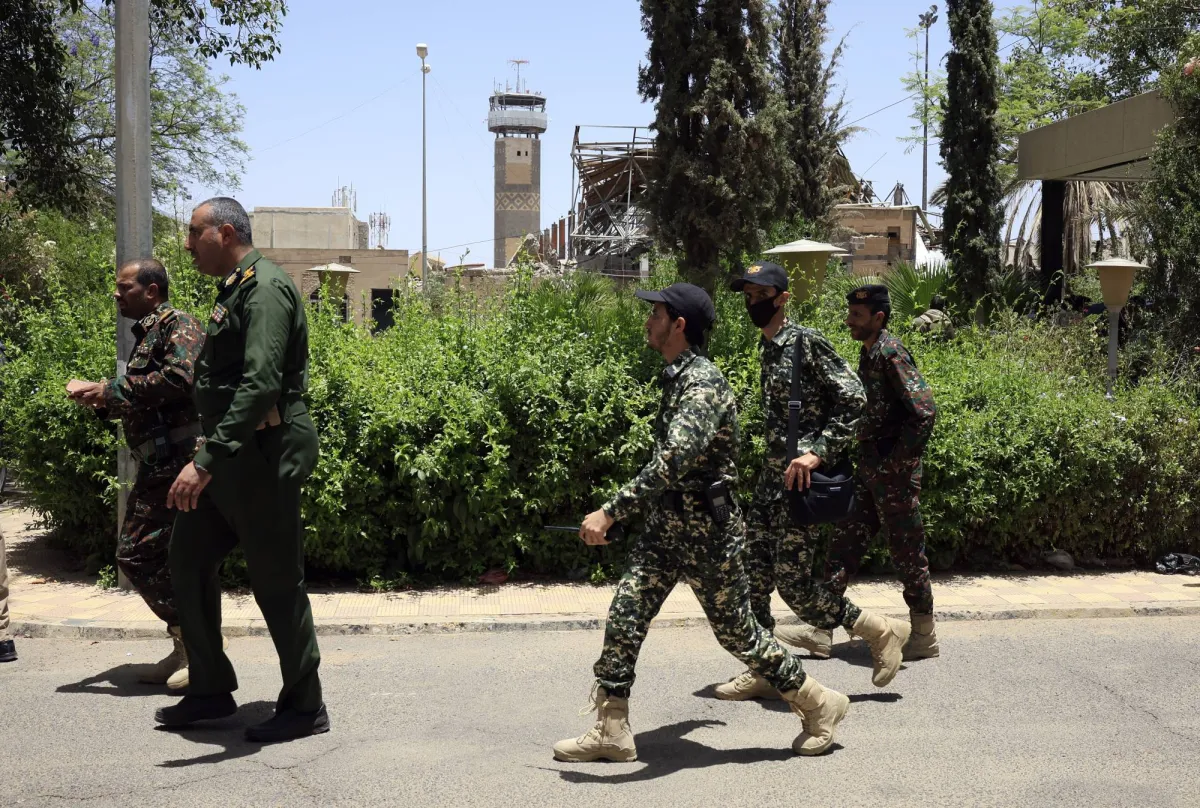
The Houthi group has escalated its violations against residents in the Yemeni capital, Sana'a, and its surroundings. These violations include the bombing of homes belonging to opponents, besieging private facilities, and imposing new levies on civilians. This comes as tribal protests against the seizure of lands belonging to the Khawlan tribes and their illegal appropriation are on the rise.
In the Shumlan neighborhood in northwestern Sana'a, one of the most violent incidents occurred when Houthi gunmen bombed the home of Brigadier General Fadl Al-Saidi, a former Yemeni army officer. The incident sparked widespread outrage, and human rights activists viewed it as a new indicator of the increasing violations against residents and their properties in areas controlled by the group.
Details of the Incident
Local sources confirmed that Houthi gunmen, accompanied by military vehicles, stormed Brigadier General Al-Saidi's home before setting it on fire and completely blowing it up, amid heavy security presence in the area. It is noteworthy that Brigadier General Al-Saidi has been detained in the group's prisons since 2018 without trial, following a previous dispute with Houthi elements who attempted to forcibly seize his home.
Activists circulated on social media footage showing columns of smoke rising from the site of the house, accompanied by the sound of successive explosions. The Yemeni Network for Rights and Freedoms condemned the incident, considering the bombing of the house a blatant violation of international humanitarian law and a direct assault on citizens' rights to housing and private property.
Background & Context
Meanwhile, residents in Shumlan reported that the Houthi group has intensified the presence of its armed elements in several alleys and streets, conducting extensive inspection and surveillance campaigns. They also imposed new financial levies on traders and residents under various pretexts, including support for what they call "summer camps."
In another repressive move, the Houthi group closed the "Shumlan" mineral water factory and forcibly halted production and distribution operations following a siege and storming carried out by their gunmen. Workers explained that the group's elements had besieged the factory a day before the storming and set fire to old tires in front of the main gate in an attempt to pressure the factory management to pay financial levies.
Impact & Consequences
The level of tribal tension is increasing in the rural areas of Sana'a, where the Khawlan tribes accused Houthi leaders of seizing lands belonging to the tribe and acting upon them without any legal status. The tribes issued a statement announcing their complete rejection of any acts of looting, appropriation, or sale of lands belonging to the tribe's members, holding the Houthi group responsible for any consequences that may arise from the continuation of these practices.
Tribal figures also accused Houthi leader Abdul Basit Al-Hadi, appointed as governor of rural Sana'a, of seizing a piece of land belonging to the tribe on Khawlan Street in the capital and selling it to a relative, exploiting the influence of the armed group. The tribe's members confirmed that the encroached lands are historically recognized properties of the Khawlan people.
Regional Significance
The governorate of Ibb, under the control of the Houthi group, is witnessing a notable increase in violations against civilians and their properties, amid growing accusations against the group of using security and armed influence to suppress any opposing movements. In the latest of these incidents, a Houthi gunman demolished the home of a woman over ninety years old, sparking widespread anger in local and human rights circles.
Condemnations continue from local and international human rights organizations, as these incidents reflect a side of the oppressive policies practiced by the Houthi group against civilians in areas under their control, indicating a state of chaos and security breakdown.