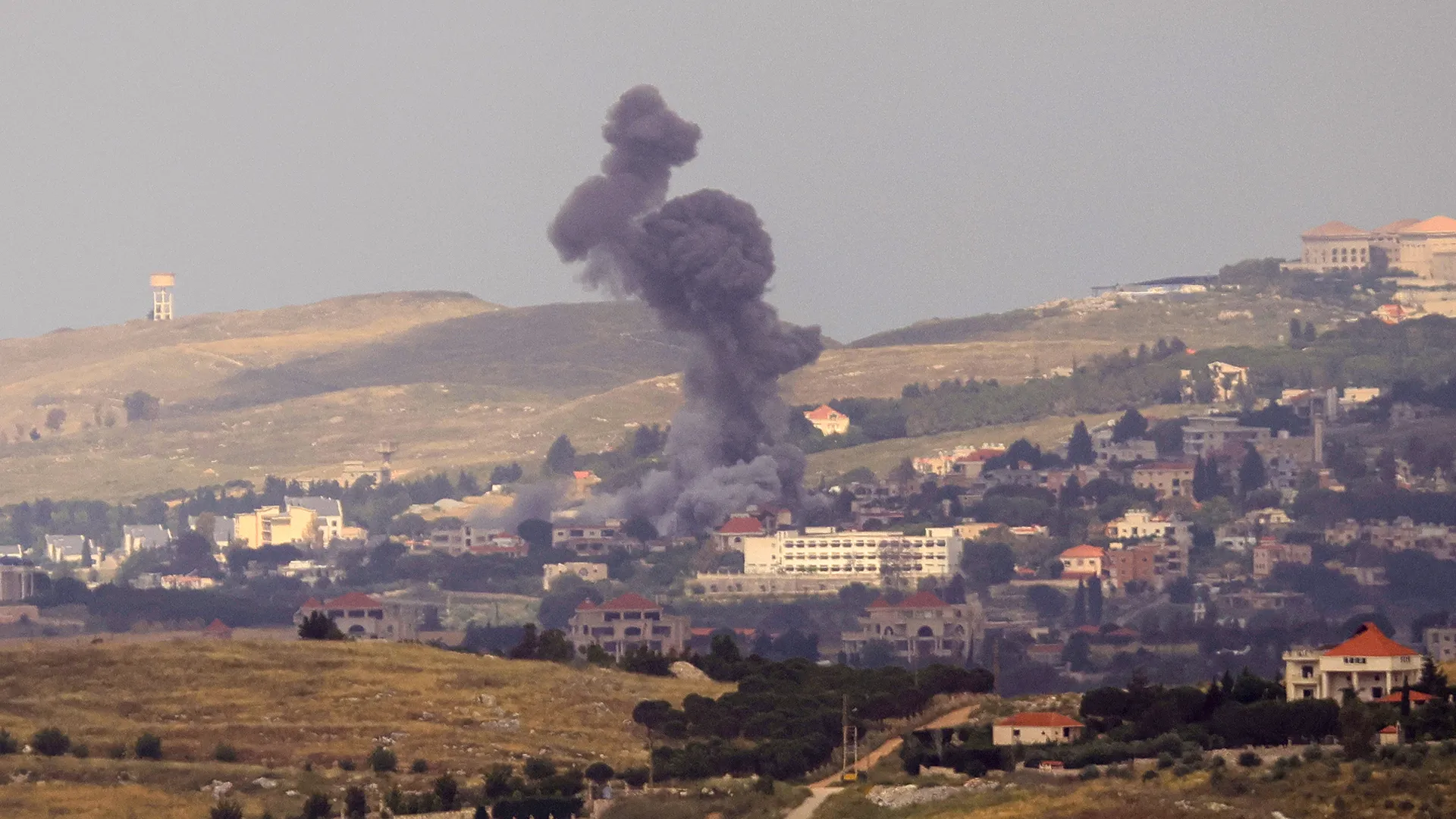
The frequency of Israeli bombardments on southern Lebanon is increasing, with warplanes targeting emergency response and civil defense centers, resulting in several casualties. Meanwhile, the occupying army faces significant challenges in executing ground invasion operations, as the steadfastness of Hezbollah fighters emerges as a key factor in countering these assaults.
Military and strategic expert Brigadier General Hassan Jouni reported that the rules of engagement established by Hezbollah in recent days have contributed to diminishing the effectiveness of Israeli attacks. Jouni notes that the occupying army aims to establish what is known as the "yellow line," targeting approximately 55 towns and villages in southern Lebanon, with the goal of creating an Israeli military presence extending between 4 and 10 kilometers deep along the border.
Details of the Event
The combat operations are concentrated on three main fronts, with recent airstrikes focused on the Tyre District, targeting the Islamic Authority center in the town of Hanouieh, resulting in the martyrdom of four paramedics. Another strike targeted the area of "Deir Qanoun al-Nahr," leading to the deaths of five martyrs, including two paramedics.
Reports indicate that the Israeli occupation is seeking to control the strategic town of Tibnin, which is considered a crucial hub in plans to expand Israeli control. At the same time, Israeli media have reported the presence of armed militants in the Dovif and Bar'am areas near the border town of Rmeish, reflecting escalating tensions in the region.
Background & Context
Historically, the southern regions of Lebanon have witnessed recurring conflicts between Hezbollah and the Israeli army, with Hezbollah being a major force in resisting the occupation. The complex geographical terrain of the area has enhanced Hezbollah fighters' maneuverability, as most of them are well-acquainted with the land, granting them an advantage in battles.
These developments come at a sensitive time, as the Israeli occupation seeks to assert its control over the borders amid rising resistance from Hezbollah. This ongoing conflict reflects the complex regional tensions that impact security and stability in the area.
Impact & Consequences
Analyses suggest that the continuation of Israeli attacks could lead to a greater escalation in the conflict, threatening to ignite a new round of violence in the region. Moreover, the failure of the occupation to achieve its military objectives may negatively affect the morale of its army and strengthen Hezbollah's position within Lebanon.
On the other hand, these events could heighten tensions between Lebanon and Israel, necessitating international community intervention to mediate the conflict. This struggle is part of a broader regional conflict where political and military interests intersect.
Regional Significance
The events in southern Lebanon directly influence regional security, as this area is a potential flashpoint that could escalate the conflict between Arab states and Israel. Additionally, the continuation of military operations may adversely affect the humanitarian situation in Lebanon, where civilians are suffering from the repercussions of the ongoing conflict.
In conclusion, the situation in southern Lebanon remains complex, with military and political factors intertwining, requiring close monitoring by the international community. The resilience exhibited by Hezbollah in the face of the Israeli occupation reflects the strength of resistance in the region, complicating efforts for peace and stability.