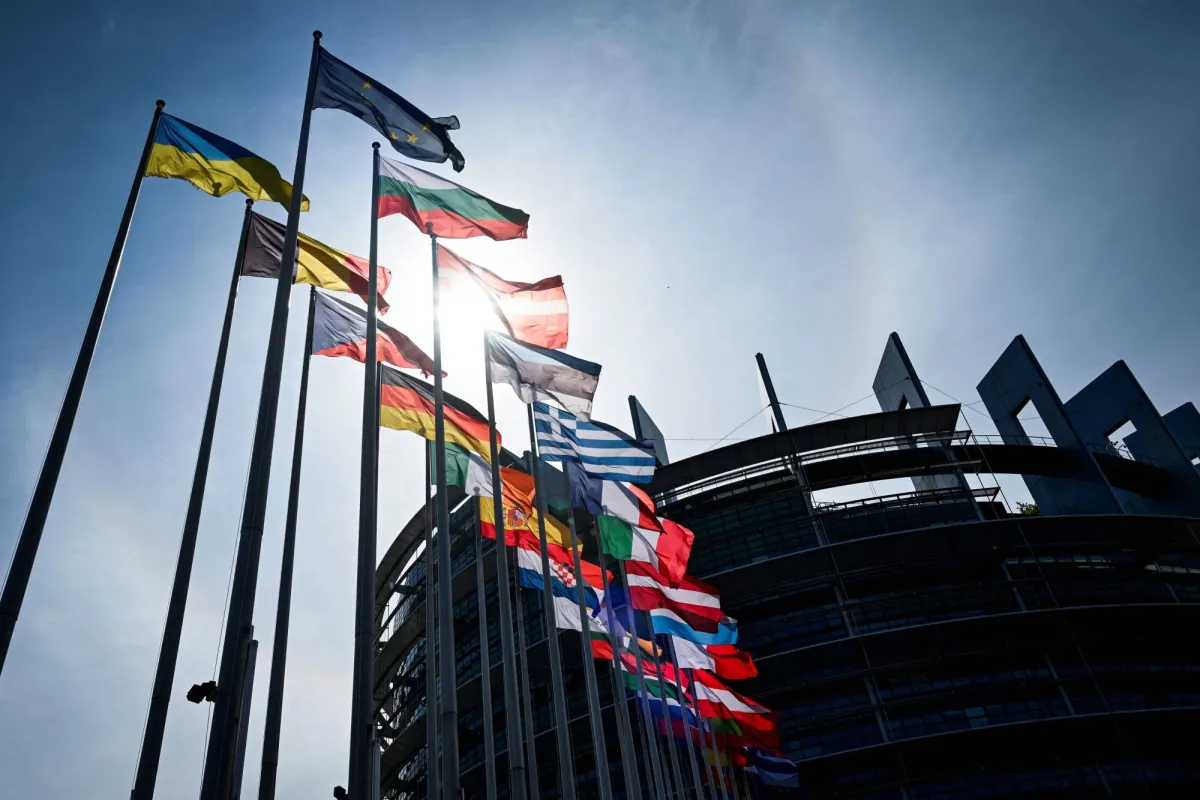
The European Parliament voted on Tuesday in favor of increasing the European Union budget for the period 2028-2034, in a move aimed at enhancing spending on defense and competitiveness while maintaining support for agriculture and low-income regions. This step paves the way for a potential confrontation with member states that oppose increasing their contributions.
The proposal received support from 370 Members of Parliament against 201, with 84 abstaining from voting. The new budget amounts to 1.38 percent of the EU's total national income, compared to the 1.26 percent proposed by the European Commission last July, according to Reuters.
Details of the Decision
The difference in figures is due to the Parliament listing the costs of repaying the COVID-19 recovery fund separately, rather than integrating it into the total as the Commission did. The budget rapporteur, Siegfried Mureșan, a member of the center-right faction, emphasized that achieving more requires sufficient resources, noting that new priorities such as defense will receive necessary funding while traditional sectors like agriculture and fisheries continue to be supported.
According to estimates, the Commission's budget proposal is around 1.76 trillion euros (approximately 2.06 trillion dollars) over seven years, with 149 billion euros allocated for repaying joint loans. Meanwhile, the Parliament proposes raising the budget to 1.94 trillion euros, with additional resources allocated to support cohesion policies and reduce social and economic disparities.
Background & Context
The EU budget is primarily funded by contributions from member states, alongside customs duties and a share of value-added tax revenues. To finance the proposed increase, the Commission has introduced five new sources of revenue known as "own resources," which include revenues from carbon permits, taxes on tobacco, unrecycled electronic waste, as well as revenues from large corporations.
The Parliament has also proposed three additional sources of revenue, including a digital tax, a tax on cryptocurrency transactions, and a tax on online gaming and gambling activities. The digital tax is expected to face strong opposition from the United States, which hosts most major tech companies.
Impact & Consequences
The long-term budget of the EU is known as the "Multiannual Financial Framework," extending over seven years and requiring unanimous approval from member states along with ratification by the European Parliament. It does not specify direct annual spending but sets ceilings for spending in the form of commitments and expected payments.
The budget relies on three main sources of funding, the most significant being direct contributions from national budgets linked to gross national income, which account for about 71 percent of revenues. It also includes value-added tax revenues at nearly 13 percent, in addition to 75 percent of customs duties imposed on imports from outside the Union, representing about 11 percent.
Regional Significance
Arab countries are indirectly affected by this increase in the European budget, as new defense and economic policies could impact trade and investment relations between the EU and Arab states. Additionally, increased defense spending may lead to changes in geopolitical balances in the region.
In conclusion, this step represents a significant shift in European spending policy, reflecting the challenges faced by member states amid changing global conditions.