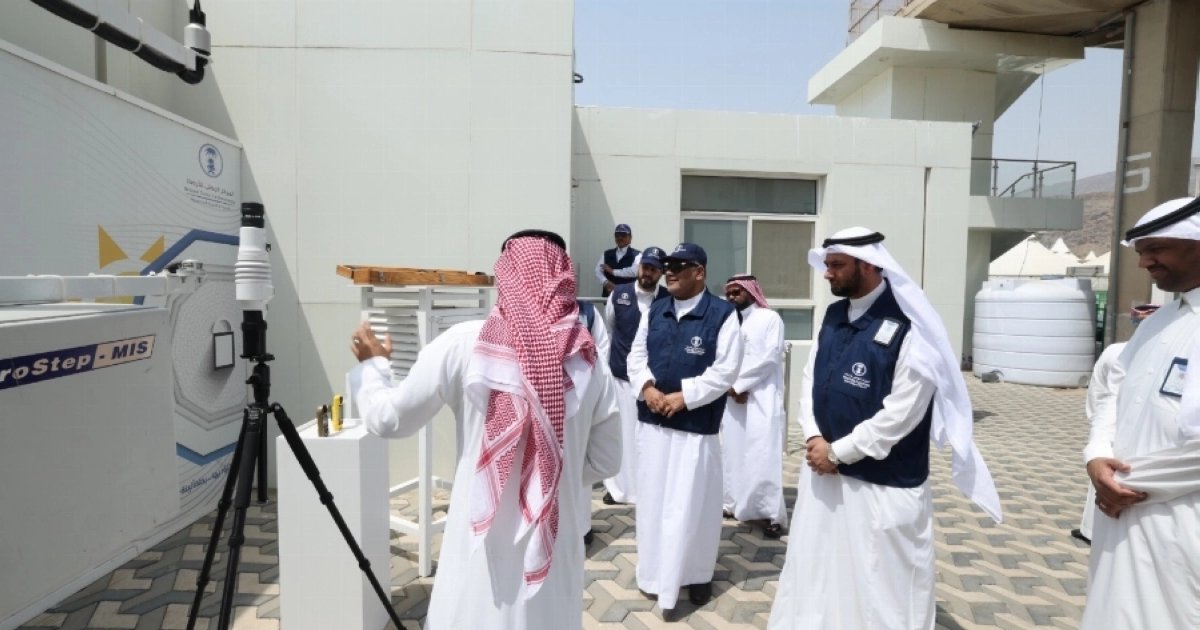
The National Center of Meteorology in Saudi Arabia has announced predictions for rising temperatures in Mecca and the holy sites during the Hajj season of 2026. It is expected that temperatures could reach 47 degrees Celsius, necessitating that pilgrims take the necessary precautions to cope with these severe weather conditions.
Dr. Ayman Ghulam, the CEO of the center, explained that the period from the beginning of Dhu al-Hijjah until the day of Tarwiyah (8 Dhu al-Hijjah) will witness extreme temperatures ranging between 44 and 47 degrees Celsius, with minimum temperatures between 28 and 31 degrees Celsius. Humidity levels are expected to range between 10% and 40%, with winds blowing from the southwest to the northwest at speeds between 15 and 40 kilometers per hour.
Weather Forecast Details
Hot weather is expected to persist from the day of Arafah until 13 Dhu al-Hijjah, with skies ranging from clear to partly cloudy, and continuous wind activity that may lead to dust and sand movement. Dr. Ghulam noted that maximum temperatures during this period will range between 42 and 44 degrees Celsius, while minimum temperatures will range between 26 and 29 degrees Celsius, with humidity levels reaching up to 55%.
He also added that there is a possibility of thunderstorms forming over the highlands of Taif, which may affect the holy sites, accompanied by strong gusts that could stir up dust and sand.
Background & Context
Mecca is known to be one of the hottest regions during the summer, attracting millions of pilgrims for the Hajj rituals, making weather conditions a critical factor in the pilgrimage experience. Historically, previous Hajj seasons have experienced climatic fluctuations, prompting authorities to take preventive measures to ensure the safety of pilgrims.
In recent years, weather monitoring systems have been significantly enhanced, utilizing advanced technologies such as radars and satellite imagery to improve the accuracy of weather forecasts. Additionally, infrastructure has been bolstered to address climatic challenges during the Hajj season.
Impact & Consequences
The extreme weather conditions during the Hajj season require special preparedness from pilgrims, who must take precautions such as drinking adequate amounts of water, wearing appropriate clothing, and avoiding direct exposure to sunlight. Relevant authorities are also working to provide necessary assistance to pilgrims, including establishing medical centers and distributing water.
These forecasts underscore the importance of good planning and coordination among relevant entities to ensure the safety of pilgrims and provide a secure environment for performing the rituals. The use of modern technology in weather monitoring reflects the Kingdom's commitment to enhancing the Hajj experience.
Regional Significance
Mecca is a significant spiritual center for Muslims worldwide, thus the weather conditions during the Hajj season impact pilgrims from various countries. Providing a safe and healthy environment for pilgrims reflects Saudi Arabia's commitment to promoting religious tourism.
Ultimately, the Hajj season requires cooperation among all stakeholders to ensure the safety and comfort of pilgrims, highlighting the importance of collective efforts in facing climatic challenges.