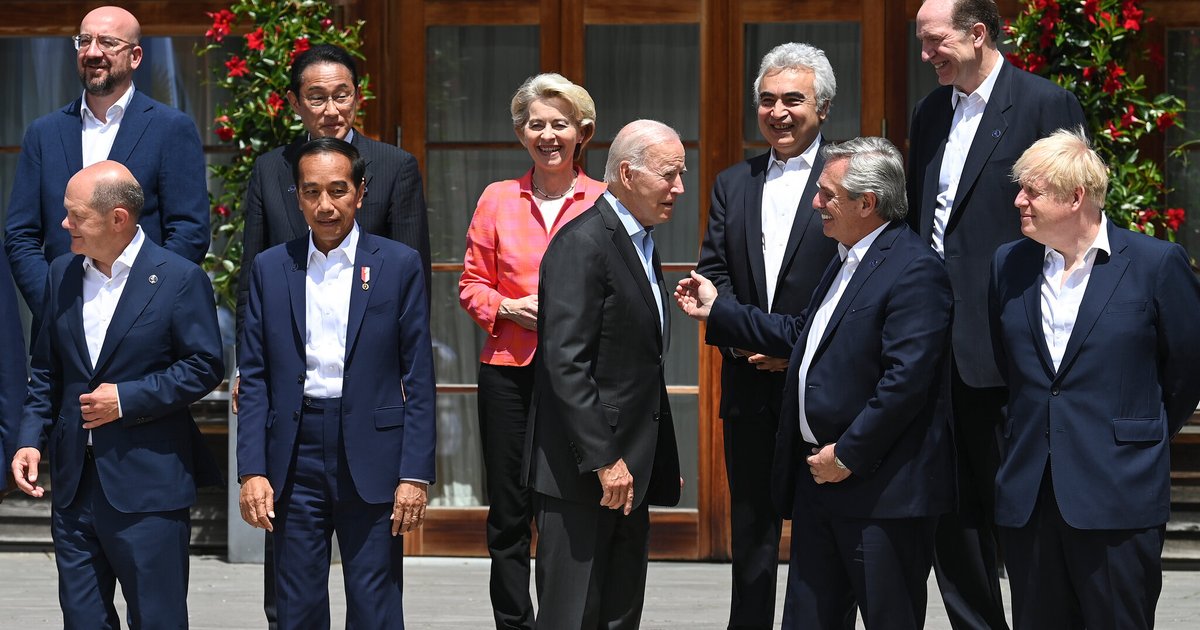
The Group of Seven (G7) plans to hold a virtual meeting on Monday to discuss strategies for combating the sharp rise in oil prices amid escalating tensions between the United States and Iran. The meeting will bring together finance and energy ministers, along with central bank governors, to consider the release of strategic oil reserves.
This move comes after airstrikes by the United States and Israel on Iran escalated tensions in the Middle East, prompting Iranian forces to close the Strait of Hormuz, a vital corridor for global oil trade. This closure has caused significant disruptions in oil supplies and a noticeable increase in prices.
Details of the Meeting
At the beginning of this month, the International Energy Agency (IEA) began releasing oil reserves, with the quantity exceeding 400 million barrels. This step is considered the first of its kind since 2022, when Russia commenced its full-scale invasion of Ukraine. Among the released quantity, Japan, the second-largest oil-producing country in the IEA, accounted for approximately 79.8 million barrels, while the United States contributed 172.2 million barrels.
Japan imports more than 90% of its oil needs from the Middle East, making it vulnerable to price fluctuations resulting from regional crises. G7 finance ministers held discussions on March 9, followed by meetings with energy ministers, where they agreed on the urgent need for coordinated actions to address these challenges.
Background & Context
Historically, oil prices have experienced sharp fluctuations due to political and military crises in the Middle East. Since 2022, the Russian-Ukrainian war has increased pressures on global energy markets, contributing to unprecedented price hikes. Additionally, tensions between Iran and the United States are longstanding, with geopolitical interests intricately overlapping in this region.
The G7, which includes France, the United Kingdom, Canada, Germany, Italy, Japan, and the United States, along with the European Union, represents some of the largest economic powers in the world. It plays a crucial role in stabilizing global markets, especially amid current crises.
Impact & Consequences
The rise in oil prices has direct implications for the global economy, increasing transportation and production costs, which in turn leads to price hikes across various sectors. This increase may also affect economic growth in oil-consuming countries, necessitating swift actions from governments.
In this context, these crises may increase pressure on governments to provide additional support to citizens, thereby exacerbating financial burdens on public budgets. Furthermore, geopolitical tensions could worsen economic conditions in developing countries that rely on oil imports.
Regional Significance
Arab oil-producing countries, such as Saudi Arabia and the United Arab Emirates, are in a unique position to benefit from rising prices; however, any escalation in regional tensions could negatively impact the stability of these nations. Additionally, oil-importing countries in the region, such as Egypt and Jordan, will face significant challenges amid rising prices.
In conclusion, the upcoming G7 meeting reflects the importance of international cooperation in addressing global economic challenges and underscores the necessity for coordinated actions to ensure energy market stability.