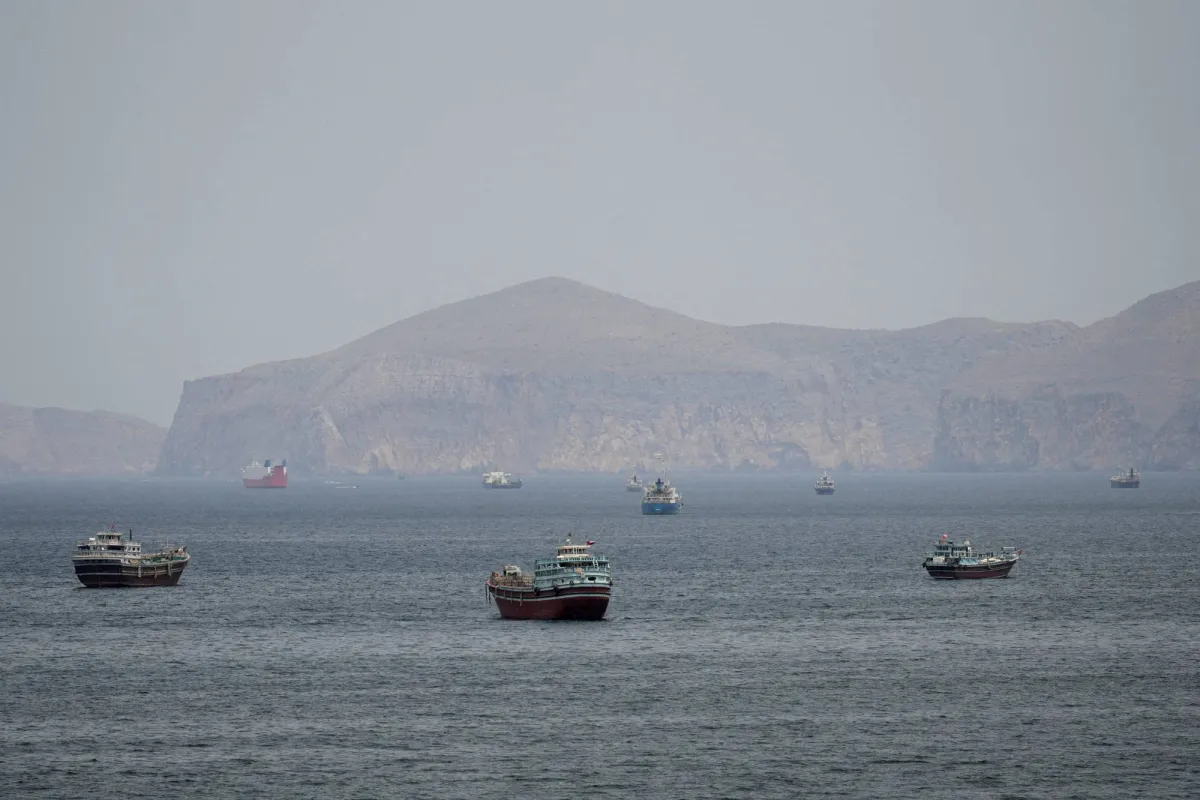
On Wednesday, two giant tankers crossed the Strait of Hormuz after a long wait of over two months, loaded with approximately 6 million barrels of oil. This move comes amid escalating tensions in the region, as reports indicate that a third tanker is also on its way out.
The three tankers are carrying large quantities of crude from the Middle East and are among a few giant tankers that have left the Gulf this month. The ships were ordered to use a special transit route after the war waged by the United States and Israel against Iran reduced shipping traffic through the strait, which is a vital artery through which about 20 percent of global oil supplies pass.
Details of the Event
According to shipping data from the London Exchanges Group and Kepler, the tanker Universal Winner, flying the South Korean flag, is carrying 2 million barrels of Kuwaiti crude, having been loaded on March 4. The tanker is on its way out of the strait after two giant Chinese tankers passed through earlier today.
The tanker is headed to Ulsan in South Korea to unload its cargo by June 9. Additionally, 2 million barrels of Basra crude have been loaded onto the giant oil tanker Yuan Gui Yang, which flies the Chinese flag and is expected to arrive at the Shuidong port in China on June 4.
Background & Context
The ongoing war since February 28 has significantly reduced oil exports from Gulf countries, with the Strait of Hormuz being almost completely closed. This closure has severely impacted shipping traffic, leading to a notable decline in oil exports from Iraq, Kuwait, and the UAE.
Data shows that China's crude oil imports from Russia, its largest supplier, reached 8.97 million tons last month, an increase of 11 percent year-on-year. Meanwhile, imports from Saudi Arabia, the UAE, and Iraq have significantly decreased, reflecting the conflict's impact on global oil markets.
Impact & Consequences
The pace of foreign selling in Asian stock markets accelerated in May, amid increasing investor caution over the inflationary pressures stemming from the war. Foreign investors have sold regional stocks worth $24.75 billion so far, with record selling flows recorded last week.
All eyes are on Saudi Arabia, which is leading international efforts to ensure the stability of oil markets. Riyadh has successfully secured energy flows for consumers, helping to prevent prices from skyrocketing. A Saudi energy ministry advisor confirmed that the kingdom plays a crucial role in rescuing the global oil market from a serious crisis.
Regional Significance
Arab countries are significantly affected by the repercussions of the war on Iran, with experts predicting that the effects of this war will last for years. The closure of the Strait of Hormuz complicates production and export operations, impacting global oil prices.
In conclusion, shipping traffic through the Strait of Hormuz remains a focal point for the world, as this region represents a lifeline for oil supplies. As the conflict continues, the future of oil markets remains uncertain.