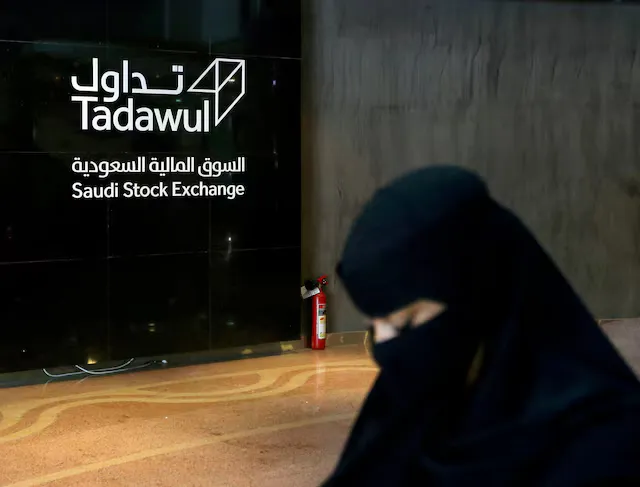
Major Gulf stock markets fell in early trading today, impacted by renewed tensions in the Middle East, which negatively affected investor sentiment. This decline followed local media reports of explosions in Tehran, Tabriz, and Isfahan, while U.S. President Donald Trump hinted at the possibility of reaching an agreement to end the war, urging Israeli Prime Minister Benjamin Netanyahu to avoid further strikes.
In the UAE, the main index in Dubai dropped by 1.3%, influenced by a 1.2% decline in Emaar Properties shares and a 1.6% drop in Salik shares. The Abu Dhabi index also fell by 0.9%, with the International Holding Company shares decreasing by 0.6% and First Abu Dhabi Bank shares dropping by 1.3%.
Event Details
The Qatari index decreased by 0.9%, pressured by a 1.1% drop in Qatar National Bank shares. In Saudi Arabia, the main index fell by 0.1%, affected by a 0.5% decline in Al Rajhi Bank shares. Conversely, Saudi Aramco shares rose by 0.7%, supported by rising oil prices, with Brent crude contracts increasing by 4.47% to reach $97.15 per barrel.
Alan Taylor, a member of the Monetary Policy Committee at the Bank of England, stated that current interest rates are restrictive for the economy, indicating that he sees no need to raise them to combat inflationary pressures arising from the Iranian war. He explained in an interview with Sky News that the current situation is manageable unless the worst-case scenarios occur, expressing hope for the crisis to end.
Background & Context
Taylor has been a prominent advocate for lowering interest rates before the outbreak of the U.S.-Israeli war with Iran, and since then, he and the majority of committee members have voted to keep borrowing costs unchanged. The discussion around lowering interest rates has shifted to the possibility of tightening again, as Megan Greene, a member of the Monetary Policy Committee, believes that ongoing geopolitical tensions could raise inflation risks.
Greene warns that excessive hesitation could be costly, noting that raising interest rates to 4% may become necessary if inflationary pressures persist. In contrast, the Organization for Economic Cooperation and Development (OECD) adopts a more cautious outlook, expecting interest rates to remain stable throughout this year before lowering them later in 2027.
Impact & Consequences
In the background, the quantitative tightening program is gradually reshaping the financial environment. Bank of England Governor Andrew Bailey updated lawmakers on the latest developments of this program, indicating that the Bank of England's reserves have declined to around £640 billion, compared to a peak of approximately £980 billion.
Quantitative tightening effectively tightens financial conditions indirectly, providing policymakers with an additional reason to exercise caution. Raising interest rates alongside quantitative tightening could send a strong message to combat inflation, but it may also add pressure to an economy that remains fragile.
Regional Significance
Arab markets are directly affected by geopolitical tensions, as events in the Middle East contribute to significant fluctuations in financial markets. Investors in the region must closely monitor these developments, as they can impact their investment strategies.
In conclusion, the situation in the region remains volatile, requiring investors to make informed decisions amid these changing circumstances.