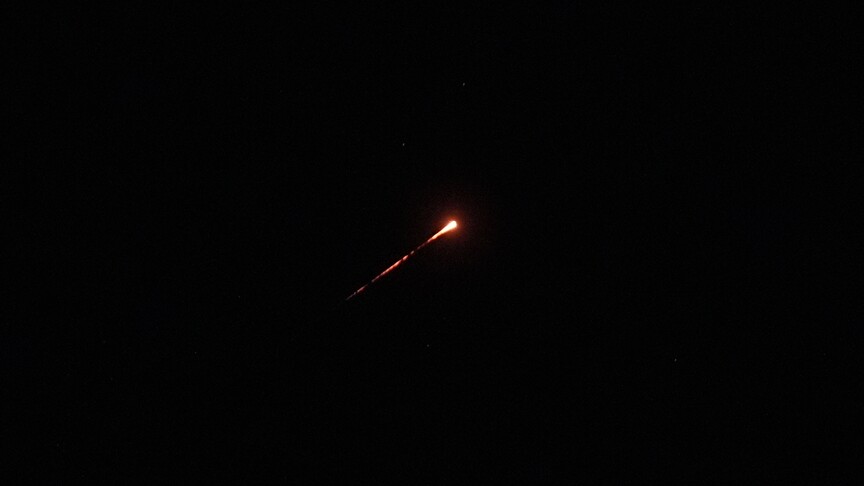
A senior Iranian advisor has warned that the resistance axis, which includes Iran and its allies, has the capability to close vital waterways if Israel continues to escalate its attacks. These statements come at a time when tensions are rising between the two sides, as Iran and Israel increasingly exchange pressure and attacks.
Concerns are growing about the escalation of conflict in the region, as recent days have witnessed a series of mutual missile attacks. While Iran emphasizes its ability to respond, Israel continues its military operations against Iranian targets in Syria, further intensifying the tensions.
Details of the Situation
In statements made by the Iranian advisor, it was emphasized that Iran will not hesitate to use its military power to defend its interests. He also noted that any escalation by Israel would be met with a strong response, raising concerns about the potential for a large-scale conflict in the region.
These developments come at a sensitive time, as Israel seeks to bolster its security position amid increasing threats from Iran. Recent days have seen an uptick in missile attacks, with Iran targeting Israeli military sites, leading to swift reactions from the Israeli side.
Background & Context
Historically, relations between Iran and Israel have been tense, with each side viewing the other as an existential threat. Since the Iranian Revolution in 1979, Iran has taken an antagonistic stance towards Israel, leading to escalating conflicts in the region. In recent years, Israel has increased its military operations against Iran, particularly in Syria, where it seeks to prevent Tehran from bolstering its military presence near its borders.
These tensions are part of a broader conflict involving multiple regional and international powers. Iran seeks to expand its influence in the region, while Israel aims to maintain its military superiority. This conflict reflects the complex geopolitical tensions in the Middle East.
Impact & Consequences
These tensions could lead to greater military escalation, potentially affecting the stability of the entire region. If mutual attacks continue, neighboring countries may find themselves compelled to intervene, increasing the likelihood of a widespread conflict. Additionally, any escalation could impact oil prices and global financial markets, as the region is one of the world's most significant oil-producing areas.
Moreover, these tensions may exacerbate sectarian divisions in the region, as extremist groups could exploit the situation to enhance their influence. This could complicate peace and stability efforts in the Middle East.
Regional Significance
The tensions between Iran and Israel have significant implications for Arab countries, as they could affect the national security of neighboring states. If the conflict escalates, Arab nations may find themselves in a difficult position, needing to take a clear stance on the conflict.
Furthermore, these tensions could lead to increased sectarian tensions in the region, impacting relations between Arab states and Iran. Under these circumstances, it becomes essential for Arab countries to enhance security and political cooperation to address shared challenges.
In conclusion, the tensions between Iran and Israel remain a complex issue requiring international attention. The international community must work to de-escalate the situation and prevent conflict escalation, as any escalation could have dire consequences for the entire region.