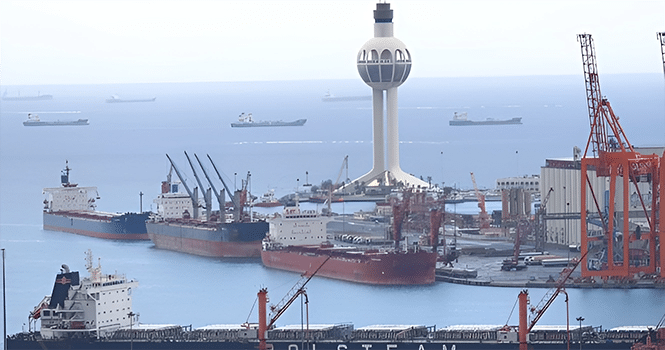
The Saudi Ports Authority has announced the increase of the capacity of the Jeddah Islamic Port gates from 10 to 18 lanes, a move aimed at enhancing the efficiency of logistical operations and facilitating the movement of goods. This increase is part of the Kingdom's Vision 2030, which seeks to develop infrastructure and enhance the Kingdom's status as a global trade hub.
This step is part of the government's efforts to improve services provided at ports, as it will enable the accommodation of a larger number of trucks and vehicles, contributing to reduced waiting times and increased speed of unloading and loading goods.
Details of the Initiative
The new updates at Jeddah Islamic Port include the addition of new lanes and the upgrading of the technical systems used in traffic management. Logistics services associated with the port have also been improved, reflecting the Kingdom's commitment to enhancing port efficiency and facilitating trade.
Jeddah Islamic Port is considered one of the largest ports in the Kingdom, playing a vital role in trade movement between the Kingdom and countries around the world. With these updates, the port is expected to witness a significant increase in the volume of goods traded.
Background & Context
This initiative comes amid challenges faced by many global ports, as countries strive to improve their infrastructure to meet the growing demand for trade. Studies have shown that improving port efficiency can significantly contribute to enhancing the national economy.
In recent years, the Kingdom has made substantial investments in developing its ports, making it one of the main destinations for trade in the region. These investments include upgrading equipment and expanding facilities, contributing to raising the level of services provided.
Impact & Consequences
The increase in capacity at Jeddah Islamic Port is expected to improve the Kingdom's competitiveness in the global market. This step will help attract more global companies to invest in the Kingdom, thereby boosting the local economy.
Moreover, improving port efficiency will contribute to reducing shipping and transportation costs, benefiting both consumers and businesses alike. These developments reflect the Kingdom's commitment to enhancing the business environment and improving service quality.
Regional Significance
This step serves as a model for other Arab countries seeking to improve their infrastructure and boost trade. With the increasing economic challenges in the region, port improvements can be an effective means to enhance economic growth.
Furthermore, developing ports enhances the ability of Arab countries to compete in global markets, contributing to sustainable development and strengthening economic integration among Arab nations.
In conclusion, the increase in capacity at the Jeddah Islamic Port gates represents a strategic step that reflects the Kingdom's Vision 2030 in enhancing infrastructure and improving logistical service efficiency. This initiative is not just a local improvement but also reflects the Kingdom's commitment to its role as an economic powerhouse in the region.