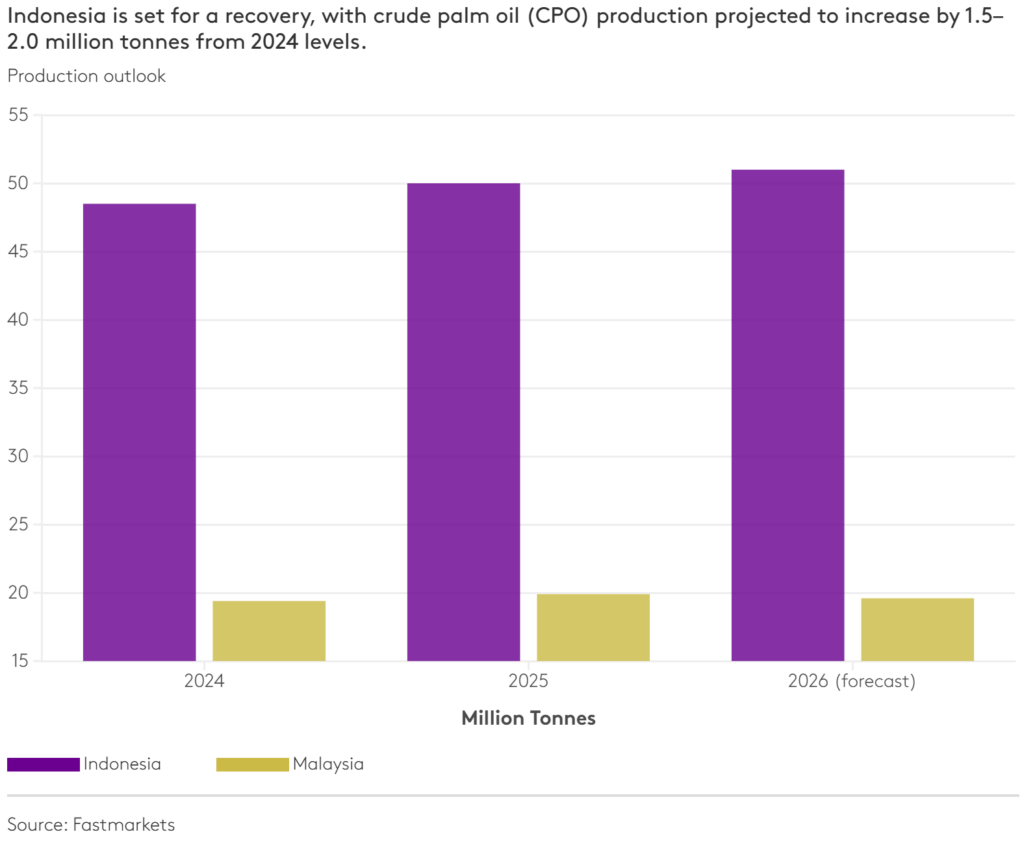
The Indonesian Ministry of Trade has set a reference price for crude palm oil (CPO) at $989.63 per ton for the period from April 1 to April 30, 2026, reflecting a significant increase of 5.41% compared to last month's price of $938.87 per ton. This decision comes amid rising global demand for this vital commodity, coupled with the impact of geopolitical tensions in the Middle East.
In a statement, Tomi Andan, the Director General of Foreign Trade at the ministry, confirmed that this increase is a result of heightened demand that has not been matched by an increase in supply due to declining production. He also noted that crude oil prices have risen due to current geopolitical conditions, which in turn has affected palm oil prices.
Details of the Event
The export duties for crude palm oil during this period have been set at $148 per ton, while the export duty for refined palm oil has been set at $123.7035 per ton, representing 12.5% of the reference price. These prices have been calculated based on average prices in Indonesian and Malaysian markets as well as Rotterdam port prices.
According to data, the average price on the Indonesian palm oil exchange from February 20 to March 19, 2026, was $896.94 per ton, while in Malaysia it reached $1,082.31 per ton, and in Rotterdam $1,319.84 per ton. If there is a price difference exceeding $40, the reference price is calculated based on the average prices closest to the median.
Background & Context
Indonesia is one of the largest producers of palm oil in the world, with this commodity playing a vital role in the Indonesian economy. In recent years, there have been significant fluctuations in palm oil prices, impacting both global and local markets. The increasing demand for palm oil is attributed to its widespread use in food and non-food industries, making it a strategic commodity.
Geopolitical tensions in the Middle East, particularly crises affecting oil production, play a significant role in driving up palm oil prices. As oil prices rise, producers tend to increase palm oil prices as an alternative, adding pressure to global markets.
Impact & Consequences
This increase in palm oil prices is expected to affect global markets, as many countries rely on this commodity in their food industries. Additionally, rising prices may lead to increased production costs in various industries, which could reflect on food prices in the markets.
Moreover, the price hikes may impact consumers' ability in importing countries to purchase this commodity, potentially leading to fluctuations in demand. These changes may also affect the trade policies of both importing and exporting countries.
Regional Significance
The Arab region is also experiencing direct effects from the rise in palm oil prices, as many Arab countries depend on importing this commodity. With rising prices, Arab nations may face challenges in securing their food needs, potentially leading to increased local prices.
Additionally, geopolitical tensions in the Middle East may affect market stability, increasing the need for effective strategies to ensure food security in the region.
In conclusion, the rise in palm oil prices is a direct result of changes in demand and supply, along with geopolitical influences. It is crucial for both producing and importing countries to monitor these changes to ensure market stability and protect their economic interests.