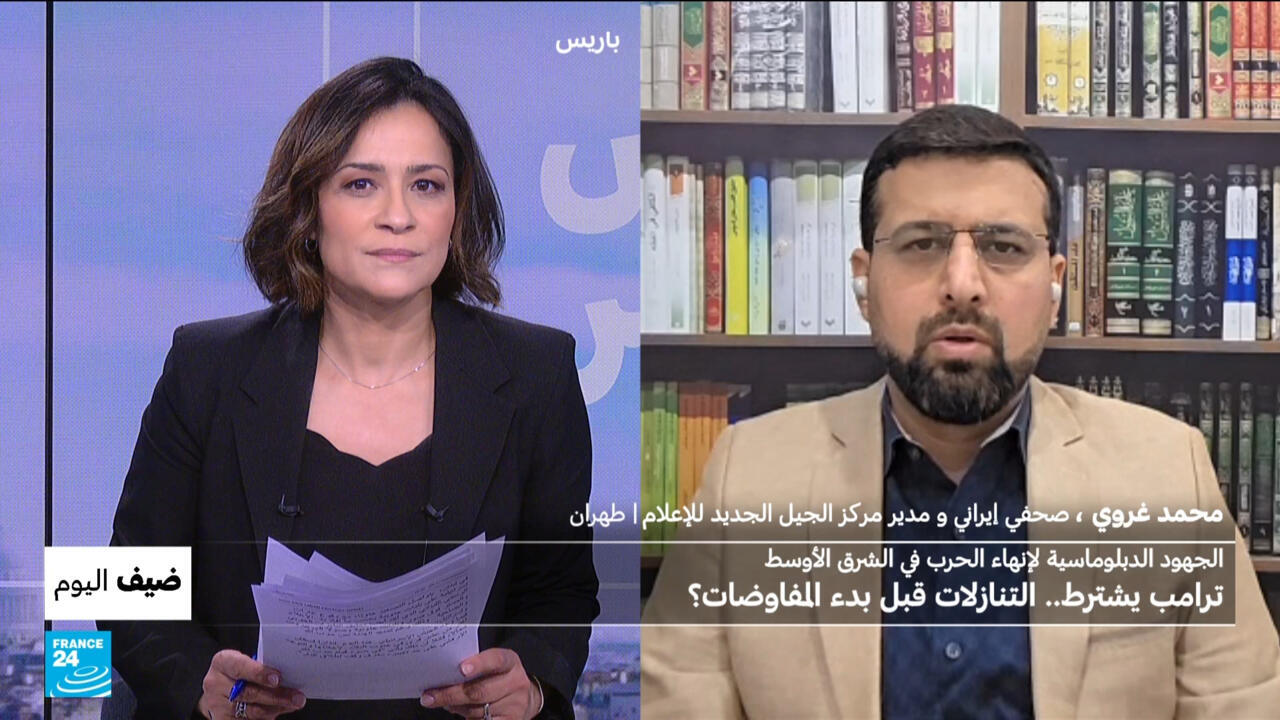
Iran is striving to conclude the war in the Middle East through a diplomatic proposal, yet U.S. President Donald Trump has not expressed significant welcome. In a new episode of the program 'Guest of the Day,' Iranian journalist and director of the New Generation Media Center in Tehran, Mohammad Ghoravi, was hosted to discuss the details of this proposal and its prospects.
This Iranian proposal comes at a sensitive time when the region is experiencing increasing tensions, as many parties seek to find peaceful solutions to ongoing conflicts. However, Trump has conditioned any official negotiations on concessions from Tehran, raising questions about the potential for progress in this direction.
Details of the Proposal
In his remarks, Ghoravi indicated that Iran hopes that the recent tour of its foreign minister in the region has garnered greater support for its proposal. Nevertheless, the reactions from Washington have been lukewarm, complicating the situation further. Ghoravi believes that Iran may be willing to make some concessions, but it requires guarantees from the United States and Gulf countries.
Pressure on Iran is mounting due to the economic sanctions imposed on it, prompting the country to seek diplomatic solutions. However, will Tehran succeed in convincing Trump to offer concessions in exchange for resuming negotiations?
Background & Context
Historically, the region has witnessed numerous attempts to end conflicts, but most have failed. Iranian-American relations have been tense for decades, especially following Trump's withdrawal from the nuclear agreement in 2018. This backdrop makes it difficult for both parties to reach an agreement.
Moreover, Gulf countries play a significant role in this context, as they seek to influence the course of events. Will these countries succeed in pushing Iran towards making concessions, or will matters remain unchanged?
Impact & Consequences
If the Iranian proposal succeeds, it could lead to a radical change in the political landscape of the Middle East. This may help ease tensions between Iran and Gulf countries, contributing to regional stability. Conversely, if negotiations fail, the situation may escalate further, threatening regional security.
It is also important to note how these developments will affect relations between Iran and the West, especially amid ongoing tensions regarding the Iranian nuclear program.
Regional Significance
These events are of particular importance to Arab countries, as they can impact their stability and security. If Iran manages to make progress in its negotiations, it could positively reflect on relations between Arab states and Tehran.
Ultimately, the question remains open: Will Iran be able to make the necessary concessions, and will its diplomatic efforts succeed in achieving peace in the region?