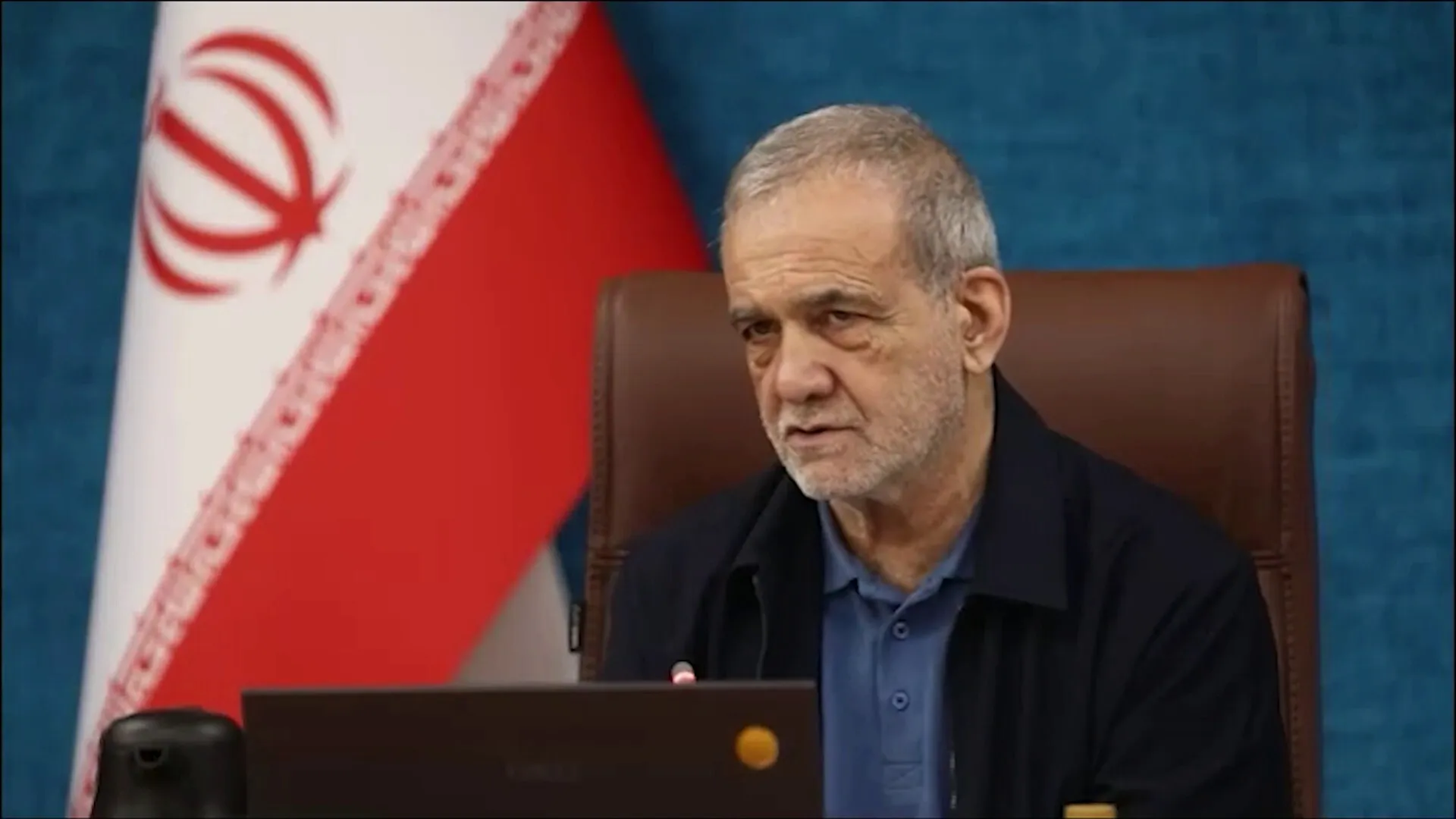
Iranian President Masoud Bezhakian has warned that current tensions could extend to neighboring countries, emphasizing the need for unity and regional cooperation to face challenges. He identified the U.S. and Zionism as the main enemies seeking to incite discord among Muslims.
In a speech during a meeting of the Iranian Cabinet, Bezhakian called for overcoming internal differences and not displaying them at this sensitive stage. He underscored the importance of enhancing cooperation among regional countries, warning that the targeting would not be limited to Iran alone but could extend to other nations such as Iraq, Turkey, Pakistan, and Saudi Arabia.
Event Details
Bezhakian praised the positions of some neighboring countries, appreciating Afghanistan's cooperation, particularly regarding water issues, as well as the collaboration of Pakistan, Iraq, Azerbaijan, and Turkey in confronting what he described as attempts to incite conflicts. He confirmed that this coordination has contributed to thwarting plans aimed at destabilizing internal stability.
The Iranian president called for investing in this regional cooperation, warning against falling into external schemes. He also urged the Iranian people to continue their support and solidarity, especially under difficult circumstances where some may lose family members.
Background & Context
Bezhakian affirmed that his country continues to manage its internal crises despite escalating pressures, stressing that the cohesion of the internal front and the role of the people are the foundational pillars in facing challenges. He noted that the entire weight and effort fall on those working in the field, considering that public satisfaction in these circumstances is a source of great pride.
He also clarified that the management of conditions within Iran is proceeding in a way that prevents citizens from feeling the burden of war as expected, attributing this to the efforts of officials, particularly governors, ministers, and the Ministry of Interior.
Impact & Consequences
The Iranian president emphasized the necessity of instilling an internal conviction that the country can be managed with dignity and pride, warning that defeat does not stem from external pressures as much as it does from closed minds and monopolization of opinion. He called for openness and cooperation instead of imposing a single viewpoint.
On the economic front, Bezhakian urged citizens to participate in managing energy consumption, especially gas, electricity, and fuel, pointing out the importance of not cutting supplies to the industrial sector. He affirmed that the unity and solidarity of the people prevent the imposition of surrender, warning against classifying society into "us" and "not us".
Regional Significance
Bezhakian criticized what he termed "arrogance" in dealing with regional issues, emphasizing the right of peoples to defend themselves. He assured that the government would do everything possible to serve the citizens, calling on official media to support awareness and cooperation efforts to avoid energy crises in summer and winter.
He also expressed appreciation for the role of leadership and the armed forces, including the Revolutionary Guard, Basij, army, and security forces, praising what he described as their "sacrifices and dedication" in protecting the country.