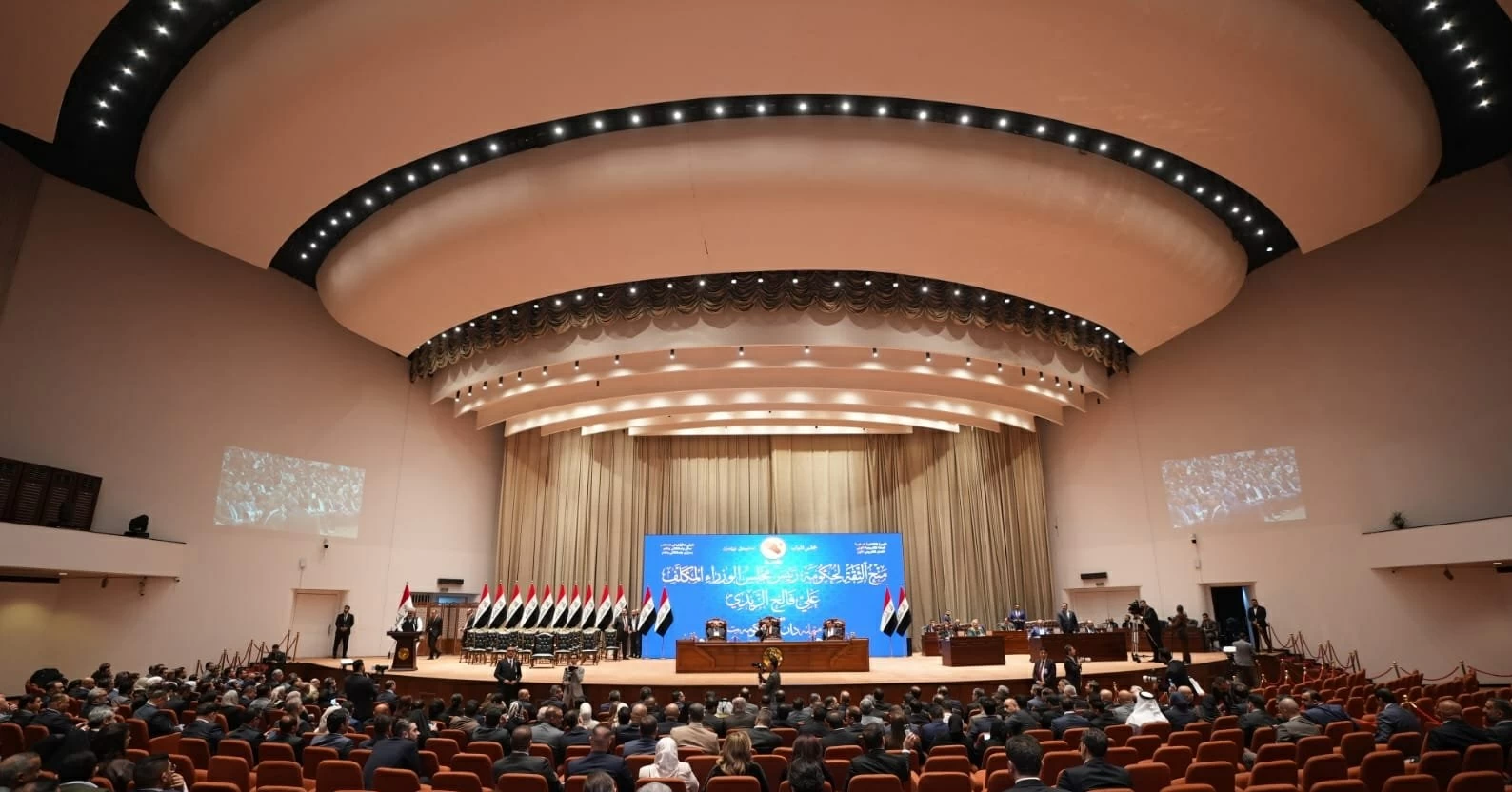
The Iraqi Parliament voted this afternoon (Thursday) to grant confidence to the government of Prime Minister Ali Faleh Al-Zaydi, approving 14 ministers as part of the new government formation.
The session, attended by 270 deputies, saw the parliament vote on several ministers, including Bassam Mohammed Khudair as Minister of Oil, Mohammed Nuri as Minister of Industry, Ali Saad Wahib as Minister of Electricity, Abdul Karim Abtan as Minister of Education, and Moustafa Nizar Jumaa as Minister of Trade.
Details of the Event
The parliament also voted on Abdul Hussein Aziz as Minister of Health, Sarwa Abdul Wahid as Minister of Environment, Muthana Ali Mahdi as Minister of Water Resources, Abdul Rahim Jassim as Minister of Agriculture, and Khalid Shawani as Minister of Justice. Additionally, Wahab Salman Mohammed was selected as Minister of Transport, Faleh Al-Sari as Minister of Finance, Moustafa Sand as Minister of Communications, and Fouad Hussein as Minister of Foreign Affairs.
However, the vote on the candidates for the Ministries of Higher Education, Interior, Planning, and Labor was postponed due to objections raised against the nominees. A parliamentary source informed Okaz newspaper that the postponed ministries, along with the Vice Presidents of the Republic and the government, will be resolved after the Eid al-Adha holiday.
Background & Context
This step comes at a critical time for Iraq, as Al-Zaydi seeks to form a government capable of addressing the economic and security challenges facing the country. The previous period has witnessed political tensions and conflicts among various blocs, affecting the government formation process.
Historically, Iraq has experienced numerous governmental changes, with previous administrations struggling to achieve political and economic stability. Therefore, the formation of a new government is considered an important step toward restoring confidence in the political process.
Impact & Consequences
This new government is expected to influence the political landscape in Iraq, as citizens hope it can implement the necessary reforms and improve public services. However, challenges remain, particularly concerning corruption and unemployment.
The postponement of the vote on some ministries may raise questions about the government's ability to function effectively, which could impact public trust in it. Thus, it will be crucial to monitor how the government addresses these issues in the upcoming period.
Regional Significance
The formation of Al-Zaydi's government may have wide-ranging effects on the Arab region, as stability in Iraq is a significant factor for the stability of neighboring countries. Furthermore, the government's success in addressing internal issues could contribute to enhancing regional cooperation.
Ultimately, hope remains pinned on the new government to fulfill the aspirations of the Iraqi people, amidst substantial challenges that require continuous efforts and strong political will.