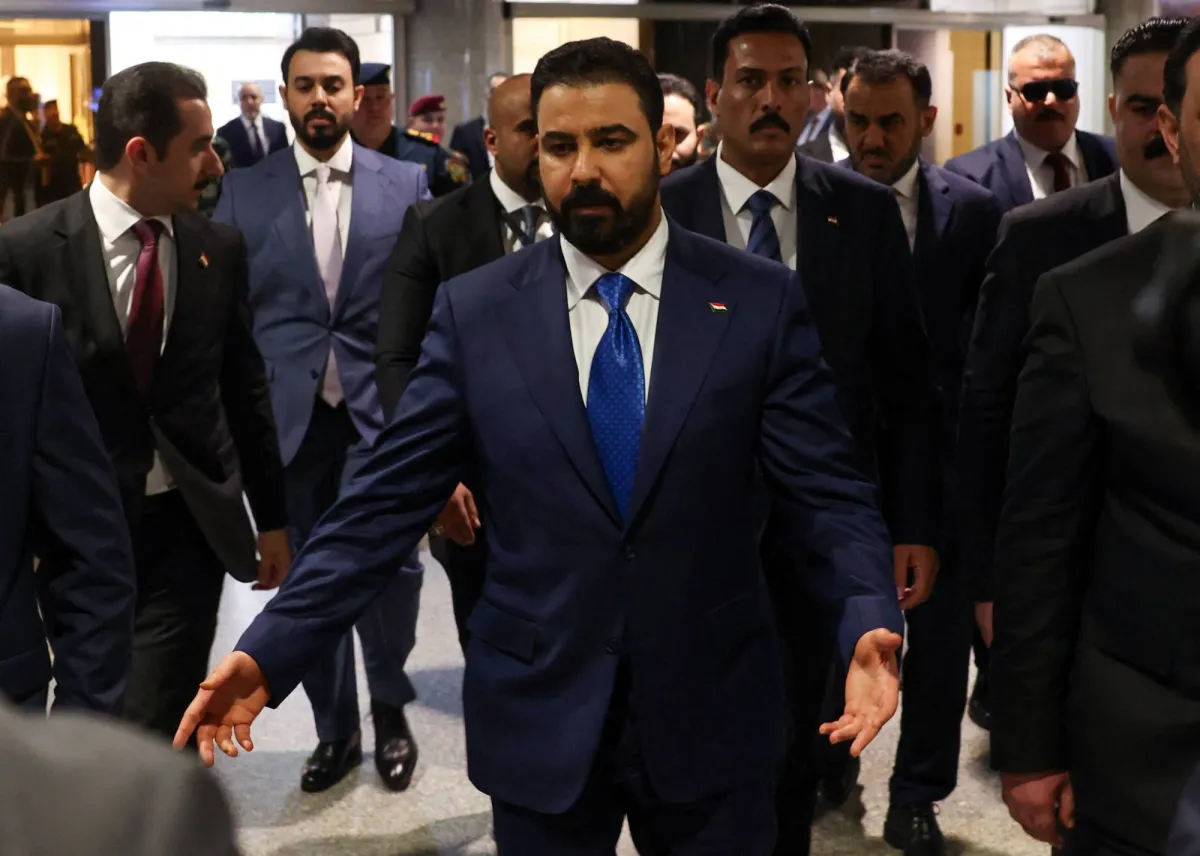
The Iraqi Parliament has granted confidence to an incomplete government led by Prime Minister-designate Ali Falah Al-Zaydi, after a session attended by 226 deputies. This decision reflects a fragile compromise amid increasing American pressures concerning the role of Iran-linked armed factions within state institutions.
The Council of Representatives voted on the government program, which consists of 14 points, and granted confidence to several ministers within a partial formation, while several portfolios remain vacant due to ongoing political disputes among Shiite, Sunni, and Kurdish forces regarding the distribution of some sovereign and service ministries.
Details of the Event
The government was passed after days of intensive negotiations between the forces of the "Coordination Framework" and Sunni and Kurdish parties, at a time when it appeared that American pressures related to the issue of arms and armed factions played a pivotal role in forming the new government. Iraqi political sources reported that parliament members did not receive complete resumes of the nominated ministers until just hours before the voting session, while the political agreement to pass part of the cabinet was finalized to ensure the government's launch.
The fortified Green Zone in Baghdad, where the Parliament building is located, witnessed heightened security measures since the early morning hours, with main entrances closed to those without official permits, and no signs of escalation from armed factions or their supporters were recorded. Despite the forces close to the factions holding around 80 seats in Parliament, their absence from the political and field scene during the confidence vote session was evident.
Context and Background
The current state of calm is attributed to an "Iranian decision not to escalate at this stage," coinciding with continued indirect tensions between Tehran and Washington. The "Sadiqoon" bloc affiliated with the "Asa'ib Ahl al-Haq" movement linked its participation in the government to resolving the issue of "restricting arms to the state," despite names close to the movement circulating for government positions.
In Washington, the United States confirmed that it is monitoring the formation of the new Iraqi government, emphasizing that its relationship with the upcoming government will be determined based on its stance towards Iran-backed armed factions. A spokesperson for the U.S. State Department stated that "militias linked to Iran should have no role within Iraqi state institutions."
Impact and Consequences
By granting confidence to the government, Iraq aims to address issues of services, energy, and the economy, alongside restricting arms to the state, which is the most sensitive issue in the current Iraqi political landscape. However, several portfolios, including defense, interior, transport, culture, and labor, remain subject to political negotiation, amid ongoing disputes within the forces participating in the government.
The presidency of the parliament relied on a previous decision by the Federal Supreme Court that allows the Prime Minister-designate to present his cabinet in batches, which enabled the government to be passed despite several ministerial vacancies. This decision may open the door to further political tensions in the future.
Impact on the Arab Region
This step is significant in the context of regional relations, reflecting the tensions among political forces in Iraq and their impact on stability in the region. Additionally, American pressures on armed factions may affect political balances in Iraq, which could reflect on relations with neighboring countries.
In conclusion, it remains to be seen how the new government will handle the significant challenges it faces, especially amid ongoing political disputes and external pressures. The success of the government in achieving stability could have profound implications for the future of Iraq and the region as a whole.