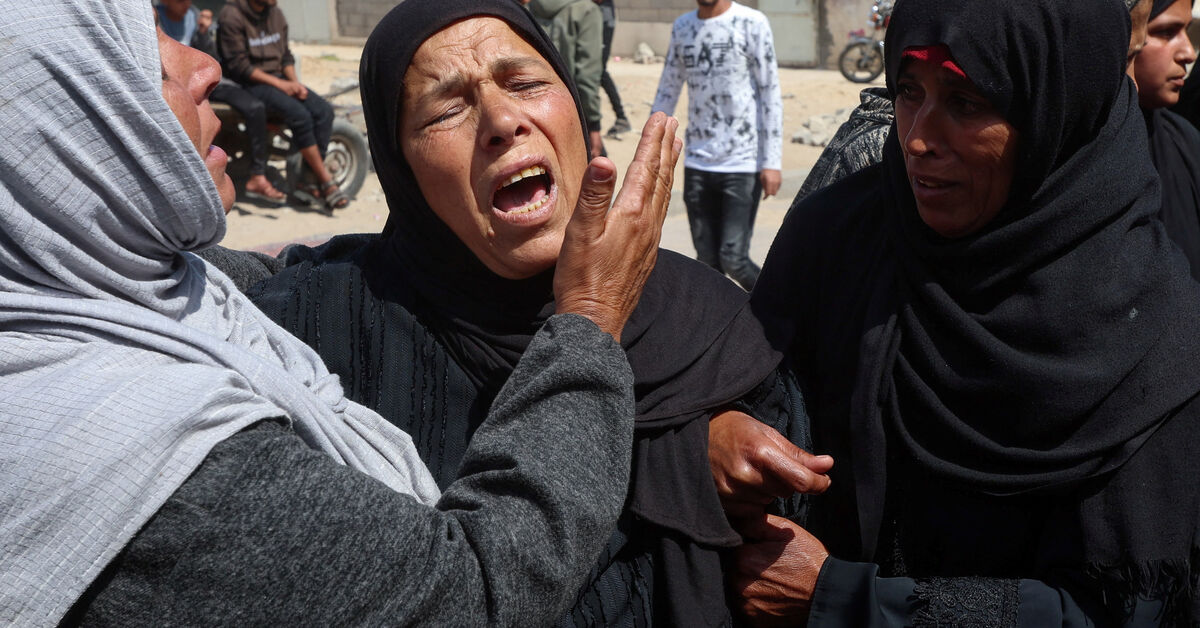
Israeli airstrikes on the Gaza Strip on Tuesday resulted in the deaths of three Palestinians, including a nine-year-old boy, according to medical sources. The drone attack targeted the child, Adel Al-Najjar, in Khan Younis, while another airstrike hit a vehicle in Gaza City, leading to the deaths of two others and injuring several more.
Medical sources reported that Adel Al-Najjar was killed in eastern Khan Younis while playing in the street when he was struck by the drone. Meanwhile, the airstrike on a car in Gaza resulted in two fatalities and multiple injuries. No immediate comment was made by the Israeli military regarding these incidents.
Details of the Airstrikes
These airstrikes come at a sensitive time as the Gaza Strip faces increasing tensions due to military escalation. Recently, the region has witnessed a surge in Israeli military operations, exacerbating the humanitarian situation. The family of Adel Al-Najjar gathered at Nasser Hospital to bid farewell to his body, which was adorned with a white shroud symbolizing his innocence.
It is noteworthy that Gaza has been under a continuous blockade for years, increasing the suffering of its residents and making them vulnerable to further violence. The recent airstrikes reflect the ongoing conflict between Palestinians and Israelis, which has resulted in numerous humanitarian tragedies.
Background & Context
Historically, Gaza has experienced an escalation in military actions, serving as a battleground for repeated conflicts between Palestinian factions and the Israeli military. Since 2007, when Hamas took control of the territory, tensions have intensified, leading to several wars and armed conflicts. The humanitarian conditions in Gaza have significantly deteriorated, with residents suffering from severe shortages of essential resources such as water and electricity.
Over the years, there have been multiple attempts to reach a ceasefire, but these often fail due to mistrust between the conflicting parties. Israeli airstrikes are part of a policy of responding to rocket attacks from Gaza, but they frequently result in civilian casualties.
Impact & Consequences
The impact of these airstrikes extends beyond human losses, reflecting an escalation in violence that could lead to a new round of conflict. The international community is closely monitoring the situation, with increasing calls for de-escalation and a ceasefire. However, the continuation of attacks may exacerbate humanitarian conditions and heighten tensions in the region.
The international response to this escalation could be crucial in determining the course of future events. There are concerns that this escalation may lead to a new wave of displacement and refugee crises, increasing the burden on neighboring countries hosting Palestinian refugees.
Regional Significance
The situation in Gaza is emblematic of the broader Israeli-Palestinian conflict, highlighting the urgent need for a sustainable resolution. The ongoing violence not only affects the immediate region but also has implications for international relations and security in the Middle East.
In conclusion, the recent airstrikes underscore the deteriorating humanitarian conditions in Gaza and the ongoing complexities of the Israeli-Palestinian conflict, necessitating urgent attention and action from the global community.