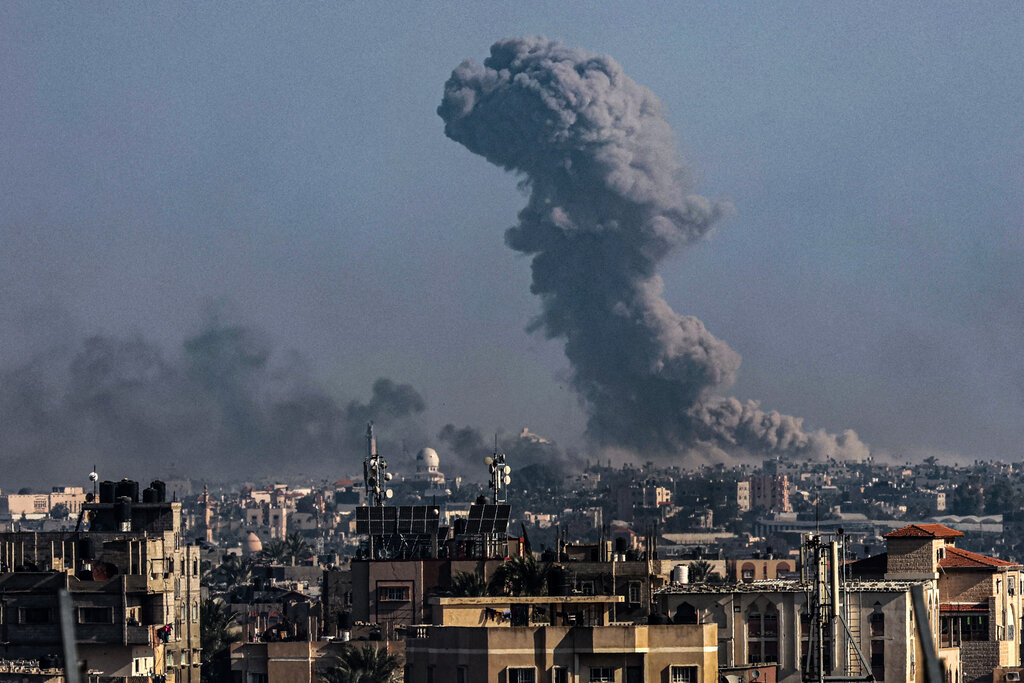
The Israeli occupation persists in applying military pressure on the residents of the Gaza Strip, aiming to drive them towards the western regions of the territory. These maneuvers are part of an effort to expand what is known as the 'Yellow Line', a term that refers to the dividing line between areas controlled by Israel and those controlled by Palestinian factions.
These pressures include the use of military force, which exacerbates the suffering of civilians and heightens tensions in the region. Such actions come at a sensitive time, coinciding with political developments on the Palestinian scene, raising questions about the true objectives behind these maneuvers.
Details of the Event
Reports indicate that the Israeli occupation has carried out intensive bombing operations in various areas of Gaza, leading to the displacement of many families towards the west. This displacement aims to alter the demographic composition of the area, thereby reinforcing Israeli control over Palestinian lands.
Moreover, these pressures occur amid escalating tensions between Palestinian factions and the occupation, as Israel seeks to impose a new reality that aligns with its strategy in the region. Recent events have shown that the occupation does not hesitate to use force to achieve its goals, even at the expense of civilians.
Background & Context
Historically, the Gaza Strip has witnessed numerous crises due to the Israeli occupation, with the region experiencing several wars and conflicts. These events have led to a deterioration of humanitarian and economic conditions, forcing residents to live under extremely difficult circumstances.
In recent years, Israel has attempted to assert control over more Palestinian territories, resulting in increased resistance from Palestinian factions. This ongoing conflict reflects the deep-seated tensions between the occupation and the Palestinian people, complicating peace efforts in the region.
Impact & Consequences
These Israeli pressures significantly affect the lives of civilians in Gaza, as their suffering intensifies due to ongoing military actions. Additionally, these measures could lead to a new escalation in the conflict, threatening stability across the entire region.
Furthermore, these movements may impact relations between Israel and Arab countries, as international criticism of Israeli policies grows. Such criticisms could increase pressure on the occupation, potentially contributing to changes in some current policies.
Regional Significance
The situation in Gaza is part of the larger picture of the Arab-Israeli conflict, with the Palestinian issue remaining a focal point of interest for the Arab world. The continuation of Israeli pressures could exacerbate humanitarian conditions, necessitating urgent international intervention.
These circumstances require a unified Arab action to support Palestinian rights, as any deterioration in the situation could affect stability in neighboring countries. The Palestinian cause remains central, and Arab nations must exert greater efforts to resolve it.
In conclusion, the situation in Gaza remains complex, with military and political dimensions heavily intertwined. A thorough analysis of events and strategic thinking by all involved parties is essential to achieve peace and stability in the region.