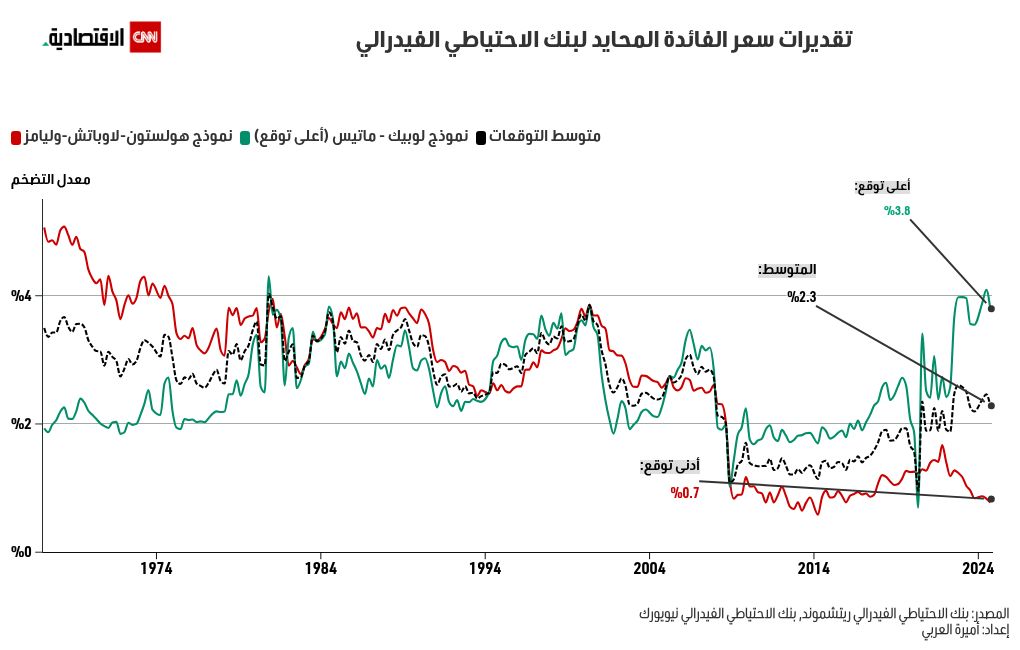
The Bank of Japan recently announced its new estimate for the neutral interest rate, which is a vital indicator of the monetary authorities' capacity to raise interest rates. The new estimates showed that the rate has not changed much from previous forecasts, indicating that economists will not adjust their opinions regarding the monetary policy direction in the country.
These estimates are very important as they reflect the current economic situation in Japan and the central bank's trends. Amid global economic challenges, the neutral interest rate remains a key indicator for understanding how the central bank responds to economic pressures.
Details of the Announcement
The Bank of Japan's estimate for the neutral interest rate comes at a sensitive time, as the bank seeks to achieve price stability and economic growth. The new estimates suggest that the bank still faces challenges in raising interest rates due to inflationary pressures that may affect the Japanese economy. The bank indicated that any changes in monetary policy will depend on developments in the domestic and global economy.
The neutral interest rate is an important indicator for monetary policy, as it determines the point at which interest rates do not stimulate or curb economic growth. Therefore, any changes in this rate can significantly impact economic and political decisions in Japan.
Background & Context
Historically, the Bank of Japan has faced numerous challenges in managing monetary policy, especially after years of economic stagnation. Since the global financial crisis in 2008, the bank has pursued an extremely accommodative monetary policy, including very low interest rates, aimed at stimulating growth. However, the new estimates for the neutral interest rate suggest that the bank may be in a difficult position regarding raising interest rates.
In recent years, Japan has witnessed significant changes in the structure of the global economy, affecting the central bank's strategies. Changes in oil prices, trade tensions, and the repercussions of the COVID-19 pandemic are all factors that influence the bank's decisions.
Impact & Consequences
The Bank of Japan's estimate for the neutral interest rate could have wide-ranging effects on financial markets. If the bank decides to raise interest rates, it could lead to volatility in financial markets, especially amid global economic tensions. On the other hand, if the bank continues with a low-interest-rate policy, it may lead to sustained inflationary pressures.
This estimate may also affect investor and consumer expectations, potentially leading to changes in their financial behavior. In the case of price instability, consumers may hesitate to spend, which would impact economic growth.
Regional Significance
The Arab region is significantly affected by global economic changes, including monetary policies in Japan. If the Bank of Japan raises interest rates, it could lead to increased borrowing costs in global markets, impacting Arab economies that rely on foreign investments.
Moreover, any changes in Japanese monetary policy could affect oil prices, which is a crucial factor in the economies of many Arab countries. Therefore, monitoring developments from the Bank of Japan is essential for understanding economic trends in the region.
In conclusion, the Bank of Japan's estimate for the neutral interest rate remains an important indicator for understanding monetary policy in the country. As economic challenges continue, the impact of these estimates will remain a focal point for both economists and investors alike.