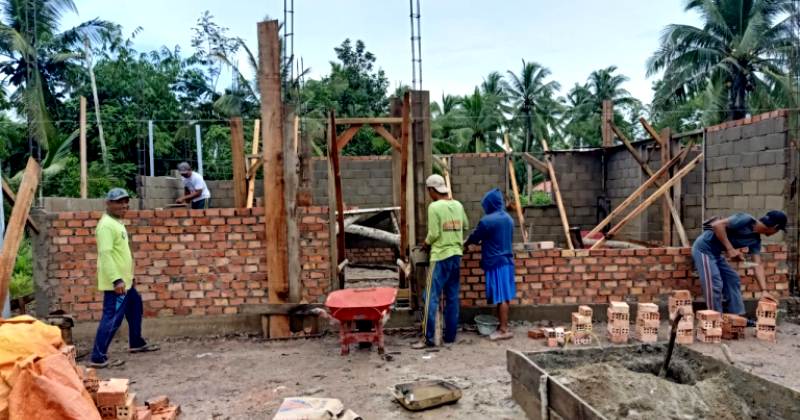
Indonesian Interior Minister Muhammad Tito Karnavian announced the launch of the 'Bantuan Stimulan Perumahan Swadaya' (BSPS) program aimed at improving housing conditions for low-income families. This announcement was made during the nationwide launch ceremony in Jakarta, where the minister emphasized the importance of this program in supporting the most vulnerable groups.
Karnavian pointed out that the program is part of the government's initiative to provide three million housing units, aligning with the vision of Indonesian President Joko Widodo. The minister assured that he would do his utmost to support this program in collaboration with the relevant ministers, stressing the crucial role of local governments in achieving the program's objectives.
Event Details
The BSPS program was launched as part of a collaboration between the Ministry of Home Affairs and the Ministry of Public Works and Housing, along with several financial institutions such as Bank Rakyat Indonesia. The ceremony was attended by several prominent figures, including Minister of Public Works and Housing Basuki Hadimuljono, who was praised for his role in supporting vulnerable segments of society.
The program aims to provide decent housing for low-income families, contributing to improved living standards and enhancing social stability. Karnavian also noted that this program would stimulate the local economy by supporting small and medium-sized economic activities.
Background & Context
Indonesia is one of the countries facing significant challenges in housing, with many citizens suffering from a lack of adequate housing. Studies have shown that over 10% of the population lives in unsuitable housing conditions. In this context, the government's initiative to provide housing is a necessary step to improve the lives of citizens.
Historically, previous Indonesian governments have launched several housing programs, but they did not achieve the desired results due to funding shortages and administrative corruption. However, the current government seems to be adopting a more inclusive approach, collaborating with the private sector and civil society to achieve its goals.
Impact & Consequences
The BSPS program is expected to contribute to reducing poverty rates in Indonesia, as it will provide poor families with the opportunity to obtain decent housing. Additionally, the program will enhance economic activity by creating job opportunities in the construction and building sector, contributing to an overall improvement in economic conditions.
Moreover, improving housing conditions can lead to better public health and education, as living in a healthy environment positively affects quality of life. Thus, this program is a strategic step towards achieving sustainable development in Indonesia.
Regional Significance
Indonesia's experience in housing is a model for Arab countries facing similar challenges in providing adequate housing for their citizens. Arab nations can benefit from this experience by adopting similar housing programs aimed at improving living conditions for vulnerable groups.
Furthermore, the collaboration between the government and the private sector in Indonesia can serve as a model in the Arab region, as it can contribute to achieving sustainable development and creating job opportunities.