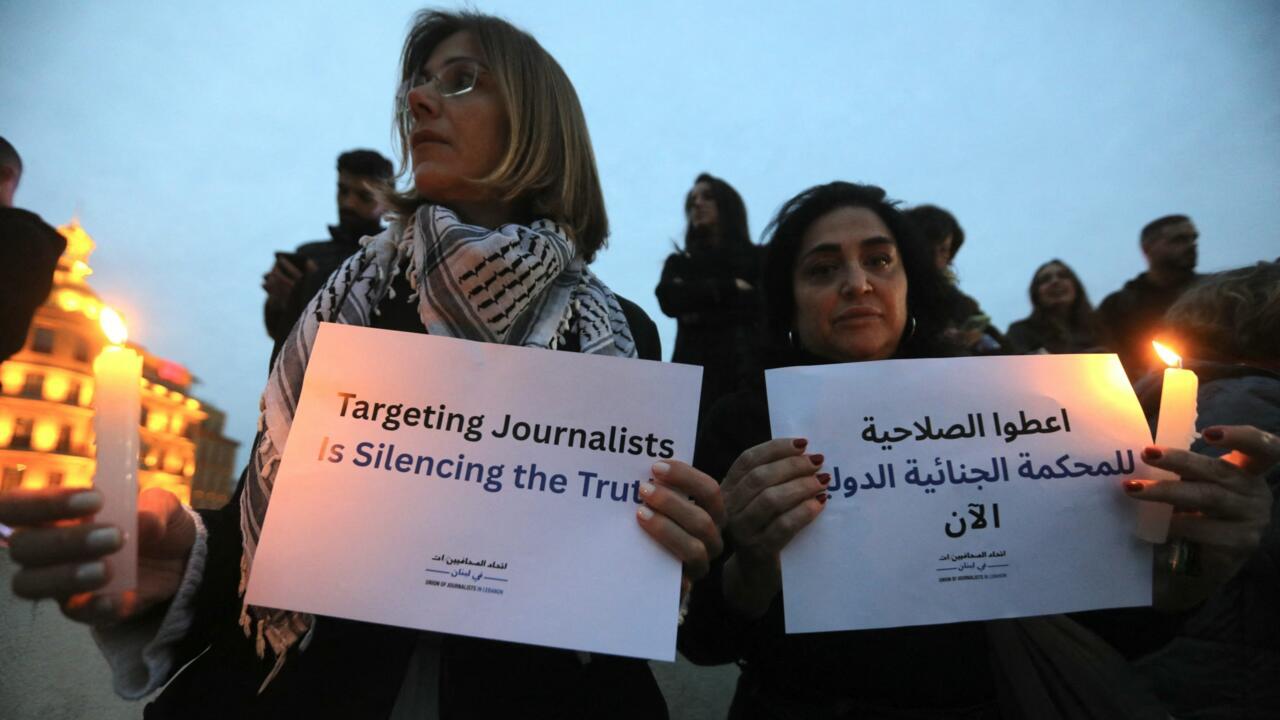
Despite the increasing accusations from Lebanon against Israel for committing war crimes on its territory, the Lebanese government continues to refuse to grant the International Criminal Court (ICC) the authority to investigate these crimes. Since the onset of the war on March 2, 2024, more than 211 children and 111 paramedics have been reported killed, along with 5 journalists, prompting urgent human rights calls for action.
On April 26, 2024, the Lebanese Cabinet, led by Najib Mikati, decided to task the Ministry of Foreign Affairs with submitting a declaration to the ICC. However, the government retracted this decision a month later, raising questions about the true reasons behind this reversal.
Details of the Incident
Following the targeting of a gathering of journalists in Alama Al-Shaab, southern Lebanon, on October 13, 2023, which resulted in the death of Reuters photographer Issam Abdullah, pressure on the Lebanese government to grant the ICC the authority to investigate has intensified. However, the complex political reality in Lebanon, particularly with the presence of Hezbollah, complicates matters and leads the government to avoid taking steps that could result in accountability.
Reports indicate that Hezbollah opposes Lebanon's recourse to the ICC, fearing that it could lead to its condemnation. There are also concerns about potential American reactions that could include sanctions against Lebanese officials.
Background & Context
Historically, Lebanon has not joined the ICC as a member due to the refusal of warlords in the country. However, the previous government had granted the court authority, but the current government's retraction reflects political instability and fear of consequences.
Figures released by the Lebanese Ministry of Health show that the number of casualties is significantly increasing, reflecting the extent of damage inflicted on civilians. President Joseph Aoun described the targeting of journalists as a violation of the most basic rules of international law.
Impact & Consequences
Pressure on the Lebanese government is mounting from human rights organizations and international institutions, demanding official investigations into the crimes committed. Lawyer Farouk Al-Maghribi pointed out that granting authority to the ICC is a quick and cost-effective step, but political obstacles prevent this from happening.
Concerns are growing that the Lebanese government's failure to take serious steps may exacerbate the humanitarian situation in the country and reinforce a culture of impunity for crimes committed against civilians.
Regional Significance
This issue is part of the broader conflict in the region, where violations against civilians are increasing in various contexts. The lack of accountability for perpetrators could lead to further violence and instability in Lebanon and the region.
In conclusion, the question remains: when will the Lebanese government take serious steps towards justice? Opening judicial files to document war crimes is essential to ensure that such violations do not recur in the future.