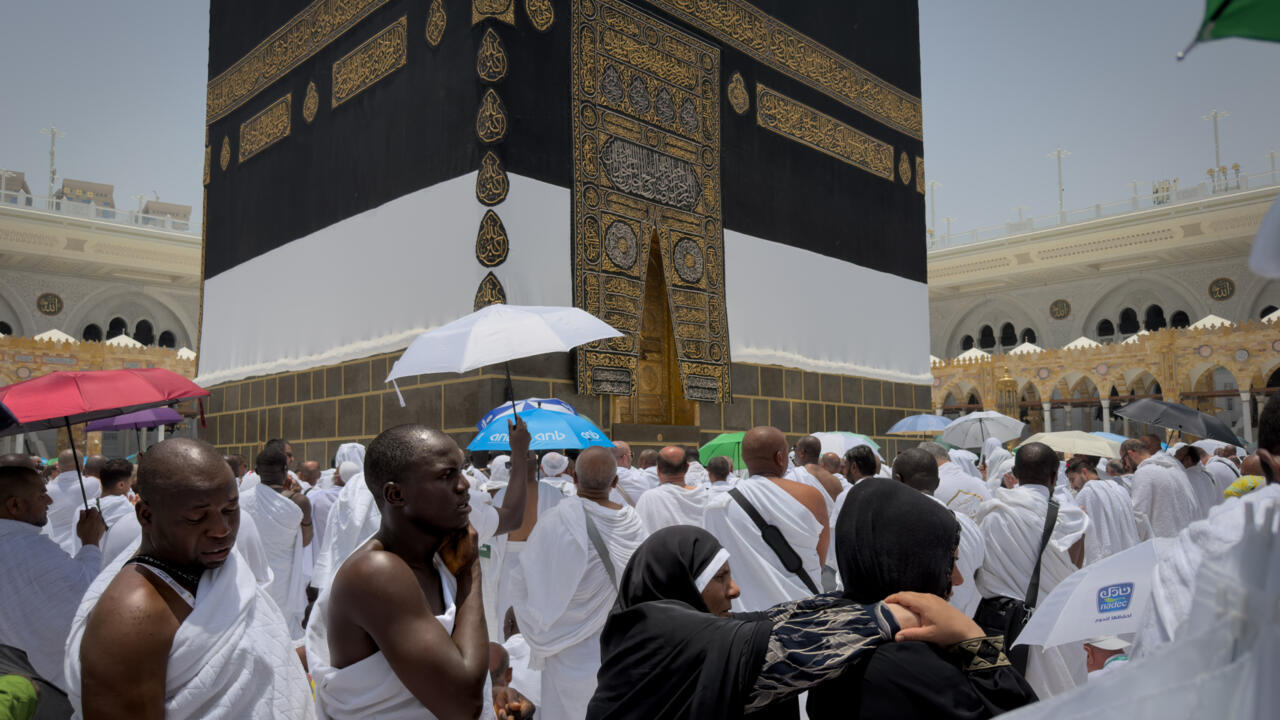
More than one million Muslims have converged on Mecca to fulfill the Hajj pilgrimage this year, amid increasing tensions in the Middle East. These rituals come at a sensitive time, as the region is witnessing fears of renewed conflict between the United States, Israel, and Iran, following a series of attacks launched by Tehran on targets in Saudi Arabia and Gulf states.
The Saudi authorities are keen to keep the atmosphere of Hajj free from political conflicts, as the Ministry of Interior emphasized in a statement the importance of not raising political or sectarian flags within Mecca and the holy sites. Despite the sweltering heat and tense atmosphere, pilgrims expressed their joy and happiness in performing this religious duty.
Event Details
Saudi authorities reported that over 1.2 million pilgrims arrived in the kingdom this week, as the Hajj rituals commenced, lasting several days. Last year, the number of pilgrims reached 1.6 million, reflecting the continued interest in this obligation despite the surrounding circumstances.
The Hajj rituals have long been a source of tension between Riyadh and Tehran, with past years witnessing incidents of violence and unrest, particularly among Iranian pilgrims. In the years following the Islamic Revolution in Iran in 1979, Saudi authorities accused Iranian pilgrims of causing stampedes and violent incidents, prompting Riyadh to take strict measures to prevent any political displays during Hajj.
Background & Context
Relations between Saudi Arabia and Iran have seen increasing tensions, especially after the tragic stampede incident in 2015 that resulted in the deaths of 464 Iranians. Relations further deteriorated after the execution of Shiite cleric Nimr al-Nimr, leading to a severance of diplomatic ties between the two countries.
Despite this, Riyadh and Tehran reached a reconciliation agreement in 2023 with Chinese mediation, reopening embassies between the two nations. However, this agreement has been heavily impacted by Iranian attacks on Gulf states, exacerbating instability in the region.
Impact & Consequences
Geopolitical tensions are affecting this year's Hajj, as Iranian pilgrims are arriving in large numbers, reflecting their desire to perform the rituals despite the surrounding conditions. It is expected that the number of Iranian pilgrims will exceed tens of thousands, with the Iranian flag visible on the clothing of some pilgrims.
Saudi authorities are taking additional measures to combat the heat, as temperatures are expected to exceed 40 degrees Celsius in the coming days. After over 1,300 deaths last year due to heat, more than 50,000 medical personnel and 3,000 ambulances have been deployed to assist the pilgrims.
Regional Significance
The significance of Hajj extends beyond being a religious duty; it also represents an opportunity to strengthen relationships among Muslims from various countries. Under the current circumstances, Hajj remains a symbol of unity and solidarity among Muslims, despite political tensions.
At the conclusion of the rituals, many pilgrims expressed their happiness in fulfilling the duty, with one pilgrim stating, "The heat does not matter to me; my focus is entirely on performing the Hajj rituals correctly." Another noted that Hajj had been a dream for years, and it has finally come true.