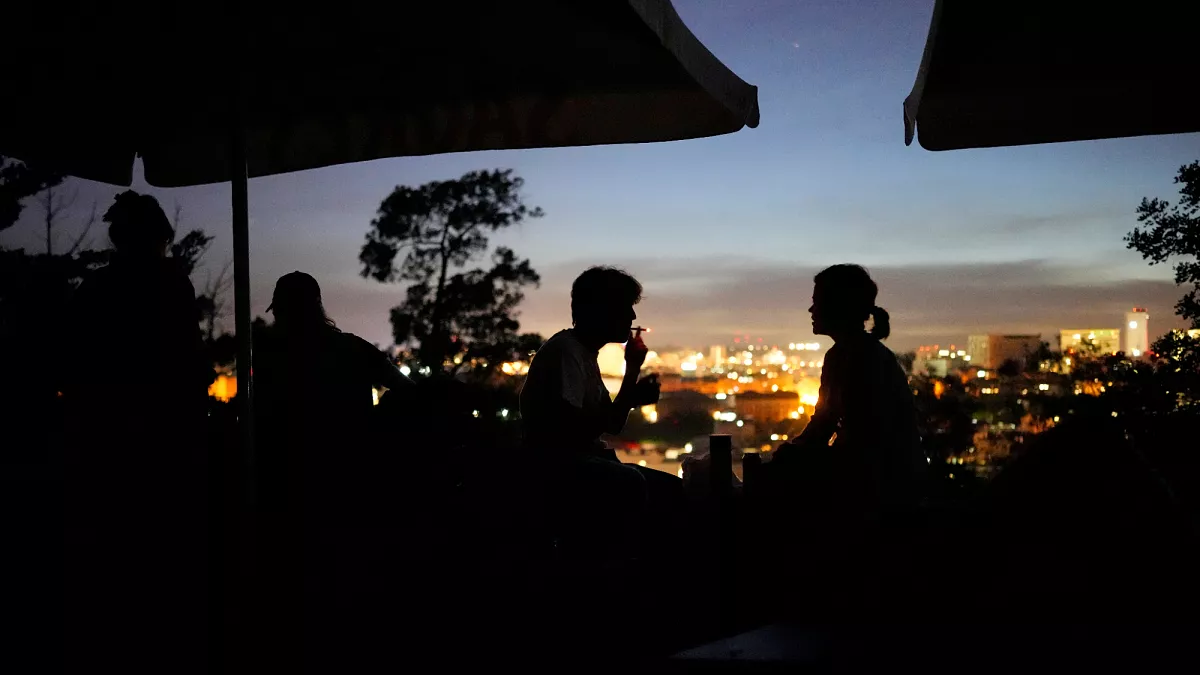
On this day last year, Portugal and Spain experienced a massive power outage that led to panic and chaos. A year after this incident, a parliamentary working group in Portugal presented its final report, which includes comprehensive recommendations aimed at improving the management of electrical grid outages.
The report, submitted on Tuesday, acknowledges that the government's response in the initial minutes of the incident was based on "intuition" rather than any established plan. Among the key recommendations, it is proposed that hospitals, healthcare centers, nursing homes, and emergency services be required to maintain a minimum energy independence for 72 hours, while other critical infrastructure is asked to sustain 24 hours of power.
Details of the Incident
The report also recommends raising the fuel storage limit in these facilities from 500 liters to 3000 liters, which is considered a common standard in other European countries. Additionally, it was suggested to classify food retailers and pharmacies as part of the critical infrastructure.
The recommendations also include restructuring the emergency and security communication network (SIRESP) and developing an alert system independent of commercial telephone networks. It was emphasized that emergency procedures need to be activated more quickly, pointing to the delays that occurred during last year's outage.
Background & Context
In November 2025, the Government Operations Center (CORGOV) was established in direct response to the blackout, where the Minister of the Presidency, António Lita Amaro, acknowledged the absence of a crisis action plan. He confirmed during the final hearing of the parliamentary group that "the country needs to do more."
A technical report released in March concluded that the power outage was not the result of a single failure, but rather a series of cascading failures that caused the system to collapse in less than 90 seconds. Before the collapse, voltage surged across several points in the Spanish grid, while power production from large renewable energy plants dropped by approximately 500 megawatts.
Impact & Consequences
Following the publication of the technical report in March, the Portuguese government referred the issue of compensation to the National Energy Regulatory Authority (ERSE). Environment and Energy Minister, Maria da Graça Carvalho, confirmed that it is time to evaluate the national authority and chart a path forward regarding compensations.
The European Commission responded to last year's blackout by activating its resilience strategy, recommending that households prepare an emergency kit sufficient for 72 hours, including drinking water, non-perishable food, a first aid kit, and a battery-operated radio or flashlight.
Regional Significance
This incident serves as an important lesson for Arab countries facing challenges in energy infrastructure. With the increasing reliance on renewable energy sources, effective emergency plans must be in place to handle any potential outages. Additionally, enhancing regional cooperation in energy can contribute to improving crisis response.
In conclusion, these recommendations highlight the importance of proactive planning and preparedness in facing crises, reflecting the necessity of strengthening energy infrastructure across all nations.