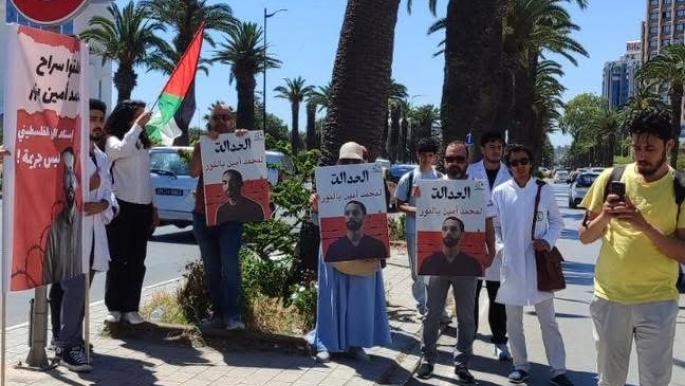
A judge in the financial judicial pole has ordered the release of activist Mohamed Amin Ben Nour, considered a prominent member of the 'Fleet of Resilience', after an interrogation session held today, Friday. This decision marks an important step in the context of the rapidly evolving political events in Tunisia, reflecting the increasing tensions within the political landscape.
Mohamed Amin Ben Nour, who was arrested earlier, is known for his activism in defending human rights and participating in social movements. His arrest sparked widespread reactions from local and international human rights organizations, which viewed his detention as a violation of freedom of expression.
Details of the Interrogation
During the interrogation session, Ben Nour was questioned about several issues related to his political and social activities. His lawyers indicated that the session provided an opportunity to demonstrate the lack of strong evidence supporting the charges against him. After hours of questioning, the judge decided to release him, which brought relief among his supporters.
This move comes at a time when Tunisia is witnessing an escalation in protests and demonstrations, with citizens demanding improvements in economic and social conditions. Many political factions have considered Ben Nour's release as a potential indicator of the government's willingness to engage in dialogue with the opposition.
Historical Context
Historically, Tunisia has undergone numerous political transformations since the revolution that ousted Zine El Abidine Ben Ali in 2011. Since then, the country has become a battleground for political conflicts among various political forces, leading to a division within Tunisian society over many issues. In recent years, protests have increased due to economic and social crises, posing significant challenges for the government.
Activists like Mohamed Amin Ben Nour represent a part of a larger movement striving for social justice and human rights. However, the government faces pressure to maintain stability, prompting it to take stringent measures against any opposition.
Consequences and Implications
The release of Ben Nour could have significant implications for the political scene in Tunisia. This decision is likely to encourage more activists to express their opinions and participate in protests. It may also increase pressure on the government to negotiate with the opposition and make concessions.
At the same time, this decision could be perceived as a message to the international community that Tunisia is committed to upholding human rights and fundamental freedoms. Nevertheless, challenges remain, as the government must address the economic and social crises affecting citizens' lives.
Impact on the Arab Region
Tunisia is seen as a model in the Arab region following the success of its revolution, yet it now faces significant challenges that could impact its stability. Events in Tunisia may inspire protest movements in other countries suffering from political repression or economic crises.
Moreover, the release of activists could encourage greater freedoms in neighboring countries, potentially leading to political changes in the region. However, the situation in Tunisia may serve as a warning to other nations on how to handle opposition and protests.
In conclusion, the release of Mohamed Amin Ben Nour represents a positive step towards enhancing human rights in Tunisia, yet it also highlights the ongoing challenges the country faces. The Tunisian government must listen to the people's demands and work towards the necessary changes.